

Motmot

Ornate Sunbird 対 ムナグロタイヨウチョウ

Cinnyris ornatus 対 Aethopyga saturata

Ornate Sunbirdとムナグロタイヨウチョウのクイズ
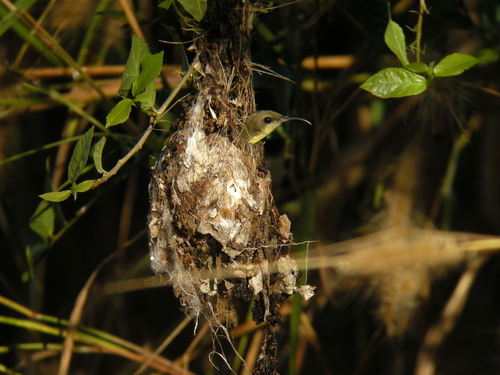
Ornate Sunbird (Cinnyris ornatus) Ornate Sunbird
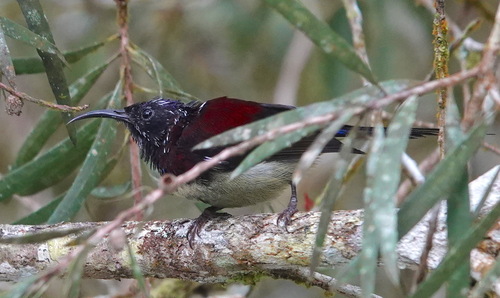
ムナグロタイヨウチョウ (Aethopyga saturata) ムナグロタイヨウチョウ

メディア

読み込み中…

要点

オーナテサンバードとムナグロタイヨウチョウを区別する最も信頼できるフィールドマークは、オスの喉と胸です:オーナテサンバードのオスは青黒い虹色の喉と胸を持ち、腹部は黄色ですが、ムナグロタイヨウチョウのオスは特徴的な黒い喉を持っていますが、明るい黄色の腹部はありません。メスはより難しいですが、オーナテサンバードのメスは黄色い眉斑と緑がかったオリーブ色の上面を持ち、ムナグロタイヨウチョウのメスは一般的に暗く、強い黄色の眉斑がありません。サイズと構造はフィールドでは強く診断できませんが、ムナグロタイヨウチョウはわずかに軽いです。両種は東南アジアで重なり合うため、特に混合群れや森林の縁の生息地では羽毛に注意を払うことが重要です。

識別のコツ

  1. オスの喉と胸の色: オーナテサンバードのオスは青黒い虹色の喉と胸を持ち、ムナグロタイヨウチョウのオスは虹色の青黒い光沢のない黒い喉を持っています。これは成鳥のオスにとって最も信頼できるフィールドマークです。
  2. オスの腹部: オーナテサンバードのオスは明るい黄色の腹部を持ち、暗い喉と鋭く対照的です。ムナグロタイヨウチョウのオスは一般的に下部が暗く、強い黄色の腹部がありません。
  3. オスの額の光沢: オーナテサンバードのオスは額に紫黒い光沢を示すことがありますが、ムナグロタイヨウチョウにはありません。
  4. 尾の先端: オーナテサンバードのオスは白い先端を持つ黒い尾を持ち、良い視界で見ることができます。ムナグロタイヨウチョウはこの強い白い先端がありません。
  5. メスの眉斑: オーナテサンバードのメスは黄色い眉斑を持ち、ムナグロタイヨウチョウのメスにはありません。これはメスと幼鳥を区別するための重要なマークです。
  6. メスの上面: オーナテサンバードのメスは緑がかったオリーブ色ですが、ムナグロタイヨウチョウのメスは一般的に暗く、オリーブ色が少ないです。
  7. メスの腹部: オーナテサンバードのメスは黄色の腹部を持ち、ムナグロタイヨウチョウのメスは鈍い色で黄色が少ないです。
  8. 翼の模様: どちらの種にも特徴的な上翼や飛行パターンのマークは記載されていないため、翼のパネルや後縁に頼らないでください。
  9. サイズ: オーナテサンバードはわずかに重いですが、これはフィールドでは信頼できるフィールドマークではありません。
  10. 生息地: 両方が生息する地域では、ムナグロタイヨウチョウは高地や密な森林でより一般的かもしれませんが、オーナテサンバードは低地や縁の生息地でより広く分布しています。ただし、かなりの重なりがあります。
  11. 地理的範囲: インド亜大陸(インド、ネパール、ブータン、バングラデシュ)にいる場合、ほぼ確実にムナグロタイヨウチョウを見ています。ジャワ、ボルネオ、または小スンダ列島では、オーナテサンバードのみが生息しています。
  12. 行動: 両種は似たような行動を示すため、食事や飛行スタイルに頼って区別しないでください。
  13. 性差: 両種は性差があり、識別時には常に性別を考慮してください。オスはメスよりも分けやすいです。
  14. 落とし穴: メスと幼鳥が最も混同されやすいです。黄色い眉斑の有無と腹部の色調に注目してください。
  15. 混合群れ: 混合種の群れでは、各サンバードを注意深く確認してください。両方が同じ地域に生息することがあります。

大きさ

オーナテサンバードはわずかに重い(オス6.7–11.9 g、メス6–10 g)ですが、ムナグロタイヨウチョウ(約5.3 g)よりも重いです [wikipedia][wikidata]。ただし、この違いは微妙で、フィールドでは簡単に判断できません。両方とも小さく、活発なサンバードであり、サイズだけでは隣同士で見ない限り信頼できる区別にはなりません。

羽色

行動

両種は活発で蜜を吸うサンバードであり、しばしば花の間を飛び回る姿が見られます。情報源には強い行動の違いは記載されていません。両方とも単独、ペア、または混合種の群れで見られ、特に森林の縁や庭で見られます。

生息環境

オーナテサンバードは本土東南アジア、スマトラ、ジャワ、ボルネオ、小スンダ列島に特有で、低地の森林から庭までさまざまな生息地で見られます [wikipedia]。ムナグロタイヨウチョウはインド亜大陸や東南アジアの大部分を含む広範な範囲を持ち、低地と山地の湿った森林の両方で見られます。重なり合う地域(例:タイ、マレーシア)では、両種が存在する可能性がありますが、ムナグロタイヨウチョウは高地や密な森林でより一般的です。

より良い説明を送る

比較と同じ項目を使ってください。文章はすぐに公開されます。

The most reliable field mark to separate Ornate Sunbird from Black-throated Sunbird is the male's throat and breast: Ornate Sunbird males show a blue-black iridescent throat and breast with yellow underparts, while Black-throated Sunbird males have a distinctive black throat but lack the bright yellow belly. Females are trickier, but Ornate Sunbird females have a yellow supercilium and greenish-olive upperparts, while Black-throated Sunbird females are generally darker and lack the strong yellow eyebrow. Size and structure are not strongly diagnostic in the field, but Black-throated Sunbird is slightly lighter. Both species overlap in Southeast Asia, so careful attention to plumage is essential, especially in mixed flocks or forest edge habitats.

  1. Male throat and breast color: Male Ornate Sunbird has a blue-black iridescent throat and breast, while Black-throated Sunbird male has a plain black throat without the iridescent blue-black sheen. This is the most reliable field mark for adult males.
  2. Male underparts: Ornate Sunbird males have bright yellow underparts, contrasting sharply with the dark throat. Black-throated Sunbird males are generally darker below and lack the strong yellow belly.
  3. Male forehead gloss: Ornate Sunbird males may show a purple-black gloss on the forehead, which is absent in Black-throated Sunbird.
  4. Tail tip: Ornate Sunbird males have a black tail with a white tip, which can be visible in good views. Black-throated Sunbird lacks this strong white tip.
  5. Female supercilium: Female Ornate Sunbird has a yellow supercilium (eyebrow), which is lacking in Black-throated Sunbird females. This is a key mark for separating females and immatures.
  6. Female upperparts: Ornate Sunbird females are greenish-olive above, while Black-throated Sunbird females are generally darker and less olive.
  7. Female underparts: Ornate Sunbird females have yellow underparts, while Black-throated Sunbird females are duller and less yellow.
  8. Wing pattern: No distinctive upperwing or flight pattern marks are described for either species, so do not rely on wing panels or trailing edges.
  9. Size: Ornate Sunbird is slightly heavier, but this is not a reliable field mark in the field.
  10. Habitat: In areas where both occur, Black-throated Sunbird may be more common in higher elevation or denser forest, while Ornate Sunbird is more widespread in lowland and edge habitats. However, there is considerable overlap.
  11. Geographic range: If you are in the Indian subcontinent (India, Nepal, Bhutan, Bangladesh), you are almost certainly seeing Black-throated Sunbird. In Java, Borneo, or the Lesser Sundas, only Ornate Sunbird occurs.
  12. Behavior: Both species behave similarly, so do not rely on feeding or flight style for separation.
  13. Sexual dimorphism: Both species are sexually dimorphic, so always consider sex when identifying. Males are easier to separate than females.
  14. Pitfalls: Females and immatures are the most likely to be confused. Focus on the presence or absence of the yellow supercilium and the tone of the underparts.
  15. Mixed flocks: In mixed-species flocks, check each sunbird carefully, as both can occur together in some regions.

Ornate Sunbird is slightly heavier (male 6.7–11.9 g, female 6–10 g) than Black-throated Sunbird (about 5.3 g) [wikipedia][wikidata]. However, this difference is subtle and not easily judged in the field. Both are small, active sunbirds, and size alone is not a reliable separator unless seen side by side.

  • Adult males: Ornate Sunbird males show olive upperparts, black remiges with green edging, a black tail with a white tip, and a blue-black iridescent throat and breast. The underparts are bright yellow. The forehead has a purple-black gloss. In contrast, Black-throated Sunbird males have a black throat (as the name suggests), but lack the bright yellow belly and iridescent blue-black breast of Ornate. Their upperparts and underparts are generally darker and less contrasting.
  • Adult females: Female Ornate Sunbirds are greenish-olive above, with a yellow supercilium and yellow underparts. Female Black-throated Sunbirds are generally darker, lack the yellow supercilium, and have less yellow below.
  • Immature/juvenile plumage: No specific juvenile or first-winter wing pattern is described for either species in the sources. Thus, separation relies on overall coloration and supercilium in females and immatures.
  • Wing pattern in flight: No distinctive upperwing or flight pattern marks are described for either species, so this is not a useful field mark.
  • Tail: Ornate Sunbird males have a black tail with a white tip; this may be visible in good views and is less pronounced in Black-throated Sunbird.

Both species are active, nectar-feeding sunbirds, often seen flitting among flowers. No strong behavioral differences are noted in the sources. Both can be found singly, in pairs, or in mixed-species flocks, especially at forest edges or in gardens.

Ornate Sunbird is endemic to Mainland Southeast Asia, Sumatra, Java, Borneo, and the Lesser Sunda Islands, and is often found in a range of habitats from lowland forests to gardens [wikipedia]. Black-throated Sunbird has a broader range, including the Indian subcontinent and much of Southeast Asia, and is found in both lowland and montane moist forests. In areas of overlap (e.g., Thailand, Malaysia), both species may be present, but Black-throated Sunbird is more likely at higher elevations or in denser forest.

変更を破棄しますか?

保存していない編集があります。今離れると失われます。

Ornate Sunbird · ムナグロタイヨウチョウ · 苦手な鳥