

Suimanga Ornado vs Suimanga Gorjinegro
Cinnyris ornatus frente a Aethopyga saturata
Juega un quiz con Suimanga Ornado y Suimanga Gorjinegro
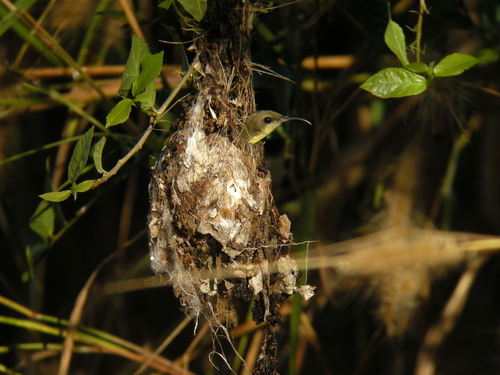 Suimanga Ornado
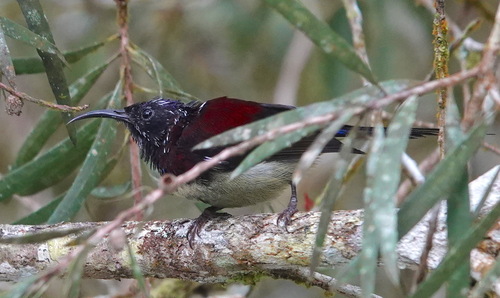 Suimanga Gorjinegro
En breve
La marca de campo más confiable para separar Suimanga Ornado de Suimanga Gorjinegro es la garganta y el pecho del macho: los machos de Suimanga Ornado muestran una garganta y un pecho iridiscentes azul-negro con partes inferiores amarillas, mientras que los machos de Suimanga Gorjinegro tienen una garganta negra distintiva pero carecen del brillante vientre amarillo. Las hembras son más complicadas, pero las hembras de Suimanga Ornado tienen un supercilio amarillo y partes superiores verde-oliva, mientras que las hembras de Suimanga Gorjinegro son generalmente más oscuras y carecen de la fuerte ceja amarilla. El tamaño y la estructura no son diagnósticos en el campo, pero Suimanga Gorjinegro es ligeramente más liviano. Ambas especies se superponen en el sudeste asiático, por lo que prestar atención cuidadosa al plumaje es esencial, especialmente en bandadas mixtas o hábitats de borde de bosque.
Consejos de identificación
- Color de la garganta y el pecho del macho: El macho de Suimanga Ornado tiene una garganta y un pecho iridiscentes azul-negro, mientras que el macho de Suimanga Gorjinegro tiene una garganta negra simple sin el brillo iridiscente azul-negro. Esta es la marca de campo más confiable para machos adultos.
- Partes inferiores del macho: Los machos de Suimanga Ornado tienen partes inferiores amarillas brillantes, contrastando fuertemente con la garganta oscura. Los machos de Suimanga Gorjinegro son generalmente más oscuros por debajo y carecen del fuerte vientre amarillo.
- Brillo en la frente del macho: Los machos de Suimanga Ornado pueden mostrar un brillo púrpura-negro en la frente, que está ausente en Suimanga Gorjinegro.
- Punta de la cola: Los machos de Suimanga Ornado tienen una cola negra con una punta blanca, que puede ser visible en buenas vistas. Suimanga Gorjinegro carece de esta fuerte punta blanca.
- Supercilio de la hembra: La hembra de Suimanga Ornado tiene un supercilio amarillo (ceja), que falta en las hembras de Suimanga Gorjinegro. Esta es una marca clave para separar hembras e inmaduros.
- Partes superiores de la hembra: Las hembras de Suimanga Ornado son verde-oliva por encima, mientras que las hembras de Suimanga Gorjinegro son generalmente más oscuras y menos olivas.
- Partes inferiores de la hembra: Las hembras de Suimanga Ornado tienen partes inferiores amarillas, mientras que las hembras de Suimanga Gorjinegro son más apagadas y menos amarillas.
- Patrón de alas: No se describen marcas distintivas en el patrón de alas superiores o en el vuelo para ninguna de las especies, por lo que no se debe confiar en los paneles de las alas o los bordes traseros.
- Tamaño: Suimanga Ornado es ligeramente más pesado, pero esta no es una marca de campo confiable en el campo.
- Hábitat: En áreas donde ambas ocurren, Suimanga Gorjinegro puede ser más común en elevaciones más altas o en bosques más densos, mientras que Suimanga Ornado es más común en hábitats de tierras bajas y de borde. Sin embargo, hay una considerable superposición.
- Rango geográfico: Si estás en el subcontinente indio (India, Nepal, Bután, Bangladesh), casi con seguridad estás viendo a Suimanga Gorjinegro. En Java, Borneo o las Menores Islas de la Sonda, solo se encuentra Suimanga Ornado.
- Comportamiento: Ambas especies se comportan de manera similar, por lo que no se debe confiar en el estilo de alimentación o vuelo para la separación.
- Dimorfismo sexual: Ambas especies son dimórficas sexualmente, por lo que siempre se debe considerar el sexo al identificar. Los machos son más fáciles de separar que las hembras.
- Trampas: Las hembras y los inmaduros son los más propensos a confundirse. Concéntrate en la presencia o ausencia del supercilio amarillo y el tono de las partes inferiores.
- Bandadas mixtas: En bandadas de especies mixtas, revisa cada suimanga cuidadosamente, ya que ambas pueden ocurrir juntas en algunas regiones.
Tamaño
Suimanga Ornado es ligeramente más pesado (macho 6.7–11.9 g, hembra 6–10 g) que Suimanga Gorjinegro (alrededor de 5.3 g) [wikipedia][wikidata]. Sin embargo, esta diferencia es sutil y no se puede juzgar fácilmente en el campo. Ambos son suimangas pequeños y activos, y el tamaño por sí solo no es un separador confiable a menos que se vean uno al lado del otro.
Plumaje
- Machos adultos: Los machos de Suimanga Ornado muestran partes superiores olivas, remiges negros con borde verde, una cola negra con una punta blanca, y una garganta y un pecho iridiscentes azul-negro. Las partes inferiores son de un amarillo brillante. La frente tiene un brillo púrpura-negro. En contraste, los machos de Suimanga Gorjinegro tienen una garganta negra (como su nombre indica), pero carecen del brillante vientre amarillo y el pecho iridiscentes azul-negro de Suimanga. Sus partes superiores e inferiores son generalmente más oscuras y menos contrastantes.
- Hembras adultas: Las hembras de Suimanga Ornado son verde-oliva por encima, con un supercilio amarillo y partes inferiores amarillas. Las hembras de Suimanga Gorjinegro son generalmente más oscuras, carecen del supercilio amarillo y tienen menos amarillo por debajo.
- Plumaje inmaduro/juvenil: No se describe un patrón específico de alas para juveniles o primer invierno para ninguna de las especies en las fuentes. Por lo tanto, la separación se basa en la coloración general y el supercilio en hembras e inmaduros.
- Patrón de alas en vuelo: No se describen marcas distintivas en el patrón de alas superiores o en el vuelo para ninguna de las especies, por lo que esta no es una marca de campo útil.
- Cola: Los machos de Suimanga Ornado tienen una cola negra con una punta blanca; esto puede ser visible en buenas vistas y es menos pronunciado en Suimanga Gorjinegro.
Comportamiento
Ambas especies son suimangas activas que se alimentan de néctar, a menudo vistas revoloteando entre flores. No se notan diferencias de comportamiento significativas en las fuentes. Ambas pueden encontrarse solas, en parejas o en bandadas de especies mixtas, especialmente en bordes de bosque o en jardines.
Hábitat
Suimanga Ornado es endémico de la parte continental del sudeste asiático, Sumatra, Java, Borneo y las Menores Islas de la Sonda, y a menudo se encuentra en una variedad de hábitats desde bosques de tierras bajas hasta jardines [wikipedia]. Suimanga Gorjinegro tiene un rango más amplio, incluyendo el subcontinente indio y gran parte del sudeste asiático, y se encuentra tanto en bosques húmedos de tierras bajas como montanos. En áreas de superposición (por ejemplo, Tailandia, Malasia), ambas especies pueden estar presentes, pero Suimanga Gorjinegro es más probable que se encuentre en elevaciones más altas o en bosques más densos.