

cuco-oriental vs gray nightjar
Cuculus optatus versus Caprimulgus jotaka
Jogue um quiz com cuco-oriental e gray nightjar
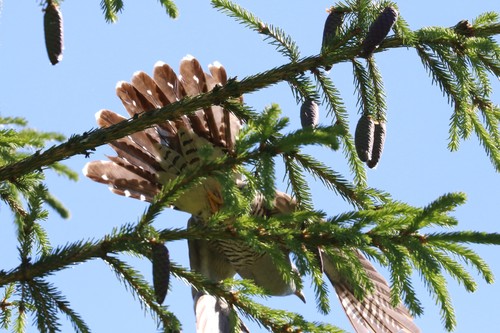 cuco-oriental
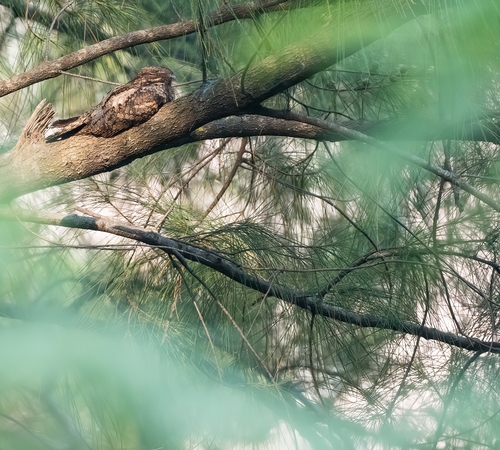 gray nightjar
Em resumo
A marca de campo mais confiável para separar o cuco-oriental do gray nightjar é a estrutura e postura geral: o cuco é um pássaro esbelto, de asas longas, semelhante a um falcão, com um padrão de listras claro nas partes inferiores, enquanto o nightjar é um pássaro de cabeça larga, pernas curtas e padrão críptico, com uma distinta mancha branca na garganta e plumagem vermiculada intrincada. Em voo, o cuco-oriental exibe um voo direto e constante com asas pontudas, enquanto o gray nightjar tem um voo flácido e flutuante com asas arredondadas e manchas brancas nas primárias e na cauda (nos machos). Os nightjars juvenis e fêmeas não possuem as manchas brancas proeminentes, mas ainda mostram uma aparência mais manchada e camuflada do que qualquer cuco. Se visto empoleirado, o alinhamento paralelo do nightjar ao galho e a coloração críptica são distintivos. Vocalizações e contexto de habitat também podem ajudar, mas a estrutura e plumagem geralmente são decisivas.
Dicas de identificação
- Forma da cabeça e bico: O cuco-oriental tem uma cabeça pequena, bico esbelto e um perfil semelhante a um falcão; o gray nightjar tem uma cabeça grande e larga, bico pequeno e olhos grandes—especialmente óbvios em perfil ou vistas próximas.
- Postura empoleirada: O cuco empoleira-se ereto ou ligeiramente inclinado, frequentemente exposto em galhos; o nightjar empoleira-se longitudinalmente ao longo de um galho, abraçando-o de perto para camuflagem, geralmente quase invisível, a menos que seja assustado.
- Estilo de voo: O cuco voa com batidas de asas diretas e constantes e asas pontudas; o nightjar tem um voo lento, flácido e flutuante com asas arredondadas, frequentemente planando ou fazendo curvas erráticas.
- Padrão das asas em voo: Os nightjars machos têm manchas brancas proeminentes nas primárias e na cauda; fêmeas e juvenis não possuem essas, mas ainda mostram asas superiores manchadas e vermiculadas. O cuco nunca mostra manchas brancas nas asas ou na cauda, e a asa superior é cinza simples.
- Partes inferiores: O cuco mostra partes inferiores brancas-cremosas com listras escuras fortes e regulares; o nightjar tem partes inferiores amarelo-pálido com listras horizontais escuras densas e irregulares, nunca listradas como o cuco.
- Mancha na garganta: O nightjar tem uma mancha branca conspícua na garganta (menor e mais marrom nas fêmeas); o cuco não possui nenhuma mancha branca na garganta, mostrando em vez disso um peito cinza ou marrom simples.
- Partes superiores: O cuco é cinza simples (macho/morfologia cinza) ou ruivo com listras escuras (morfologia ruiva); o nightjar é intrincadamente padronizado com vermiculações, listras e barras para camuflagem.
- Rabo e cauda: O cuco morfo ruivo tem listras escuras fortes no rabo; a cauda do nightjar é listrada com preto e marrom, com manchas subterminais brancas nos machos.
- Cor dos olhos e partes nuas: O cuco tem um anel ocular amarelo e pernas e pés laranja-amarelo; as partes nuas do nightjar são menos conspícuas, com grandes olhos escuros.
- Período de atividade: O cuco é diurno, ativo durante o dia; o nightjar é noturno, mais ativo ao crepúsculo e à noite.
- Contexto de habitat: O cuco é mais estritamente habitante de florestas; o nightjar é frequentemente encontrado em florestas abertas, bordas de florestas ou encostas gramadas, especialmente ao crepúsculo ou à noite.
- Vocalização: O cuco emite notas baixas e pareadas de 'pu-pu' durante o dia; o nightjar (não descrito aqui) tipicamente emite chamados de churring ou repetitivos à noite.
- Diferenças de sexo e idade: Fêmeas e juvenis de nightjars não possuem as manchas brancas nas asas e na cauda, mas mantêm o padrão críptico e manchado; os cucos morfo ruivos podem ser confundidos com nightjars em luz fraca, mas sempre carecem das vermiculações intrincadas e têm uma aparência mais uniforme e listrada.
- Risco de confusão: Em luz fraca ou ao crepúsculo, um nightjar assustado pode ser confundido com um cuco, mas note o voo errático e flutuante e a plumagem críptica. Um cuco empoleirado nunca é tão bem camuflado ou alinhado ao galho quanto um nightjar.
- Quando em dúvida: Concentre-se na forma da cabeça, mancha na garganta e padrão das partes inferiores—esses são confiáveis mesmo em vistas breves ou distantes.
Tamanho
O cuco-oriental é ligeiramente maior e mais pesado (massa corporal ~94,5g [wikidata]), com um comprimento de 30–32 cm e envergadura de 51–57 cm [wikipedia]. O gray nightjar é um nightjar de tamanho médio, mas nenhuma massa precisa é dada aqui; estruturalmente, é de pernas mais curtas e cabeça mais larga, com uma cauda proporcionalmente mais longa e asas mais curtas em comparação com o cuco. O cuco parece mais esbelto e semelhante a um falcão, enquanto o nightjar é mais robusto e compacto.
Plumagem
-
Voo juvenil/imaturo: Nenhum padrão específico de asa superior relacionado à idade é descrito para o cuco-oriental, mas todas as idades mostram partes superiores cinzas e listras escuras claras nas partes inferiores cremosas. O gray nightjar juvenil se assemelha aos adultos, mas carece das manchas brancas nas asas e na cauda (fêmeas e imaturos), e é overall mais manchado e vermiculado acima, com uma mancha na garganta menor ou mais marrom.
-
Plumagem adulta: Os machos do cuco-oriental são cinzas acima com uma barriga cremosa e fortemente listrada e um ventrículo amarelo claro levemente marcado. Fêmeas e juvenis podem ser morfos cinzas ou ruivos; os morfos ruivos são avermelhados acima com listras escuras fortes, incluindo no rabo (diferente do cuco-canoro). Os adultos do gray nightjar são intrincadamente padronizados com vermiculações cinza-brancas, marrons e pretas acima, uma mancha branca proeminente na garganta (menor e mais marrom nas fêmeas) e manchas brancas proeminentes nas asas e cauda nos machos. As partes inferiores são amarelo-pálido com listras horizontais escuras densas, nunca listradas como o cuco. O padrão críptico do nightjar é projetado para camuflagem, enquanto o padrão do cuco é mais nitidamente definido e menos manchado.
Comportamento
O cuco-oriental é secreto e frequentemente forrageia em árvores, arbustos ou no chão, geralmente sozinho e difícil de ver. Seu voo é direto e intencional, com batidas de asas fortes e constantes. O gray nightjar é noturno, forrageia por insetos em voo ao crepúsculo e à noite, e descansa durante o dia em galhos ou no chão, alinhando seu corpo paralelamente ao galho para camuflagem. Seu voo é flutuante, com batidas de asas lentas e flácidas, planando e fazendo curvas erráticas ao perseguir insetos. O nightjar é muito mais provável de ser visto à noite, enquanto o cuco é ativo durante o dia.
Habitat
O cuco-oriental prefere florestas—coníferas, decíduas ou mistas—em toda a Eurásia setentrional e leste da Ásia, frequentemente chegando mais tarde do que o cuco-canoro em áreas de reprodução. O gray nightjar se reproduz em regiões semelhantes, mas é mais frequentemente encontrado em florestas abertas, bordas de florestas e, às vezes, encostas gramadas, especialmente para descanso diurno. O nightjar é mais provável de ser encontrado em habitats abertos ou semi-abertos, especialmente ao crepúsculo ou à noite, enquanto o cuco é mais estritamente habitante de florestas e diurno.
Voz
Os machos do cuco-oriental emitem uma série de notas baixas e pareadas de 'pu-pu', ambas as notas igualmente estressadas, às vezes introduzidas por uma frase mais longa ou notas ásperas; as fêmeas emitem um trinado profundo e borbulhante. O chamado do gray nightjar não é descrito aqui, mas os nightjars tipicamente têm chamados de churring ou repetitivos ao crepúsculo ou à noite, bem diferentes do hoot do cuco. Se você ouvir uma frase baixa e até duas notas durante o dia, é provavelmente um cuco; se você ouvir churring ou chamados repetitivos à noite, é provavelmente um nightjar.