

okinawa rail vs slaty-legged crake
Gallirallus okinawae versus Rallina eurizonoides
Jogue um quiz com okinawa rail e slaty-legged crake
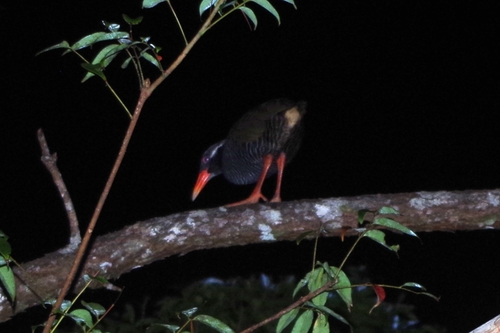 okinawa rail
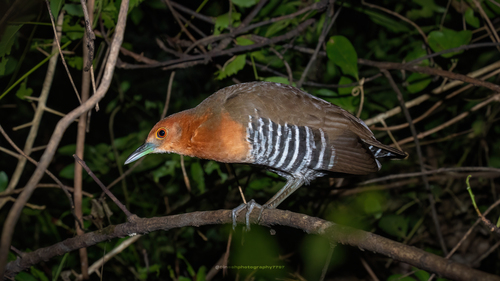 slaty-legged crake
Em resumo
A marca de campo mais confiável para separar okinawa rail de slaty-legged crake é a combinação de bico e pernas vermelhos brilhantes (okinawa rail) versus bico amarelado e pernas verdes (slaty-legged crake), visível mesmo em pouca luz. A plumagem juvenil também difere: os jovens okinawa rails são mais claros e manchados por baixo, enquanto os juvenis slaty-legged crakes são marrons escuros no geral, mas mantêm as barras na barriga e uma garganta branca. Okinawa rail é quase incapaz de voar, com asas e cauda muito curtas, e está restrito à Ilha Okinawa, enquanto slaty-legged crake é mais amplamente distribuído e um melhor voador. Ambos têm partes inferiores listradas, mas as listras em preto e branco do okinawa rail estão em um fundo preto, enquanto o slaty-legged crake apresenta tons de castanho e uma garganta branca.
Dicas de identificação
- Cor do bico: Okinawa rail tem um bico grande e vermelho brilhante com uma ponta esbranquiçada (adulto), enquanto slaty-legged crake tem um bico amarelado. Isso é visível em todas as idades, exceto no juvenil okinawa rail, que tem um bico acastanhado.
- Cor das pernas: O adulto okinawa rail tem pernas vermelhas brilhantes; slaty-legged crake tem pernas verdes. O juvenil okinawa rail tem pernas e pés amarelo-ocre, enquanto os jovens slaty-legged crake têm pernas esverdeadas.
- Padrão facial: Okinawa rail apresenta um rosto preto com uma mancha branca na frente do olho e uma linha branca atrás do olho, estendendo-se até o pescoço; slaty-legged crake não possui essas listras faciais e, em vez disso, tem uma garganta branca.
- Listras nas partes inferiores: Ambas as espécies têm listras em preto e branco por baixo, mas as listras do okinawa rail estão em um fundo preto e são estreitas, enquanto as listras do slaty-legged crake são ousadas e em um fundo castanho ou marrom, com uma garganta branca e peito castanho.
- Partes superiores: Okinawa rail é oliva-marrom por cima; slaty-legged crake é marrom por cima com uma cabeça e peito castanhos.
- Plumagem juvenil: O juvenil okinawa rail é mais claro e manchado por baixo, com marcas faciais menos distintas e pernas amarelo-ocre; o juvenil slaty-legged crake é marrom escuro por cima e por baixo, mas ainda mostra listras na barriga e uma garganta branca.
- Cauda e asas: Okinawa rail tem asas e cauda muito curtas e é quase incapaz de voar, frequentemente parecendo atarracado e corpulento. Slaty-legged crake tem uma cauda curta, mas é um voador capaz e parece mais esbelto.
- Forma do corpo: Okinawa rail é mais robusto e robusto, especialmente nas pernas e no bico; slaty-legged crake é mais comprimido lateralmente para se mover através da vegetação densa.
- Comportamento: Okinawa rail é geralmente visto correndo no chão ou empoleirando-se em árvores, raramente voando. Slaty-legged crake é discreto, frequentemente se escondendo em arbustos, e pode voar quando assustado.
- Habitat: Okinawa rail é encontrado apenas nas florestas do norte da Ilha Okinawa; slaty-legged crake é amplamente distribuído em áreas úmidas arborizadas em toda a Ásia do Sul e Sudeste.
- Tamanho: Okinawa rail é maior (30 cm, 435 g) e mais pesado que slaty-legged crake (25 cm, corpo mais leve).
- Cor do íris: O adulto okinawa rail tem íris e anel ocular vermelhos; slaty-legged crake não apresenta essa característica.
- Contexto: Se visto fora de Okinawa, quase certamente não é okinawa rail. Se em floresta subtropical densa em Okinawa, slaty-legged crake é extremamente improvável.
- Vocalização: Okinawa rail é barulhento ao amanhecer e ao anoitecer, frequentemente chamando em grupos; slaty-legged crake é discreto e menos frequentemente ouvido.
- Armadilhas: Ambas as espécies têm partes inferiores listradas, mas verifique as listras faciais, a cor do bico e das pernas e a robustez geral para evitar confusão, especialmente em juvenis.
Tamanho
Okinawa rail é maior e mais pesado, medindo cerca de 30 cm de comprimento com uma envergadura de 48–50 cm e um peso em torno de 435 g [wikipedia]. Slaty-legged crake é menor, cerca de 25 cm de comprimento, com um corpo mais esbelto e comprimido lateralmente para se mover através da vegetação densa [wikipedia]. O okinawa rail parece mais robusto e robusto, especialmente nas pernas e no bico.
Plumagem
-
Juvenil/imaturo: O juvenil okinawa rail é mais claro que o adulto, com manchas brancas por baixo em vez das barras brancas estreitas do adulto, e as marcas faciais brancas são menos distintas. O bico e a íris são acastanhados, pernas e pés amarelo-ocre. O juvenil slaty-legged crake é marrom escuro por cima e por baixo, mas mantém as fortes listras em preto e branco na barriga e uma garganta branca, sem as listras faciais do okinawa rail.
-
Adulto: Okinawa rail tem partes superiores oliva-marrom, partes inferiores pretas com barras brancas estreitas, um rosto preto com uma mancha branca na frente do olho e uma linha branca atrás do olho, e uma cauda escura com barras claras. O bico e as pernas são vermelhos brilhantes. Slaty-legged crake tem costas marrons, cabeça e peito castanhos, fortes listras em preto e branco nas flancos, barriga e cauda, uma garganta branca, bico amarelado e pernas verdes. Os sexos são semelhantes em ambas as espécies.
Comportamento
Okinawa rail é quase incapaz de voar, correndo rapidamente, mas raramente voando, e passa a maior parte do tempo no chão, embora empoleire-se em árvores. É geralmente visto em cobertura densa, mas pode aparecer em áreas abertas para se banhar. Slaty-legged crake é discreto e prefere se esconder em arbustos quando perturbado, mas é capaz de voar e se move através da vegetação com facilidade devido ao seu corpo achatado. Ambas forrageiam no chão, mas slaty-legged crake também pode escalar arbustos.
Habitat
Okinawa rail é endêmico da Ilha Okinawa, Japão, e está restrito a florestas úmidas subtropicais e habitats adjacentes. Não é encontrado fora dessa pequena área. Slaty-legged crake é amplamente distribuído em toda a Ásia do Sul e Sudeste, reproduzindo-se em pântanos e áreas úmidas e arborizadas da Índia à Indonésia e Filipinas. As duas espécies não se sobrepõem em alcance, exceto como raros vagantes, e o contexto do habitat é uma forte pista: okinawa rail é encontrado apenas nas florestas do norte de Okinawa.
Voz
Okinawa rail é barulhento, com uma variedade de chamadas altas, especialmente ao amanhecer e ao anoitecer, frequentemente chamando em pares ou grupos. Slaty-legged crake é descrito como discreto; nenhuma vocalização distintiva é especificada nas notas, então a voz não é um separador confiável com as informações fornecidas.