

Okinawaral vs Zwartpootral
Gallirallus okinawae versus Rallina eurizonoides
Speel een quiz met Okinawaral en Zwartpootral
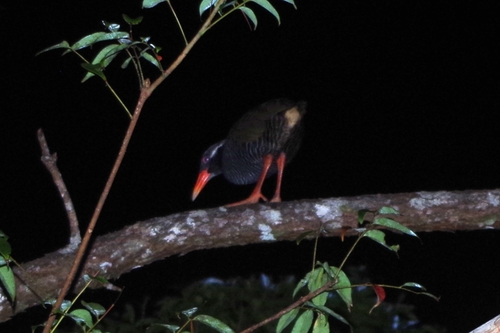 Okinawaral
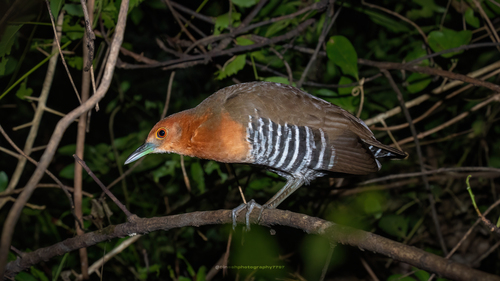 Zwartpootral
Kort gezegd
Het meest betrouwbare veldkenmerk om Okinawaral van Zwartpootral te scheiden is de combinatie van een helderrode snavel en poten (Okinawaral) versus een geelachtige snavel en groene poten (Zwartpootral), zichtbaar zelfs bij slecht licht. Juveniele verenkleed verschilt ook: jonge Okinawarals zijn bleker en gevlekt aan de onderzijde, terwijl juvenile Zwartpootrals over het algemeen donkerbruin zijn maar buikstreping en een witte keel behouden. Okinawaral is bijna onvliegend met zeer korte vleugels en staart, en is beperkt tot het eiland Okinawa, terwijl Zwartpootral wijdverspreider is en beter kan vliegen. Beide hebben gestreepte onderdelen, maar de zwart-witte strepen van de Okinawaral zijn op een zwarte achtergrond, terwijl de Zwartpootral kastanjebruine tinten en een witte keel toont.
Herkenningstips
- Snavel kleur: Okinawaral heeft een grote, helderrode snavel met een witachtige punt (volwassen), terwijl Zwartpootral een geelachtige snavel heeft. Dit is zichtbaar op alle leeftijden behalve bij juvenile Okinawaral, die een bruinachtige snavel heeft.
- Poten kleur: Volwassen Okinawaral heeft helderrode poten; Zwartpootral heeft groene poten. Juveniele Okinawaral heeft geel-okerkleurige poten en voeten, terwijl jonge Zwartpootral groene poten hebben.
- Gezichtspatroon: Okinawaral toont een zwart gezicht met een witte vlek voor het oog en een witte lijn achter het oog, die naar de nek loopt; Zwartpootral mist deze gezichtsstrepen en heeft in plaats daarvan een witte keel.
- Onderste strepen: Beide soorten hebben zwart-witte strepen aan de onderzijde, maar de strepen van de Okinawaral zijn op een zwarte achtergrond en zijn smal, terwijl de strepen van de Zwartpootral gedurfd zijn en op een kastanjebruine of bruine achtergrond staan, met een witte keel en kastanjebruine borst.
- Bovenste delen: Okinawaral is olijfbruin boven; Zwartpootral is bruin boven met een kastanjebruin hoofd en borst.
- Juveniele verenkleed: Juveniele Okinawaral is bleker en gevlekt aan de onderzijde, met minder duidelijke gezichtstekens en geel-okerkleurige poten; juvenile Zwartpootral is donkerbruin boven en onder maar toont nog steeds buikstreping en een witte keel.
- Staart en vleugels: Okinawaral heeft zeer korte vleugels en staart en is bijna onvliegend, vaak stumpy en zwaar van lichaam. Zwartpootral heeft een korte staart maar is een capabele vlieger en lijkt slanker.
- Lichaamsvorm: Okinawaral is robuuster en steviger, vooral in de poten en snavel; Zwartpootral is meer lateraal samengedrukt voor het bewegen door dichte vegetatie.
- Gedrag: Okinawaral wordt meestal gezien terwijl hij op de grond rent of in bomen rust, zelden vliegend. Zwartpootral is geheimzinnig, verbergt zich vaak in struiken, en kan vliegen wanneer hij wordt opgeschrikt.
- Habitat: Okinawaral wordt alleen gevonden in de bossen van het noorden van het eiland Okinawa; Zwartpootral is wijdverspreid in bosrijke wetlands in Zuid- en Zuidoost-Azië.
- Grootte: Okinawaral is groter (30 cm, 435 g) en zwaarder dan Zwartpootral (25 cm, lichter gebouwd).
- Iris kleur: Volwassen Okinawaral heeft een rode iris en oogring; Zwartpootral toont deze eigenschap niet.
- Context: Als het buiten Okinawa wordt gezien, is het bijna zeker geen Okinawaral. Als het in dichte subtropische bossen op Okinawa is, is Zwartpootral extreem onwaarschijnlijk.
- Vocalisatie: Okinawaral is luidruchtig bij zonsopgang en zonsondergang, vaak roepend in groepen; Zwartpootral is geheimzinnig en minder vaak gehoord.
- Valstrikken: Beide soorten hebben gestreepte onderdelen, maar controleer op gezichtsstrepen, snavel- en potenkleur, en algehele bulk om verwarring te voorkomen, vooral bij juvenielen.
Grootte
Okinawaral is groter en zwaarder, met een lengte van ongeveer 30 cm en een spanwijdte van 48–50 cm en een gewicht van ongeveer 435 g [wikipedia]. Zwartpootral is kleiner, ongeveer 25 cm lang, met een slanker, lateraal samengedrukt lichaam voor het bewegen door dichte ondergroei [wikipedia]. De Okinawaral lijkt robuuster en steviger, vooral in de poten en snavel.
Verenkleed
-
Juveniel/onvolwassen: Juveniele Okinawaral is bleker dan de volwassen, met witte vlekken aan de onderzijde in plaats van de smalle witte strepen van de volwassen, en de witte gezichtstekens zijn minder duidelijk. Snavel en iris zijn bruinachtig, poten en voeten zijn geel-okerkleurig. Juveniele Zwartpootral is donkerbruin boven en onder, maar behoudt de sterke zwart-witte buikstreping en een witte keel, zonder de gezichtsstrepen van Okinawaral.
-
Volwassen: Okinawaral heeft olijfbruin boven, zwarte onderdelen met smalle witte strepen, een zwart gezicht met een witte vlek voor het oog en een witte lijn achter het oog, en een donkerbruine onderstaart met lichte strepen. De snavel en poten zijn helderrood. Zwartpootral heeft een bruine rug, kastanjebruin hoofd en borst, sterke zwart-witte strepen op de flanken, buik en onderstaart, een witte keel, geelachtige snavel en groene poten. De geslachten zijn vergelijkbaar in beide soorten.
Gedrag
Okinawaral is bijna onvliegend, rent snel maar vliegt zelden, en brengt het grootste deel van zijn tijd op de grond door, hoewel hij in bomen rust. Hij wordt meestal gezien in dichte dekking maar kan in het open komen om te baden. Zwartpootral is geheimzinnig en verkiest zich te verstoppen in struiken wanneer hij wordt verstoord, maar is in staat tot vliegen en beweegt zich met gemak door de ondergroei dankzij zijn afgeplatte lichaam. Beide foerageren op de grond, maar Zwartpootral kan ook door struiken klimmen.
Habitat
Okinawaral is endemisch voor het eiland Okinawa, Japan, en beperkt tot subtropische vochtige bossen en aangrenzende habitats. Het wordt niet buiten dit kleine bereik gevonden. Zwartpootral is wijdverspreid in Zuid- en Zuidoost-Azië, broedend in moerassen en natte, bosrijke gebieden van India tot Indonesië en de Filippijnen. De twee soorten overlappen niet in hun bereik, behalve als zeldzame dwaalgasten, en de context van het habitat is een sterke aanwijzing: Okinawaral wordt alleen gevonden in de bossen van het noorden van Okinawa.
Geluid
Okinawaral is luidruchtig, met een verscheidenheid aan luide roepen, vooral bij zonsopgang en zonsondergang, vaak roepend in paren of groepen. Zwartpootral wordt beschreven als geheimzinnig; er zijn geen onderscheidende vocalisaties gespecificeerd in de aantekeningen, dus de stem is geen betrouwbare scheiding met de gegeven informatie.