

borboletinha-do-mato vs sebinho-de-olho-de-ouro
Phylloscartes ventralis versus Hemitriccus margaritaceiventer
Jogue um quiz com borboletinha-do-mato e sebinho-de-olho-de-ouro
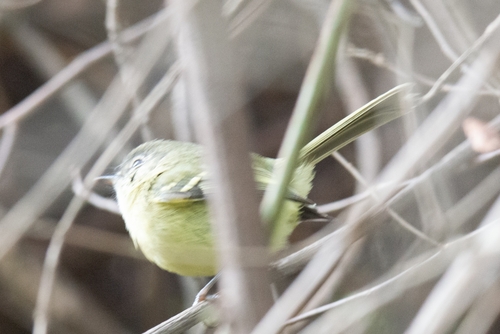 borboletinha-do-mato
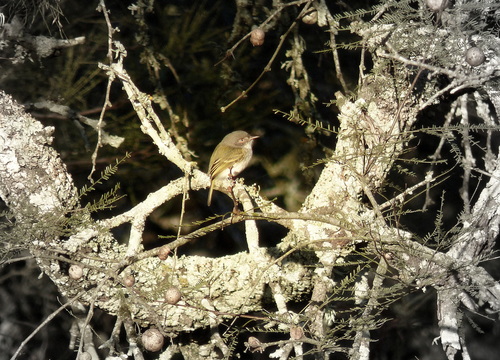 sebinho-de-olho-de-ouro
Em resumo
A marca de campo mais confiável entre a borboletinha-do-mato e o sebinho-de-olho-de-ouro é o padrão facial: a borboletinha-do-mato apresenta bochechas manchadas distintas com um anel ocular branquíssimo quebrado e um 'bigode' escuro forte, enquanto o sebinho-de-olho-de-ouro tem um rosto cinza-acastanhado mais simples com um anel ocular branquíssimo e lore, mas carece da mancha e do forte contraste facial. Ambas as espécies têm duas barras alares e tamanho semelhante, mas a borboletinha é ligeiramente mais longa e esbelta, com uma parte superior mais oliva e partes inferiores amareladas, em comparação com os tons cinza-acastanhados e partes inferiores brancas do sebinho-de-olho-de-ouro. Em vistas empoleiradas ou em voo, concentre-se no padrão facial e no tom das partes inferiores para a separação mais confiável.
Dicas de identificação
- O padrão facial é a chave: A borboletinha-do-mato apresenta um supercílios branquíssimo curto, anel ocular branquíssimo quebrado, faixa ocular escura forte, um amplo crescente abaixo do olho, um 'bigode' escuro e bochechas manchadas distintas. O sebinho-de-olho-de-ouro tem um rosto cinza-acastanhado simples com um anel ocular branquíssimo e lore, mas carece da mancha e dos fortes contrastes faciais. Este é o separador mais confiável em todas as idades e estações.
- Cor das partes superiores: A borboletinha é de um oliva escuro acima com um amarelo-oliva brilhante nas penas de voo e na base da cauda, dando um tom esverdeado. O sebinho-de-olho-de-ouro é cinza-acastanhado a oliva acastanhada acima, com uma coroa cinza e sem tons esverdeados ou amarelados nas asas ou na cauda.
- Partes inferiores: A borboletinha-do-mato tem partes inferiores cinza-oliva a amareladas, às vezes com marcas oliva fracas, e a barriga/penas de cauda podem ser amarelas mais pálidas. O sebinho-de-olho-de-ouro é branco abaixo com listras cinza-acastanhadas fracas e pode ter um leve tom amarelo nas flancos em algumas subespécies, mas nunca é tão amarelo quanto a borboletinha.
- Barras alares: Ambas as espécies apresentam duas barras alares pálidas, então isso não é um separador seguro. No entanto, as barras alares da borboletinha podem parecer mais amarelas, enquanto as do sebinho são de um buff-branquíssimo a amarelo.
- Cor e forma do bico: A borboletinha-do-mato tem um bico preto longo, plano e pontudo com uma base rosa a amarelada na mandíbula. O sebinho-de-olho-de-ouro tem uma maxila marrom avermelhada a negra e uma mandíbula marrom-rosada a rosa; o bico é geralmente mais curto e robusto.
- Cor da íris: A borboletinha tem uma íris marrom escura; o sebinho-de-olho-de-ouro tem uma íris pálida. Isso pode ser útil em distâncias curtas.
- Cor das pernas: A borboletinha tem pernas e pés cinza-ardósia a azulados; as do sebinho são rosa a cinza-pálido. Isso é sutil, mas pode ajudar em boa luz.
- Estrutura e aparência: A borboletinha é ligeiramente mais longa e esbelta, frequentemente empoleirando-se horizontalmente e às vezes levantando a cauda. O sebinho é mais compacto e pode parecer ter a cauda mais curta.
- Contexto do habitat: Em florestas úmidas, de médio porte/copa, espere encontrar a borboletinha; em arbustos secos, bordas de florestas ou pastagens arbustivas, espere encontrar o sebinho.
- Comportamento: A borboletinha frequentemente forrageia mais alto e se junta a bandos de espécies mistas; o sebinho é mais frequentemente encontrado baixo em vegetação densa.
- Padrão da cauda: Ambos têm caudas escuras, mas a borboletinha mostra penas externas amarelo-oliva na base, às vezes visíveis em boa luz ou em voo.
- Variação entre subespécies: Algumas subespécies do sebinho mostram mais amarelo ou listras, mas nenhuma se aproxima do contraste facial da borboletinha.
- Sexo e idade: Ambas as espécies têm plumagem semelhante entre os sexos e idades; nenhum padrão de asa juvenil/imatura distinto é descrito.
- Vistas em voo: Em voo, concentre-se no padrão facial e em quaisquer tons amarelos nas asas/cauda da borboletinha; o sebinho permanece com o rosto simples e cinza-acastanhado.
- Armadilhas: Não confie apenas nas barras alares ou no tamanho geral; sempre verifique a cor do rosto e das partes inferiores para uma identificação confiante.
Tamanho
Ambas as espécies são muito pequenas, mas a borboletinha-do-mato tem uma média ligeiramente maior, com cerca de 12 cm de comprimento e 8 g de massa [wikidata], enquanto o sebinho-de-olho-de-ouro tem cerca de 10–11 cm e 7–10 g [wikipedia]. A diferença é sutil e nem sempre óbvia em campo, mas a borboletinha pode parecer um pouco mais longa e esbelta, enquanto o sebinho é mais compacto. O tamanho sozinho não é um separador seguro, a menos que vistas lado a lado.
Plumagem
-
Padrão de asa juvenil/imatura: Nenhum padrão de asa específico para idade é descrito para ambas as espécies; ambas têm duas barras alares pálidas formadas pelas pontas das coberturas das asas, visíveis em todas as plumagens.
-
Plumagem adulta: A borboletinha-do-mato é oliva acima com penas externas amarelo-oliva brilhante na base das penas de voo e da cauda, e tem um padrão facial distinto: supercílios branquíssimo curto, anel ocular branquíssimo quebrado, faixa ocular escura, amplo crescente abaixo do olho, 'bigode' escuro e bochechas manchadas. As partes inferiores são cinza-oliva a amareladas, às vezes com marcas oliva fracas, e a barriga/penas de cauda podem ser amarelas mais pálidas. O sebinho-de-olho-de-ouro é cinza-acastanhado a oliva acastanhada acima, com uma coroa cinza, lore e anel ocular branquíssimos, e um rosto geralmente mais simples. Suas asas são escuras com bordas buff-branquíssimas a amarelas e duas barras alares. As partes inferiores são brancas com listras cinza-acastanhadas fracas, e a cauda é escura. Existe variação entre subespécies em ambas, mas as principais diferenças se mantêm em suas distribuições: a borboletinha é mais oliva/amarela e fortemente marcada no rosto, o sebinho é mais cinza/acastanhado e de rosto mais simples.
Comportamento
A borboletinha-do-mato é tipicamente vista forrageando ativamente no meio da copa, às vezes mais baixo, frequentemente sozinha ou em pares, e às vezes se junta a bandos de espécies mistas. Ela empoleira-se horizontalmente e pode levantar a cauda ligeiramente. Sua forrageação envolve pequenos saltos e coleta em voo, com as asas fazendo um som de zumbido. O sebinho-de-olho-de-ouro é mais frequentemente encontrado em habitats arbustivos e secos, forrageando no sub-bosque ou nas bordas da floresta, e geralmente está mais associado a vegetação baixa e densa. Ambas as espécies são ativas e podem ser vistas fazendo voos curtos, mas a borboletinha é mais propensa a estar mais alta nas camadas da floresta.
Habitat
A borboletinha-do-mato é encontrada em florestas úmidas e semiúmidas, frequentemente no meio ou na copa, em toda a América do Sul, do sul e leste (Argentina, Bolívia, Brasil, Paraguai, Peru, Uruguai). O sebinho-de-olho-de-ouro é muito mais um especialista de países secos, encontrado em arbustos áridos, pastagens arbustivas, bordas de florestas e arbustos de segundo crescimento em grande parte da América do Sul, exceto no Chile, Equador, Guiana Francesa e Suriname. Se você encontrar o pássaro na copa densa de uma floresta úmida, a borboletinha-do-mato é mais provável; em habitats secos, arbustivos ou de borda, o sebinho-de-olho-de-ouro é favorecido.
borboletinha-do-mato · sebinho-de-olho-de-ouro · Minhas aves difíceis