

Mottle-cheeked Tyrannulet vs Pearly-vented Tody-Tyrant
Phylloscartes ventralis contro Hemitriccus margaritaceiventer
Fai un quiz con Mottle-cheeked Tyrannulet e Pearly-vented Tody-Tyrant
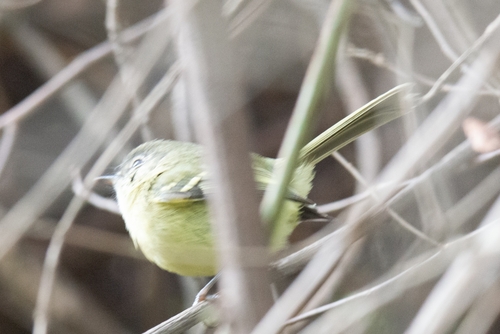 Mottle-cheeked Tyrannulet
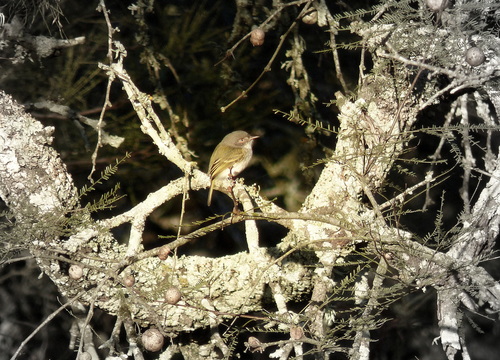 Pearly-vented Tody-Tyrant
In breve
Il segno di campo più affidabile tra Mottle-cheeked Tyrannulet e Pearly-vented Tody-Tyrant è il motivo facciale: Mottle-cheeked Tyrannulet mostra guance maculate distintive con un anello oculare biancastro spezzato e un forte 'baffo' scuro, mentre Pearly-vented Tody-Tyrant ha un volto grigio-marrone più semplice con un anello oculare biancastro e lore, ma manca della maculatura e del forte contrasto facciale. Entrambe le specie hanno due barre alari e dimensioni simili, ma il tyrannulet è leggermente più lungo e snello, con una parte superiore di tonalità oliva e parti inferiori giallastre, rispetto ai toni grigio-marroni del tody-tyrant e alle parti inferiori bianche. Nelle viste in perching o in volo, concentrati sul motivo facciale e sul tono delle parti inferiori per la separazione più affidabile.
Consigli di identificazione
- Il motivo facciale è fondamentale: Mottle-cheeked Tyrannulet mostra un breve supercilio biancastro, un anello oculare biancastro spezzato, una forte striscia oculare scura, una larga mezzaluna sotto l'occhio, un 'baffo' scuro e guance maculate distintive. Pearly-vented Tody-Tyrant ha un volto grigio-marrone semplice con un anello oculare biancastro e lore, ma manca della maculatura e dei forti contrasti facciali. Questo è il separatore più affidabile in tutte le età e stagioni.
- Colore delle parti superiori: Il tyrannulet è di un oliva scuro sopra con un brillante giallo oliva sulle membrane esterne delle penne alari e alla base della coda, dando un aspetto verdastro. Il tody-tyrant è grigio-marrone o marrone oliva sopra, con una corona grigia e senza toni verdastri o giallastri sulle ali o sulla coda.
- Parti inferiori: Mottle-cheeked Tyrannulet ha parti inferiori grigio-oliva a giallastre, a volte con deboli marcature olive, e una pancia/coverts della coda più chiara. Pearly-vented Tody-Tyrant è bianco sotto con striature grigio-chiare e può avere una leggera sfumatura gialla sui fianchi in alcune sottospecie, ma non è mai così giallo come il tyrannulet.
- Barre alari: Entrambe le specie mostrano due barre alari chiare, quindi questo non è un separatore sicuro. Tuttavia, le barre alari del tyrannulet possono apparire più gialle, mentre quelle del tody-tyrant sono di un buff-biancastro a giallo.
- Colore e forma del becco: Mottle-cheeked Tyrannulet ha un lungo becco nero, piatto e appuntito con una base rosa a giallastra della mandibola. Pearly-vented Tody-Tyrant ha una mascella marrone rossiccia a nera e una mandibola marrone rossiccia a rosa; il becco è generalmente più corto e tozzo.
- Colore dell'iride: Il tyrannulet ha un'iride marrone scuro; il tody-tyrant ha un'iride chiara. Questo può essere utile a distanza ravvicinata.
- Colore delle gambe: Il tyrannulet ha gambe e piedi grigio ardesia a bluastro; quelli del tody-tyrant sono rosa a grigio chiaro. Questo è sottile ma può aiutare in buona luce.
- Struttura e jizz: Il tyrannulet è leggermente più lungo e snello, spesso posandosi orizzontalmente e a volte alzando leggermente la coda. Il tody-tyrant è più compatto e può apparire con una coda più corta.
- Contesto dell'habitat: In foreste umide, di medio strato/canopy, aspettati il tyrannulet; in cespugli secchi, ai margini del bosco o in pascoli cespugliosi, aspettati il tody-tyrant.
- Comportamento: Il tyrannulet spesso cerca cibo più in alto e si unisce a stormi di specie miste; il tody-tyrant è più spesso basso in vegetazione densa.
- Motivo della coda: Entrambi hanno code scure, ma il tyrannulet mostra membrane esterne giallo-olive alla base, a volte visibili in buona luce o in volo.
- Variazione delle sottospecie: Alcune sottospecie di tody-tyrant mostrano più giallo o striature, ma nessuna si avvicina al contrasto facciale del tyrannulet.
- Sesso e età: Entrambe le specie hanno un piumaggio simile tra i sessi e le età; non sono descritti modelli di ali distintivi per i giovani/immauri.
- Viste in volo: In volo, concentrati sul motivo facciale e su eventuali toni gialli nelle ali/coda per il tyrannulet; il tody-tyrant rimane con un volto semplice e grigio-marrone.
- Trappole: Non fare affidamento solo sulle barre alari o sulla dimensione generale; controlla sempre il colore del volto e delle parti inferiori per un'identificazione sicura.
Taglia
Entrambe le specie sono molto piccoli moschettieri, ma Mottle-cheeked Tyrannulet è leggermente più grande, con una lunghezza di circa 12 cm e una massa di 8 g [wikidata], mentre Pearly-vented Tody-Tyrant è di circa 10–11 cm e 7–10 g [wikipedia]. La differenza è sottile e non sempre ovvia sul campo, ma il tyrannulet può apparire un po' più lungo e più snello, mentre il tody-tyrant è più compatto. La dimensione da sola non è un separatore sicuro a meno che non siano visti fianco a fianco.
Piumaggio
-
Modello di ali giovanile/immauri: Non sono descritti modelli specifici per l'età per nessuna delle due specie; entrambe hanno due barre alari chiare formate dalle punte delle copritrici alari, visibili in tutti i piumaggi.
-
Piumaggio adulto: Mottle-cheeked Tyrannulet è oliva sopra con membrane esterne giallo-olive brillanti alla base delle penne alari e della coda, e ha un motivo facciale distintivo: breve supercilio biancastro, anello oculare biancastro spezzato, striscia oculare scura, ampia mezzaluna sotto l'occhio, 'baffo' scuro e guance maculate. Le parti inferiori sono grigio-olive a giallastre, a volte con deboli marcature olive, e la pancia/coverts della coda possono essere di un giallo più chiaro. Pearly-vented Tody-Tyrant è grigio-marrone a marrone oliva sopra, con una corona grigia, lore e anello oculare biancastri, e un volto generalmente più semplice. Le sue ali sono scure con bordi buff-biancastri a gialli e due barre alari. Le parti inferiori sono bianche con deboli striature grigio-chiare, e la coda è scura. Esiste una variazione delle sottospecie in entrambe, ma le principali differenze si mantengono attraverso i loro areali: il tyrannulet è più oliva/giallo e fortemente marcato sul volto, il tody-tyrant è più grigio/marrone e con un volto più semplice.
Comportamento
Mottle-cheeked Tyrannulet è tipicamente visto cercare attivamente cibo nel medio strato fino alla chioma, a volte più in basso, spesso singolarmente o in coppie, e a volte si unisce a stormi di specie miste. Si posa orizzontalmente e può alzare leggermente la coda. La sua ricerca di cibo coinvolge brevi voli e raccolta in volo, con le ali che producono un suono frusciante. Pearly-vented Tody-Tyrant si trova più spesso in habitat cespugliosi e secchi, cercando cibo nel sottobosco o ai margini delle foreste, ed è generalmente più associato a vegetazione bassa e densa. Entrambe le specie sono attive e possono essere viste fare brevi voli, ma il tyrannulet è più probabile che si trovi più in alto nei livelli forestali.
Habitat
Mottle-cheeked Tyrannulet si trova in foreste umide e semi-umide, spesso nel medio strato o nella chioma, in tutta la parte meridionale e orientale del Sud America (Argentina, Bolivia, Brasile, Paraguay, Perù, Uruguay). Pearly-vented Tody-Tyrant è molto più uno specialista delle terre secche, trovato in cespugli aridi, pascoli cespugliosi, margini boschivi e cespugli di seconda crescita in gran parte del Sud America, tranne che in Cile, Ecuador, Guiana Francese e Suriname. Se trovi l'uccello nella densa chioma di una foresta umida, è più probabile che sia Mottle-cheeked Tyrannulet; in habitat secchi, cespugliosi o ai margini, è favorito Pearly-vented Tody-Tyrant.
Mottle-cheeked Tyrannulet · Pearly-vented Tody-Tyrant · I miei uccelli difficili