

Orejerito Oliváceo vs Titirijí Perlado
Phylloscartes ventralis frente a Hemitriccus margaritaceiventer
Juega un quiz con Orejerito Oliváceo y Titirijí Perlado
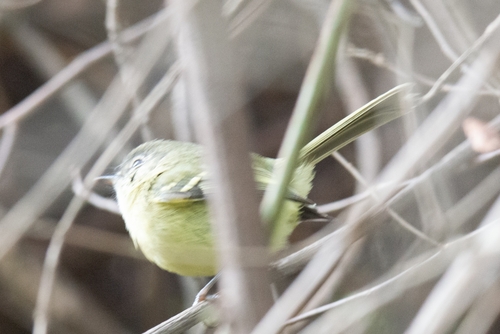 Orejerito Oliváceo
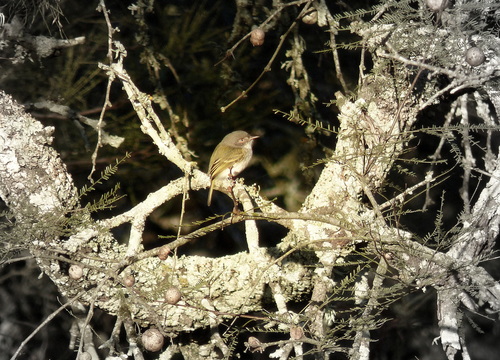 Titirijí Perlado
En breve
La marca de campo más confiable entre el Orejerito Oliváceo y el Titirijí Perlado es el patrón facial: el Orejerito Oliváceo muestra mejillas moteadas distintivas con un anillo ocular blanquecino roto y un fuerte 'bigote' oscuro, mientras que el Titirijí Perlado tiene una cara grisácea-marrón más simple con un anillo ocular blanquecino y lore, pero carece de moteado y fuerte contraste facial. Ambas especies tienen dos barras alares y tamaño similar, pero el orejerito es ligeramente más largo y esbelto, con una parte superior de tono oliváceo y partes inferiores amarillentas, en comparación con los tonos grisáceos-marrones y partes inferiores blancas del titirijí. En vistas posadas o en vuelo, concéntrate en el patrón facial y el tono de las partes inferiores para la separación más confiable.
Consejos de identificación
- El patrón facial es clave: El Orejerito Oliváceo muestra un supercilio blanquecino corto, un anillo ocular blanquecino roto, una fuerte franja ocular oscura, una amplia media luna debajo del ojo, un 'bigote' oscuro y mejillas moteadas distintivas. El Titirijí Perlado tiene una cara grisácea-marrón simple con un anillo ocular blanquecino y lore, pero carece de moteado y fuertes contrastes faciales. Este es el separador más confiable en todas las edades y estaciones.
- Color de las partes superiores: El orejerito es de un oliva oscuro arriba con un brillante amarillo-oliva en las plumas de vuelo y la base de la cola, dando un tono verdoso. El titirijí es grisáceo-marrón a oliva marrón arriba, con una corona gris y sin tonos verdosos o amarillentos en las alas o la cola.
- Partes inferiores: El Orejerito Oliváceo tiene partes inferiores grisáceas-olivas a amarillentas, a veces con marcas olivas tenues, y un vientre/coberturas de la cola más pálido. El Titirijí Perlado es blanco por debajo con un tenue veteado grisáceo y puede tener un ligero tinte amarillo en los flancos en algunas subespecies, pero nunca es tan amarillo como el orejerito.
- Barras alares: Ambas especies muestran dos barras alares pálidas, por lo que esto no es un separador seguro. Sin embargo, las barras alares del orejerito pueden parecer más amarillas, mientras que las del titirijí son de color buff-blanquecino a amarillo.
- Color y forma del pico: El Orejerito Oliváceo tiene un pico negro largo, plano y puntiagudo con una base de mandíbula de color rosado a amarillento. El Titirijí Perlado tiene una maxila de color marrón rojizo a negro y una mandíbula de color marrón rosado a rosado; el pico es generalmente más corto y robusto.
- Color del iris: El orejerito tiene un iris marrón oscuro; el titirijí tiene un iris pálido. Esto puede ser útil a corta distancia.
- Color de las patas: El orejerito tiene patas y pies de color pizarra a gris azulado; las del titirijí son rosadas a gris pálido. Esto es sutil pero puede ayudar en buena luz.
- Estructura y apariencia: El orejerito es ligeramente más largo y esbelto, a menudo posándose horizontalmente y a veces levantando su cola. El titirijí es más compacto y puede parecer de cola más corta.
- Contexto de hábitat: En bosques húmedos de dosel/mid-story, espera encontrar el orejerito; en matorrales secos, bordes de bosques o pastizales arbustivos, espera encontrar el titirijí.
- Comportamiento: El orejerito a menudo forrajea más alto y se une a bandadas de especies mixtas; el titirijí se encuentra más a menudo bajo en vegetación densa.
- Patrón de la cola: Ambos tienen colas oscuras, pero el orejerito muestra las plumas exteriores amarillas-olivas en la base, a veces visibles en buena luz o en vuelo.
- Variación de subespecies: Algunas subespecies del titirijí muestran más amarillo o veteado, pero ninguna se acerca al contraste facial del orejerito.
- Sexo y edad: Ambas especies tienen plumaje similar entre sexos y edades; no se describen patrones de alas juveniles/inmaduras distintos.
- Vistas en vuelo: En vuelo, concéntrate en el patrón facial y cualquier tono amarillo en las alas/cola para el orejerito; el titirijí permanece con cara simple y grisácea-marrón.
- Trampas: No confíes solo en las barras alares o el tamaño general; siempre verifica el color de la cara y las partes inferiores para una identificación confiable.
Tamaño
Ambas especies son muy pequeños atrapamoscas, pero el Orejerito Oliváceo promedia ligeramente más grande, con aproximadamente 12 cm de longitud y 8 g de masa [wikidata], mientras que el Titirijí Perlado mide alrededor de 10–11 cm y 7–10 g [wikipedia]. La diferencia es sutil y no siempre obvia en el campo, pero el orejerito puede parecer un poco más largo y más delgado, mientras que el titirijí es más compacto. El tamaño solo no es un separador seguro a menos que se vean uno al lado del otro.
Plumaje
-
Patrón de alas juveniles/inmaduros: No se describen patrones de alas específicos por edad para ninguna de las especies; ambas tienen dos barras alares pálidas formadas por las puntas de las coberturas alares, visibles en todos los plumajes.
-
Plumaje adulto: El Orejerito Oliváceo es de color oliva arriba con plumas exteriores amarillas-brillantes en la base de las plumas de vuelo y la cola, y tiene un patrón facial distintivo: supercilio blanquecino corto, anillo ocular blanquecino roto, franja ocular oscura, amplia media luna debajo del ojo, 'bigote' oscuro y mejillas moteadas. Las partes inferiores son grisáceas-olivas a amarillentas, a veces con marcas olivas tenues, y el vientre/coberturas de la cola pueden ser de un amarillo más pálido. El Titirijí Perlado es grisáceo-marrón a oliva marrón arriba, con una corona gris, lore y anillo ocular blanquecinos, y una cara generalmente más simple. Sus alas son oscuras con bordes de color buff-blanquecino a amarillo y dos barras alares. Las partes inferiores son blancas con un tenue veteado grisáceo, y la cola es oscura. Existe variación de subespecies en ambas, pero las principales diferencias se mantienen a través de sus rangos: el orejerito es más oliva/amarillo y fuertemente marcado en la cara, el titirijí es más gris/marrón y de cara más simple.
Comportamiento
El Orejerito Oliváceo se ve típicamente forrajeando activamente en el dosel o medio dosel, a veces más bajo, a menudo solo o en parejas, y a veces se une a bandadas de especies mixtas. Se posa horizontalmente y puede levantar su cola ligeramente. Su forrajeo implica saltos cortos y recolección en vuelo, con alas que producen un sonido de zumbido. El Titirijí Perlado se encuentra más a menudo en hábitats secos y arbustivos, forrajeando en la maleza o en los bordes del bosque, y generalmente está más asociado con vegetación baja y densa. Ambas especies son activas y pueden ser vistas realizando vuelos cortos, pero el orejerito es más propenso a estar más alto en las capas del bosque.
Hábitat
El Orejerito Oliváceo se encuentra en bosques húmedos y semi-húmedos, a menudo en el medio dosel o dosel, a través del sur y este de América del Sur (Argentina, Bolivia, Brasil, Paraguay, Perú, Uruguay). El Titirijí Perlado es mucho más un especialista de países secos, encontrado en matorrales áridos, pastizales arbustivos, bordes de bosques y matorrales de segundo crecimiento en la mayor parte de América del Sur, excepto Chile, Ecuador, Guayana Francesa y Surinam. Si encuentras el ave en un denso dosel de bosque húmedo, es más probable que sea el Orejerito Oliváceo; en hábitats secos, arbustivos o de borde, se prefiere el Titirijí Perlado.