

malaysian eared-nightjar vs great eared-nightjar
Lyncornis temminckii versus Lyncornis macrotis
Jogue um quiz com malaysian eared-nightjar e great eared-nightjar
 malaysian eared-nightjar
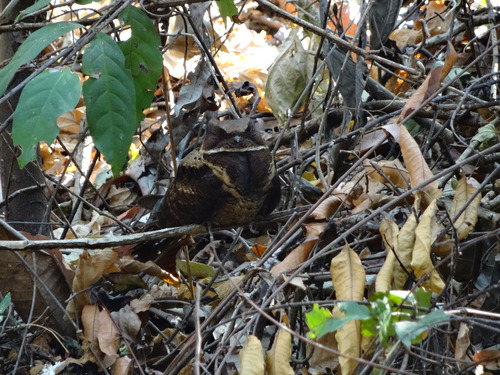 great eared-nightjar
Em resumo
A marca de campo mais confiável para separar o malaysian eared-nightjar do great eared-nightjar é o tamanho: o great eared-nightjar é muito maior e mais pesado, com um corpo e cauda mais longos. Ambas as espécies têm tufos de orelha longos, plumagem marrom críptica e marcas brancas na garganta, mas o great eared-nightjar não possui branco nas asas ou na cauda, enquanto o malaysian eared-nightjar apresenta manchas brancas nas asas e mais buff na parte inferior. Os juvenis do malaysian eared-nightjar são mais canela e marrom-alaranjado por cima, com menos manchas e buff por baixo, o que ajuda a distingui-los do geralmente mais cinza e mais fortemente riscado great eared-nightjar. A estrutura e o volume geral em campo são frequentemente as pistas mais rápidas, especialmente quando os pássaros empoleirados estão parcialmente escondidos.
Dicas de identificação
- O tamanho é a pista mais imediata: O great eared-nightjar é muito maior e mais pesado que o malaysian eared-nightjar. Se você ver um nightjar que parece especialmente longo e volumoso, favoreça o great eared-nightjar.
- Tufos de orelha: Ambas as espécies têm tufos de orelha proeminentes, mas estes nem sempre são visíveis. Quando visíveis, ambos podem mostrar tufos longos, mas os do great eared-nightjar são frequentemente mais recumbentes, enquanto os do malaysian eared-nightjar podem ficar mais eretos quando alertas.
- Branco nas asas: O malaysian eared-nightjar apresenta manchas brancas nas asas, visíveis em boa luz ou em voo. O great eared-nightjar não possui branco nas asas ou na cauda—este é um ponto chave de separação para todas as idades.
- Marcas na garganta: Ambos têm branco na garganta, mas o malaysian eared-nightjar pode mostrar uma mancha ou ponto, enquanto o great eared-nightjar tem uma faixa de garganta branca mais completa.
- Cor da parte inferior: O malaysian eared-nightjar é mais buff por baixo, com mais pontos brancos e uma aparência 'buffish', especialmente na barriga e na parte inferior da cauda. O great eared-nightjar é mais uniformemente cinza-marrom e fortemente riscado por baixo.
- Cor da parte superior: Os adultos do malaysian eared-nightjar têm uma mistura de marrom-cinza e marrom-canela na coroa e na nuca, com um manto e rabo marrons escuros. O great eared-nightjar é mais uniformemente cinza-marrom e estriado.
- Plumagem juvenil/imatura: Os jovens malaysian eared-nightjars são mais canela e marrom-alaranjado por cima, com menos manchas e buff por baixo. Isso contrasta com a aparência geralmente mais cinza e mais riscada do great eared-nightjar de qualquer idade.
- Padrão da cauda: O great eared-nightjar tem uma cauda longa e riscada, sem branco. A cauda do malaysian eared-nightjar também é longa, mas pode mostrar mais buff e manchas brancas perto da parte inferior da cauda.
- Voo: Em voo, o great eared-nightjar parece mais poderoso e robusto, com asas longas e pontiagudas e uma cauda longa. O malaysian eared-nightjar é mais ágil e rápido.
- Bico e abertura: Ambos têm bicos largos e curtos típicos dos nightjars, mas a abertura do bico do great eared-nightjar é especialmente larga (abre até ~120°), embora isso raramente seja diagnóstico em campo.
- Penas da coroa: O malaysian eared-nightjar às vezes mostra penas da coroa eretas atrás dos olhos, que podem ser confundidas com tufos de orelha; verifique os verdadeiros tufos de orelha na parte de trás da coroa.
- Camuflagem: Ambas as espécies são extremamente bem camufladas quando empoleiradas. Procure diferenças sutis em cor e padrão se você tiver uma boa visão.
- Contexto: Se visto no sudoeste da Índia, apenas o great eared-nightjar é possível. No Sudeste Asiático, ambos ocorrem, então o tamanho e a plumagem são críticos.
- Sexo e estação: Nenhuma diferença sexual ou sazonal forte é descrita para qualquer uma das espécies, então use marcas estruturais e de plumagem durante todo o ano.
- Quando em dúvida: Se o pássaro for muito grande, não tiver branco nas asas ou na cauda, e for fortemente riscado e cinza-marrom, é quase certamente um great eared-nightjar. Se for menor, mais buff por baixo, e mostrar manchas brancas nas asas, favoreça o malaysian eared-nightjar.
Tamanho
O great eared-nightjar é o maior nightjar de sua família, medindo 31–41 cm de comprimento e pesando 131–151 g (machos/fêmeas). O malaysian eared-nightjar é menor, com 25–28 cm de comprimento (peso não especificado, mas claramente mais leve). Em campo, o great eared-nightjar parece visivelmente mais volumoso, com corpo e cauda mais longos, com asas proporcionalmente mais longas. O malaysian eared-nightjar é de tamanho médio para seu gênero, maior que a maioria dos nightjars, mas claramente menor e menos massivo que o great eared-nightjar.
Plumagem
- Juvenis/imaturos: Os imaturos do malaysian eared-nightjar são mais canela e marrom-alaranjado por cima, com menos manchas pesadas e menos buff na parte inferior em comparação com os adultos. Os juvenis do great eared-nightjar não são especificamente descritos, mas adultos e imaturos compartilham a mesma plumagem geral cinza-marrom, manchada e fortemente riscada.
- Adultos: Os adultos do malaysian eared-nightjar têm plumagem críptica marrom, preta e cinza com manchas brancas nas asas e uma mancha ou ponto branco na garganta. As partes inferiores são buff com pontos brancos, especialmente na barriga, flancos e parte inferior da cauda. Os adultos do great eared-nightjar são mais uniformemente cinza-marrom e fortemente riscado, com uma faixa de garganta branca, mas sem branco nas asas ou na cauda. Ambos têm tufos de orelha longos, mas estes são frequentemente mais recumbentes no great eared-nightjar. A coroa e a nuca do malaysian eared-nightjar são mais marrom-canela, e o manto e o rabo são marrons escuros, ajudando na camuflagem.
Comportamento
Ambas as espécies são noturnas e se empoleiram crípticamente no chão ou em ramos baixos durante o dia, dependendo da camuflagem. Em voo, ambas mostram asas e caudas longas, mas o great eared-nightjar parece mais poderoso e robusto, enquanto o malaysian eared-nightjar é descrito como ágil e rápido. Os tufos de orelha podem ser levantados quando alertas, mas frequentemente ficam planos quando o pássaro está em repouso. Ambas as espécies são difíceis de avistar quando empoleiradas devido à sua plumagem.
Habitat
Ambas as espécies ocorrem no Sudeste Asiático, com o great eared-nightjar também encontrado no sudoeste da Índia. Há uma sobreposição significativa em suas distribuições no Sudeste Asiático. As preferências de habitat não são detalhadas nas notas, mas ambas são típicas de áreas florestadas ou arborizadas onde podem se empoleirar e caçar à noite.
malaysian eared-nightjar · great eared-nightjar · Minhas aves difíceis