

Motmot

ミミヨタカ 対 オオミミヨタカ

Lyncornis temminckii 対 Lyncornis macrotis

ミミヨタカとオオミミヨタカのクイズ

ミミヨタカ (Lyncornis temminckii) ミミヨタカ
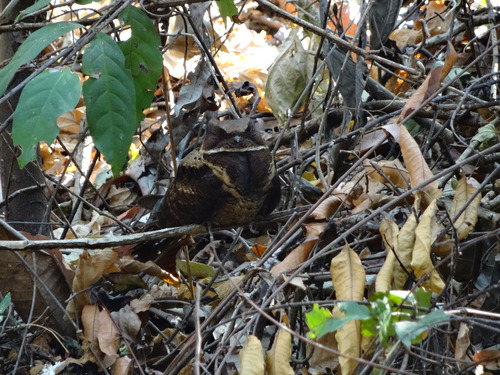
オオミミヨタカ (Lyncornis macrotis) オオミミヨタカ

メディア

読み込み中…

要点

マレーシアミミヨタカとオオミミヨタカを区別する最も信頼できるフィールドマークはサイズです:オオミミヨタカははるかに大きく重く、体と尾が長いです。両種は長い耳の房、隠蔽色の茶色の羽毛、白い喉の模様を持っていますが、オオミミヨタカは翼や尾に白がなく、マレーシアミミヨタカは翼に白い斑点を示し、下側によりバフ色が多いです。マレーシアミミヨタカの幼鳥は、上面がシナモン色とオレンジ茶色が多く、下側は斑点が少なくバフ色が減少しており、一般的に灰色がかっていてより重く縞模様のあるオオミミヨタカと区別するのに役立ちます。フィールドでの構造と全体的な体格は、特に止まっている鳥が部分的に隠れているときに最も迅速な手がかりとなります。

識別のコツ

  1. サイズが最も即座の手がかりです: オオミミヨタカはマレーシアミミヨタカよりもはるかに大きく重いです。特に長い体と重い印象の夜行性の鳥を見た場合は、オオミミヨタカを優先してください。
  2. 耳の房: 両種は目立つ耳の房を持っていますが、これらは常に見えるわけではありません。見える場合、両方とも長い房を示すことがありますが、オオミミヨタカの房はしばしばより横たわっているのに対し、マレーシアミミヨタカの房は警戒しているときにより直立することがあります。
  3. 翼の白: マレーシアミミヨタカは翼に白い斑点を示し、良い光や飛行中に見えます。オオミミヨタカは翼や尾に白がなく、これはすべての年齢における重要な区別点です。
  4. 喉の模様: 両方とも喉に白がありますが、マレーシアミミヨタカはパッチやスポットを示すことがあるのに対し、オオミミヨタカはより完全な白い喉の帯を持っています。
  5. 下側の色: マレーシアミミヨタカは下側がよりバフ色で、より白い斑点があり、特に腹部と尾の下に「バフ色」の外観を示します。オオミミヨタカは下側がより均一に灰色がかっていて、重く縞模様があります。
  6. 上側の色: マレーシアミミヨタカの成鳥は、頭頂と後頭部に灰色がかった茶色とシナモン色の混合があり、暗い茶色の背中と尾があります。オオミミヨタカはより均一に灰色がかっていて、縞模様があります。
  7. 幼鳥/未成熟の羽毛: 若いマレーシアミミヨタカは上面がよりシナモン色とオレンジ茶色が多く、下側は斑点が少なくバフ色が減少しています。これは、どの年齢のオオミミヨタカの一般的に灰色がかっていて、より縞模様のある外観と対照的です。
  8. 尾の模様: オオミミヨタカは白がない長い縞模様の尾を持っています。マレーシアミミヨタカの尾も長いですが、尾の下に近くでよりバフ色と白い斑点が見えることがあります。
  9. 飛行の印象: 飛行中、オオミミヨタカはより力強く重厚に見え、長く尖った翼と長い尾を持っています。マレーシアミミヨタカはより活発で敏捷です。
  10. くちばしと口の開き: 両方とも夜行性の鳥に典型的な広く短いくちばしを持っていますが、オオミミヨタカの口の開きは特に広い(約120°に開く)ですが、これはフィールドでは診断的であることは稀です。
  11. 頭頂の羽毛: マレーシアミミヨタカは時々目の後ろに直立した頭頂の羽毛を示し、これが耳の房と間違われることがあります;真の耳の房は後頭部で確認してください。
  12. カモフラージュ: 両種は止まっているときに非常に良くカモフラージュされています。良い視界があれば、色や模様の微妙な違いを探してください。
  13. 文脈: インド南西部で見られた場合、オオミミヨタカのみが可能です。東南アジアでは両方が生息しているため、サイズと羽毛が重要です。
  14. 性別と季節: 両種に強い性的または季節的な違いは記載されていないため、年間を通じて構造的および羽毛のマークを使用してください。
  15. 疑わしい場合: 鳥が非常に大きく、翼や尾に白がなく、重く縞模様があり灰色がかっている場合、ほぼ確実にオオミミヨタカです。もしそれが小さく、下側がバフ色で、翼に白い斑点を示す場合は、マレーシアミミヨタカを優先してください。

大きさ

オオミミヨタカはその科で最大の夜行性の鳥で、体長31〜41 cm、体重131〜151 g(オス/メス)です。マレーシアミミヨタカは体長25〜28 cmで、(体重は指定されていませんが、明らかに軽いです)。フィールドでは、オオミミヨタカは明らかに体格が大きく、体が長く、尾も長く、翼も相対的に長いように見えます。マレーシアミミヨタカはその属において中型で、ほとんどの夜行性の鳥よりも大きいですが、オオミミヨタカよりも明らかに小さく、質量が少ないです。

羽色

行動

両種は夜行性で、昼間は地面や低い枝に隠蔽的に止まっており、カモフラージュに依存しています。飛行中、両方とも長い翼と尾を示しますが、オオミミヨタカはより力強く重厚に見え、マレーシアミミヨタカは活発で敏捷であると記載されています。耳の房は警戒しているときに立ち上がることがありますが、鳥が休んでいるときはしばしば平らになります。両種は羽毛のために止まっているときに見つけるのが難しいです。

生息環境

両種は東南アジアに生息しており、オオミミヨタカはインド南西部でも見られます。東南アジアでは生息域にかなりの重複があります。生息地の好みはメモに詳細がありませんが、両方とも夜間に止まって狩りをすることができる森林や木立のある地域に典型的です。

より良い説明を送る

比較と同じ項目を使ってください。文章はすぐに公開されます。

The most reliable field mark to separate Malaysian Eared-Nightjar from Great Eared-Nightjar is size: Great Eared-Nightjar is much larger and heavier, with a longer body and tail. Both species have long ear-tufts, cryptic brown plumage, and white throat markings, but the Great Eared-Nightjar lacks any white on the wings or tail, while Malaysian Eared-Nightjar shows white speckling on the wings and more buff on the underparts. Juveniles of Malaysian Eared-Nightjar are more cinnamon and orange-brown above, with less speckling and buff below, which helps distinguish them from the generally greyer and more heavily barred Great Eared-Nightjar. Structure and overall bulk in the field are often the quickest clues, especially when perched birds are partially hidden.

  1. Size is the most immediate clue: Great Eared-Nightjar is much larger and heavier than Malaysian Eared-Nightjar. If you see a nightjar that appears especially long-bodied and bulky, favor Great Eared-Nightjar.
  2. Ear-tufts: Both species have prominent ear-tufts, but these are not always visible. When visible, both can show long tufts, but Great Eared-Nightjar's are often more recumbent, while Malaysian Eared-Nightjar's may stand more upright when alert.
  3. White on wings: Malaysian Eared-Nightjar shows white speckling on the wings, visible in good light or in flight. Great Eared-Nightjar lacks any white on the wings or tail—this is a key separation point for all ages.
  4. Throat markings: Both have white on the throat, but Malaysian Eared-Nightjar may show a patch or spot, while Great Eared-Nightjar has a more complete white throat band.
  5. Underpart color: Malaysian Eared-Nightjar is buffier below, with more white dotting and a 'buffish' appearance, especially on the belly and undertail. Great Eared-Nightjar is more uniformly grey-brown and heavily barred below.
  6. Upperpart color: Malaysian Eared-Nightjar adults have a mix of greyish-brown and cinnamon-brown on the crown and nape, with a dark brown mantle and rump. Great Eared-Nightjar is more uniformly grey-brown and streaked.
  7. Juvenile/immature plumage: Young Malaysian Eared-Nightjars are more cinnamon and orange-brown above, with less speckling and buff below. This contrasts with the generally greyer, more barred look of Great Eared-Nightjar of any age.
  8. Tail pattern: Great Eared-Nightjar has a long, barred tail with no white. Malaysian Eared-Nightjar's tail is also long but may show more buff and white dotting near the undertail.
  9. Flight jizz: In flight, Great Eared-Nightjar appears more powerful and heavyset, with long, pointed wings and a long tail. Malaysian Eared-Nightjar is sprier and more agile.
  10. Bill and gape: Both have wide, short bills typical of nightjars, but Great Eared-Nightjar's gape is especially wide (opens to ~120°), though this is rarely diagnostic in the field.
  11. Crown feathers: Malaysian Eared-Nightjar sometimes shows upright crown feathers behind the eyes, which can be mistaken for ear-tufts; check for the true ear-tufts at the rear crown.
  12. Camouflage: Both species are extremely well-camouflaged when roosting. Look for subtle differences in color and pattern if you have a good view.
  13. Context: If seen in southwest India, only Great Eared-Nightjar is possible. In Southeast Asia, both occur, so size and plumage are critical.
  14. Sex and season: No strong sexual or seasonal differences are described for either species, so use structural and plumage marks year-round.
  15. When in doubt: If the bird is very large, lacks any white on the wings or tail, and is heavily barred and grey-brown, it is almost certainly Great Eared-Nightjar. If it is smaller, buffier below, and shows white speckling on the wings, favor Malaysian Eared-Nightjar.

Great Eared-Nightjar is the largest nightjar in its family, measuring 31–41 cm in length and weighing 131–151 g (males/females). Malaysian Eared-Nightjar is smaller at 25–28 cm in length (weight not specified, but distinctly lighter). In the field, Great Eared-Nightjar appears noticeably bulkier, longer-bodied, and longer-tailed, with proportionally longer wings. Malaysian Eared-Nightjar is medium-sized for its genus, larger than most nightjars but clearly smaller and less massive than Great Eared-Nightjar.

  • Juveniles/immatures: Malaysian Eared-Nightjar immatures are more cinnamon and orange-brown above, with less heavy speckling and reduced buff on the underparts compared to adults. Great Eared-Nightjar juveniles are not specifically described, but adults and immatures share the same general grey-brown, mottled, and heavily barred plumage.
  • Adults: Malaysian Eared-Nightjar adults have cryptic brown, black, and grey plumage with white speckles on the wings and a white throat patch or spot. The underparts are buffy with white dotting, especially on the belly, flanks, and undertail. Great Eared-Nightjar adults are more uniformly grey-brown and heavily barred, with a white throat band but no white on the wings or tail. Both have long ear-tufts, but these are often more recumbent in Great Eared-Nightjar. The crown and nape of Malaysian Eared-Nightjar are more cinnamon-brown, and the mantle and rump are dark brown, aiding camouflage.

Both species are nocturnal and cryptically roost on the ground or low branches during the day, relying on camouflage. In flight, both show long wings and tails, but Great Eared-Nightjar appears more powerful and heavyset, while Malaysian Eared-Nightjar is described as spry and agile. Ear-tufts may be raised when alert, but often lie flat when the bird is at rest. Both species are difficult to spot when roosting due to their plumage.

Both species occur in Southeast Asia, with Great Eared-Nightjar also found in southwest India. There is significant overlap in their ranges in Southeast Asia. Habitat preferences are not detailed in the notes, but both are typical of forested or wooded areas where they can roost and hunt at night.

変更を破棄しますか?

保存していない編集があります。今離れると失われます。

ミミヨタカ · オオミミヨタカ · 苦手な鳥