

Malaysian Eared-Nightjar vs Great Eared-Nightjar
Lyncornis temminckii contro Lyncornis macrotis
Fai un quiz con Malaysian Eared-Nightjar e Great Eared-Nightjar
 Malaysian Eared-Nightjar
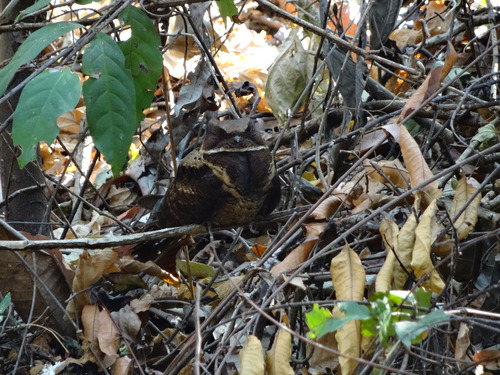 Great Eared-Nightjar
In breve
Il segno di campo più affidabile per separare il Malaysian Eared-Nightjar dal Great Eared-Nightjar è la dimensione: il Great Eared-Nightjar è molto più grande e pesante, con un corpo e una coda più lunghi. Entrambe le specie hanno lunghe ciocche auricolari, piumaggio marrone criptico e segni bianchi sulla gola, ma il Great Eared-Nightjar non ha alcun bianco sulle ali o sulla coda, mentre il Malaysian Eared-Nightjar mostra macchie bianche sulle ali e più buffo sulle parti inferiori. I giovani del Malaysian Eared-Nightjar sono più cannella e marrone-arancio sopra, con meno macchie e buffo sotto, il che aiuta a distinguerli dal generalmente più grigio e più pesantemente barrato Great Eared-Nightjar. La struttura e il volume complessivo sul campo sono spesso gli indizi più rapidi, specialmente quando gli uccelli in posato sono parzialmente nascosti.
Consigli di identificazione
- La dimensione è l'indizio più immediato: Il Great Eared-Nightjar è molto più grande e pesante del Malaysian Eared-Nightjar. Se vedi un nightjar che appare particolarmente lungo e massiccio, favorisci il Great Eared-Nightjar.
- Ciocche auricolari: Entrambe le specie hanno ciocche auricolari prominenti, ma queste non sono sempre visibili. Quando visibili, entrambe possono mostrare lunghe ciocche, ma quelle del Great Eared-Nightjar sono spesso più ricadenti, mentre quelle del Malaysian Eared-Nightjar possono stare più erette quando sono all'erta.
- Bianco sulle ali: Il Malaysian Eared-Nightjar mostra macchie bianche sulle ali, visibili in buona luce o in volo. Il Great Eared-Nightjar non ha alcun bianco sulle ali o sulla coda—questo è un punto di separazione chiave per tutte le età.
- Segni sulla gola: Entrambi hanno bianco sulla gola, ma il Malaysian Eared-Nightjar può mostrare una macchia o un punto, mentre il Great Eared-Nightjar ha una banda bianca sulla gola più completa.
- Colore delle parti inferiori: Il Malaysian Eared-Nightjar è più buffo sotto, con più macchie bianche e un aspetto 'buffo', specialmente sulla pancia e sull'undertail. Il Great Eared-Nightjar è più uniformemente grigio-marrone e pesantemente barrato sotto.
- Colore delle parti superiori: Gli adulti del Malaysian Eared-Nightjar hanno una miscela di marrone grigiastro e marrone cannella sulla corona e sul nape, con un mantello e un rump marrone scuro. Il Great Eared-Nightjar è più uniformemente grigio-marrone e striato.
- Piumaggio giovanile/immaturo: I giovani Malaysian Eared-Nightjar sono più cannella e marrone-arancio sopra, con meno macchie e buffo sotto. Questo contrasta con l'aspetto generalmente più grigio e più barrato del Great Eared-Nightjar di qualsiasi età.
- Schema della coda: Il Great Eared-Nightjar ha una lunga coda barrata senza bianco. Anche la coda del Malaysian Eared-Nightjar è lunga ma può mostrare più buffo e macchie bianche vicino all'undertail.
- Volo: In volo, il Great Eared-Nightjar appare più potente e massiccio, con ali lunghe e appuntite e una lunga coda. Il Malaysian Eared-Nightjar è più vivace e agile.
- Becco e apertura: Entrambi hanno becchi larghi e corti tipici dei nightjar, ma l'apertura del Great Eared-Nightjar è particolarmente ampia (si apre a ~120°), anche se questo è raramente diagnostico sul campo.
- Piume della corona: Il Malaysian Eared-Nightjar a volte mostra piume della corona erette dietro gli occhi, che possono essere scambiate per ciocche auricolari; controlla le vere ciocche auricolari nella parte posteriore della corona.
- Camuffamento: Entrambe le specie sono estremamente ben camuffate quando si posano. Cerca differenze sottili nel colore e nel motivo se hai una buona vista.
- Contesto: Se visto nel sud-ovest dell'India, solo il Great Eared-Nightjar è possibile. Nel sud-est asiatico, entrambe le specie si trovano, quindi dimensione e piumaggio sono critici.
- Sesso e stagione: Non ci sono forti differenze sessuali o stagionali descritte per nessuna delle due specie, quindi utilizza segni strutturali e di piumaggio tutto l'anno.
- Quando hai dubbi: Se l'uccello è molto grande, non ha alcun bianco sulle ali o sulla coda, ed è pesantemente barrato e grigio-marrone, è quasi certamente un Great Eared-Nightjar. Se è più piccolo, più buffo sotto, e mostra macchie bianche sulle ali, favorisci il Malaysian Eared-Nightjar.
Taglia
Il Great Eared-Nightjar è il nightjar più grande della sua famiglia, misurando 31–41 cm di lunghezza e pesando 131–151 g (maschi/femmine). Il Malaysian Eared-Nightjar è più piccolo, con una lunghezza di 25–28 cm (peso non specificato, ma decisamente più leggero). Sul campo, il Great Eared-Nightjar appare notevolmente più massiccio, con un corpo e una coda più lunghi, con ali proporzionalmente più lunghe. Il Malaysian Eared-Nightjar è di dimensioni medie per il suo genere, più grande della maggior parte dei nightjar ma chiaramente più piccolo e meno massiccio del Great Eared-Nightjar.
Piumaggio
- Giovani/immaturi: I giovani Malaysian Eared-Nightjar sono più cannella e marrone-arancio sopra, con meno macchie pesanti e ridotto buffo sulle parti inferiori rispetto agli adulti. I giovani del Great Eared-Nightjar non sono descritti specificamente, ma gli adulti e gli immaturi condividono lo stesso piumaggio grigio-marrone, maculato e pesantemente barrato.
- Adulti: Gli adulti del Malaysian Eared-Nightjar hanno piumaggio marrone criptico, nero e grigio con macchie bianche sulle ali e una macchia o un punto bianco sulla gola. Le parti inferiori sono buffe con macchie bianche, specialmente sulla pancia, sui fianchi e sull'undertail. Gli adulti del Great Eared-Nightjar sono più uniformemente grigio-marrone e pesantemente barrati, con una banda bianca sulla gola ma senza bianco sulle ali o sulla coda. Entrambi hanno lunghe ciocche auricolari, ma queste sono spesso più ricadenti nel Great Eared-Nightjar. La corona e il nape del Malaysian Eared-Nightjar sono più marrone-cannella, e il mantello e il rump sono marrone scuro, aiutando il camuffamento.
Comportamento
Entrambe le specie sono notturne e si posano in modo criptico a terra o su rami bassi durante il giorno, facendo affidamento sul camuffamento. In volo, entrambe mostrano ali e code lunghe, ma il Great Eared-Nightjar appare più potente e massiccio, mentre il Malaysian Eared-Nightjar è descritto come vivace e agile. Le ciocche auricolari possono essere sollevate quando sono all'erta, ma spesso giacciono piatte quando l'uccello è a riposo. Entrambe le specie sono difficili da individuare quando si posano a causa del loro piumaggio.
Habitat
Entrambe le specie si trovano nel sud-est asiatico, con il Great Eared-Nightjar che si trova anche nel sud-ovest dell'India. C'è una significativa sovrapposizione nei loro areali nel sud-est asiatico. Le preferenze di habitat non sono dettagliate nelle note, ma entrambe sono tipiche di aree boschive o boscose dove possono posarsi e cacciare di notte.
Malaysian Eared-Nightjar · Great Eared-Nightjar · I miei uccelli difficili