

Chotacabras de Temminck vs Chotacabras Orejudo
Lyncornis temminckii frente a Lyncornis macrotis
Juega un quiz con Chotacabras de Temminck y Chotacabras Orejudo
 Chotacabras de Temminck
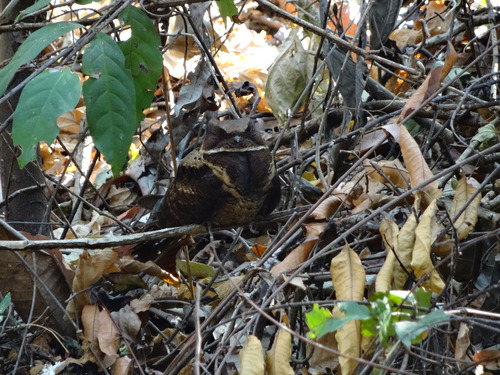 Chotacabras Orejudo
En breve
La marca de campo más confiable para separar el Chotacabras de Temminck del Chotacabras Orejudo es el tamaño: el Chotacabras Orejudo es mucho más grande y pesado, con un cuerpo y cola más largos. Ambas especies tienen largas plumas en las orejas, plumaje críptico de color marrón y marcas blancas en la garganta, pero el Chotacabras Orejudo carece de blanco en las alas o la cola, mientras que el Chotacabras de Temminck muestra manchas blancas en las alas y más color canela en las partes inferiores. Los juveniles del Chotacabras de Temminck son más canela y marrón-naranja por encima, con menos manchas y color canela por debajo, lo que ayuda a distinguirlos del Chotacabras Orejudo, que es generalmente más gris y tiene más barras. La estructura y el volumen general en el campo son a menudo las pistas más rápidas, especialmente cuando los pájaros posados están parcialmente ocultos.
Consejos de identificación
- El tamaño es la pista más inmediata: El Chotacabras Orejudo es mucho más grande y pesado que el Chotacabras de Temminck. Si ves un chotacabras que parece especialmente largo y voluminoso, favorece al Chotacabras Orejudo.
- Plumas en las orejas: Ambas especies tienen plumas prominentes en las orejas, pero estas no siempre son visibles. Cuando son visibles, ambas pueden mostrar largas plumas, pero las del Chotacabras Orejudo son a menudo más recumbentes, mientras que las del Chotacabras de Temminck pueden estar más erguidas cuando están alerta.
- Blanco en las alas: El Chotacabras de Temminck muestra manchas blancas en las alas, visibles en buena luz o en vuelo. El Chotacabras Orejudo carece de blanco en las alas o la cola; este es un punto clave de separación para todas las edades.
- Marcas en la garganta: Ambas tienen blanco en la garganta, pero el Chotacabras de Temminck puede mostrar una mancha o punto, mientras que el Chotacabras Orejudo tiene una banda blanca de garganta más completa.
- Color de las partes inferiores: El Chotacabras de Temminck es más canela por debajo, con más manchas blancas y una apariencia 'canela', especialmente en el vientre y la cola inferior. El Chotacabras Orejudo es más uniformemente marrón-gris y tiene muchas barras por debajo.
- Color de las partes superiores: Los adultos del Chotacabras de Temminck tienen una mezcla de marrón grisáceo y marrón canela en la corona y la nuca, con un manto y rabadilla de color marrón oscuro. El Chotacabras Orejudo es más uniformemente marrón-gris y con rayas.
- Plumaje juvenil/inmaduro: Los jóvenes Chotacabras de Temminck son más canela y marrón-naranja por encima, con menos manchas y color canela por debajo. Esto contrasta con el aspecto generalmente más gris y más barrado del Chotacabras Orejudo de cualquier edad.
- Patrón de la cola: El Chotacabras Orejudo tiene una cola larga y barrada sin blanco. La cola del Chotacabras de Temminck también es larga, pero puede mostrar más color canela y manchas blancas cerca de la cola inferior.
- Vuelo: En vuelo, el Chotacabras Orejudo parece más poderoso y robusto, con alas largas y puntiagudas y una cola larga. El Chotacabras de Temminck es más ágil y rápido.
- Pico y apertura: Ambas tienen picos anchos y cortos típicos de los chotacabras, pero la apertura del Chotacabras Orejudo es especialmente ancha (se abre a ~120°), aunque esto rara vez es diagnóstico en el campo.
- Plumas de la corona: El Chotacabras de Temminck a veces muestra plumas de la corona erguidas detrás de los ojos, que pueden confundirse con plumas en las orejas; verifica las verdaderas plumas en las orejas en la parte posterior de la corona.
- Camuflaje: Ambas especies están extremadamente bien camufladas cuando están en reposo. Busca diferencias sutiles en color y patrón si tienes una buena vista.
- Contexto: Si se ve en el suroeste de India, solo es posible el Chotacabras Orejudo. En el sudeste asiático, ambas ocurren, por lo que el tamaño y el plumaje son críticos.
- Sexo y temporada: No se describen diferencias sexuales o estacionales fuertes para ninguna de las especies, por lo que utiliza marcas estructurales y de plumaje durante todo el año.
- Cuando tengas dudas: Si el pájaro es muy grande, carece de blanco en las alas o la cola, y está muy barrado y marrón-gris, es casi seguro que es un Chotacabras Orejudo. Si es más pequeño, más canela por debajo, y muestra manchas blancas en las alas, favorece al Chotacabras de Temminck.
Tamaño
El Chotacabras Orejudo es el chotacabras más grande de su familia, midiendo de 31 a 41 cm de longitud y pesando de 131 a 151 g (machos/hembras). El Chotacabras de Temminck es más pequeño, midiendo de 25 a 28 cm de longitud (peso no especificado, pero claramente más ligero). En el campo, el Chotacabras Orejudo parece notablemente más robusto, con un cuerpo y cola más largos, y alas proporcionalmente más largas. El Chotacabras de Temminck es de tamaño mediano para su género, más grande que la mayoría de los chotacabras, pero claramente más pequeño y menos masivo que el Chotacabras Orejudo.
Plumaje
- Juveniles/inmaduros: Los inmaduros del Chotacabras de Temminck son más canela y marrón-naranja por encima, con menos manchas pesadas y menos color canela en las partes inferiores en comparación con los adultos. Los juveniles del Chotacabras Orejudo no se describen específicamente, pero los adultos y los inmaduros comparten el mismo plumaje general marrón-gris, moteado y con muchas barras.
- Adultos: Los adultos del Chotacabras de Temminck tienen plumaje críptico de color marrón, negro y gris con manchas blancas en las alas y una mancha o parche blanco en la garganta. Las partes inferiores son de color canela con manchas blancas, especialmente en el vientre, los flancos y la cola inferior. Los adultos del Chotacabras Orejudo son más uniformemente marrón-gris y con muchas barras, con una banda blanca en la garganta pero sin blanco en las alas o la cola. Ambos tienen largas plumas en las orejas, pero estas son a menudo más recumbentes en el Chotacabras Orejudo. La corona y la nuca del Chotacabras de Temminck son más marrón-canela, y el manto y la rabadilla son de color marrón oscuro, lo que ayuda al camuflaje.
Comportamiento
Ambas especies son nocturnas y se posan crípticamente en el suelo o en ramas bajas durante el día, confiando en el camuflaje. En vuelo, ambas muestran alas y colas largas, pero el Chotacabras Orejudo parece más poderoso y robusto, mientras que el Chotacabras de Temminck se describe como ágil y rápido. Las plumas en las orejas pueden levantarse cuando están alerta, pero a menudo se mantienen planas cuando el pájaro está en reposo. Ambas especies son difíciles de detectar cuando están en reposo debido a su plumaje.
Hábitat
Ambas especies ocurren en el sudeste asiático, con el Chotacabras Orejudo también encontrado en el suroeste de India. Hay una superposición significativa en sus rangos en el sudeste asiático. Las preferencias de hábitat no se detallan en las notas, pero ambas son típicas de áreas boscosas o arboladas donde pueden posarse y cazar por la noche.
Chotacabras de Temminck · Chotacabras Orejudo · Mis aves difíciles