

malayan night heron vs javan pond-heron
Gorsachius melanolophus versus Ardeola speciosa
Jogue um quiz com malayan night heron e javan pond-heron
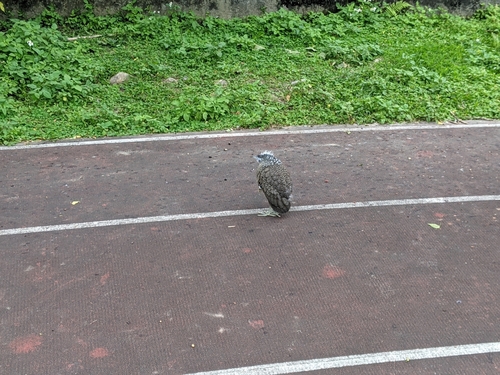 malayan night heron
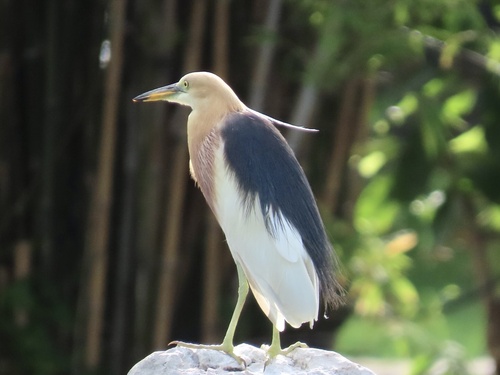 javan pond-heron
Em resumo
A marca de campo mais confiável para separar o malayan night heron do javan pond-heron é a coloração das asas e do corpo, especialmente em aves não reprodutoras e imaturas. Os juvenis de malayan night heron são acinzentados a ruivos com manchas e vermiculações pesadas, enquanto o javan pond-heron em plumagem não reprodutora ou imatura é marrom e salpicado de branco, assemelhando-se a outros garças de lagoa. Nos adultos, o malayan night heron apresenta um pescoço e peito ruivos com listras, partes superiores castanhas e uma coroa preta, enquanto o javan pond-heron em plumagem de reprodução é laranja, ardósia e branco com asas brancas marcantes. As diferenças estruturais são sutis, mas o malayan night heron é mais robusto com um bico mais curto. O habitat e o comportamento podem ajudar: o malayan night heron é geralmente solitário e terrestre, frequentemente em parques urbanos ou arborizados, enquanto o javan pond-heron é mais provável de ser encontrado em zonas úmidas abertas.
Dicas de identificação
- Plumagem juvenil/imatura: Os juvenis de malayan night heron são fortemente manchados e vermiculados, com um tom acinzentado a ruivo; os juvenis de javan pond-heron são marrons e salpicados de branco, sem manchas fortes. Esta é a marca mais confiável para imaturos, especialmente em voo ou à distância.
- Plumagem adulta de reprodução: O malayan night heron mostra um pescoço e peito ruivos com listras escuras, partes superiores castanhas e vermiculadas, coroa preta e penas de voo escuras. O javan pond-heron em plumagem de reprodução é laranja, ardósia e branco com asas brancas brilhantes—as asas são especialmente diagnósticas em voo.
- Plumagem adulta não reprodutora: O malayan night heron mantém sua aparência ruiva e listrada, enquanto o javan pond-heron torna-se marrom e salpicado de branco, assemelhando-se a outros garças de lagoa e sem a aparência ruiva/vermiculada.
- Visões de voo: O malayan night heron mostra penas de voo escuras e um perfil robusto e de pescoço curto. O javan pond-heron mostra asas brancas em plumagem de reprodução e uma forma mais típica de garça de lagoa.
- Cor do bico: O malayan night heron tem um bico preto; o javan pond-heron tem um bico amarelo com ponta preta (especialmente óbvio em plumagem de reprodução).
- Cor das pernas: O malayan night heron tem pernas esverdeadas; o javan pond-heron tem pernas amarelas.
- Coroa e face: O malayan night heron tem uma coroa preta e queixo branco; o javan pond-heron não tem coroa preta.
- Cor dos olhos: Ambos têm olhos amarelos, então isso não é útil para separação.
- Estrutura: O malayan night heron é mais robusto e de bico mais curto; o javan pond-heron é mais esbelto e de bico mais longo, mas isso é sutil e melhor usado em combinação com a plumagem.
- Comportamento: O malayan night heron é geralmente solitário e terrestre, frequentemente longe da água; o javan pond-heron é mais provável de ser visto em grupos e em zonas úmidas.
- Habitat: O malayan night heron em parques arborizados, jardins ou áreas urbanas; o javan pond-heron em zonas úmidas abertas, arrozais ou pântanos.
- Voz: Se você ouvir um profundo 'oo' ou crocitar rouco, suspeite do malayan night heron. O javan pond-heron geralmente é silencioso.
- Estação: O javan pond-heron é migratório e mostra suas cores mais brilhantes na estação de reprodução (junho-setembro); o malayan night heron não tem uma mudança sazonal tão dramática.
- Diferenças sexuais: Os machos de malayan night heron podem mostrar lore azul mais profundo e uma crista mais longa durante a reprodução, mas isso é sutil e raramente útil em campo.
- Armadilhas: O javan pond-heron não reprodutor é extremamente semelhante a outras garças de lagoa e pode ser confundido com elas, mas nunca mostra o forte padrão ruivo, listrado e vermiculado do malayan night heron em qualquer idade.
Tamanho
Malayan Night Heron is slightly larger and heavier (body mass ~415g, length 48 cm, wingspan 86 cm) than javan pond-heron (length ~45 cm; mass not specified but generally lighter than Malayan Night Heron). Malayan Night Heron is also stockier with a shorter beak, while javan pond-heron is more slender and typical of pond herons. However, size alone is not a reliable field mark unless both species are seen side by side.
Plumagem
-
Juvenile/immature birds: Malayan Night Heron juveniles are greyish to rufous, heavily spotted and vermiculated overall, with a distinctive streaked rufous neck and breast. javan pond-heron juveniles and non-breeding birds are brown and flecked with white, lacking the heavy spotting and vermiculation of Malayan Night Heron, and are virtually indistinguishable from other pond herons (Chinese, Indian) in this plumage.
-
Adult breeding plumage: Malayan Night Heron adults have a rufous neck and breast with dark streaks, chestnut and vermiculated upperparts, blackish flight feathers, a black crown, white chin, and yellow eyes. javan pond-heron adults in breeding plumage have orange, slaty, and white body coloration with bright white wings, a yellow bill with a black tip, yellow eyes, and yellow legs.
-
Adult non-breeding plumage: Malayan Night Heron remains rufous and streaked, while javan pond-heron becomes brown and flecked with white, closely resembling other pond herons and lacking the strong rufous and vermiculated pattern of Malayan Night Heron.
-
Flight feathers: Malayan Night Heron has blackish flight feathers, while javan pond-heron has white wings (especially obvious in flight in breeding plumage).
Comportamento
O malayan night heron é solitário, frequentemente forrageando sozinho em áreas abertas, parques ou ambientes arborizados, e é mais terrestre, às vezes visto se alimentando de minhocas e rãs em ambientes urbanos. Ele pousa em árvores, mas raramente é visto em grupos. O javan pond-heron é mais típico das garças de lagoa, frequentemente encontrado em zonas úmidas rasas, às vezes em grupos soltos, e é mais provável de ser visto vasculhando a água em busca de insetos, peixes e caranguejos. O malayan night heron é menos provável de ser visto em habitats abertos e úmidos frequentados pelo javan pond-heron.
Habitat
O malayan night heron prefere áreas arborizadas, parques urbanos e às vezes se alimenta em áreas gramadas abertas, frequentemente longe da água aberta. Ele é geralmente solitário e pode ser encontrado nidificando perto de edifícios em áreas urbanas. O javan pond-heron está fortemente associado a zonas úmidas rasas de água doce e salgada, arrozais e pântanos, e raramente é encontrado longe da água. O habitat é uma pista útil: uma garça em um parque arborizado ou longe da água é mais provável de ser um malayan night heron, enquanto uma em uma zona úmida é provavelmente um javan pond-heron.
Voz
O chamado territorial do malayan night heron é uma nota profunda 'oo', com crocitar roucos adicionais e sons de 'arh, arh, arh'. Nenhuma vocalização distintiva é descrita para o javan pond-heron nessas notas, então a voz só é útil se os chamados profundos do malayan night heron forem ouvidos.
malayan night heron · javan pond-heron · Minhas aves difíceis