

Bihoreau malais vs Crabier malais
Gorsachius melanolophus contre Ardeola speciosa
Faire un quiz avec Bihoreau malais et Crabier malais
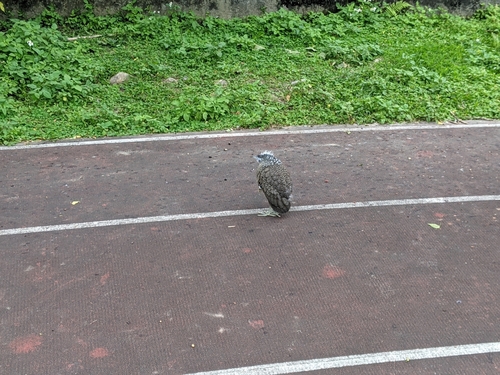 Bihoreau malais
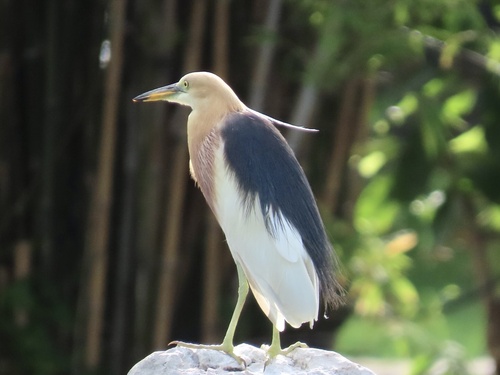 Crabier malais
En bref
Le marque de terrain le plus fiable pour séparer le Bihoreau malais du Crabier malais est la coloration des ailes et du corps, surtout chez les oiseaux non reproducteurs et immatures. Les juvéniles de Bihoreau malais sont grisâtres à roux avec de fortes taches et vermiculations, tandis que le Crabier malais en plumage non reproducteur ou immature est brun et parsemé de blanc, ressemblant de près à d'autres crabiers. Chez les adultes, le Bihoreau malais présente un cou et une poitrine roux avec des stries, un dessus châtaigne, et une couronne noire, tandis que le Crabier malais en plumage de reproduction est orange, ardoisé, et blanc avec des ailes remarquablement blanches. Les différences structurelles sont subtiles mais le Bihoreau malais est plus trapu avec un bec plus court. L'habitat et le comportement peuvent aider : le Bihoreau malais est généralement solitaire et terrestre, souvent dans des parcs boisés ou urbains, tandis que le Crabier malais est plus susceptible de se trouver dans des zones humides ouvertes.
Conseils d’identification
- Plumage juvénile/immature : Les juvéniles de Bihoreau malais sont fortement tachetés et vermiculés, avec une teinte grisâtre à roux ; les juvéniles de Crabier malais sont bruns et parsemés de blanc, manquant de taches fortes. C'est le marque le plus fiable pour les immatures, surtout en vol ou à distance.
- Plumage adulte de reproduction : Le Bihoreau malais montre un cou et une poitrine roux avec des stries sombres, un dessus châtaigne et vermiculé, une couronne noire, et des plumes de vol noires. Le Crabier malais en plumage de reproduction est orange, ardoisé, et blanc avec des ailes blanches éclatantes—les ailes sont particulièrement diagnostiques en vol.
- Plumage adulte non reproducteur : Le Bihoreau malais conserve son apparence roux et striée, tandis que le Crabier malais devient brun et parsemé de blanc, ressemblant à d'autres crabiers et manquant l'apparence roux/vermiculée.
- Vues en vol : Le Bihoreau malais montre des plumes de vol noires et un profil trapu et à cou court. Le Crabier malais montre des ailes blanches en plumage de reproduction et une forme de crabier plus typique.
- Couleur du bec : Le Bihoreau malais a un bec noir ; le Crabier malais a un bec jaune avec une pointe noire (surtout évident en plumage de reproduction).
- Couleur des pattes : Le Bihoreau malais a des pattes verdâtres ; le Crabier malais a des pattes jaunes.
- Couronne et visage : Le Bihoreau malais a une couronne noire et un menton blanc ; le Crabier malais n'a pas de couronne noire.
- Couleur des yeux : Les deux ont des yeux jaunes, donc cela n'est pas utile pour la séparation.
- Structure : Le Bihoreau malais est plus trapu et a un bec plus court ; le Crabier malais est plus élancé et a un bec plus long, mais cela est subtil et mieux utilisé en combinaison avec le plumage.
- Comportement : Le Bihoreau malais est généralement solitaire et terrestre, souvent loin de l'eau ; le Crabier malais est plus susceptible d'être vu en groupes et dans des zones humides.
- Habitat : Le Bihoreau malais dans des parcs boisés, jardins, ou zones urbaines ; le Crabier malais dans des zones humides ouvertes, rizières, ou marais.
- Voix : Si vous entendez un profond 'oo' ou un croassement rauque, suspectez le Bihoreau malais. Le Crabier malais est généralement silencieux.
- Saison : Le Crabier malais est migrateur et montre ses couleurs les plus vives pendant la saison de reproduction (juin-septembre) ; le Bihoreau malais n'a pas un changement saisonnier aussi dramatique.
- Différences sexuelles : Les mâles de Bihoreau malais peuvent montrer des lores bleus plus profonds et une crête plus longue pendant la reproduction, mais cela est subtil et rarement utile sur le terrain.
- Pièges : Le Crabier malais non reproducteur est extrêmement similaire à d'autres crabiers et peut être confondu avec eux, mais ne montre jamais le fort motif roux, strié, et vermiculé du Bihoreau malais à aucun âge.
Taille
Le Bihoreau malais est légèrement plus grand et plus lourd (masse corporelle ~415g, longueur 48 cm, envergure 86 cm) que le Crabier malais (longueur ~45 cm ; masse non spécifiée mais généralement plus légère que le Bihoreau malais). Le Bihoreau malais est également plus trapu avec un bec plus court, tandis que le Crabier malais est plus élancé et typique des crabiers. Cependant, la taille seule n'est pas un marque de terrain fiable à moins que les deux espèces soient vues côte à côte.
Plumage
-
Oiseaux juvéniles/immatures : Les juvéniles de Bihoreau malais sont grisâtres à roux, fortement tachetés et vermiculés dans l'ensemble, avec un cou et une poitrine roux striés distinctifs. Les juvéniles de Crabier malais et les oiseaux non reproducteurs sont bruns et parsemés de blanc, manquant les fortes taches et vermiculations du Bihoreau malais, et sont pratiquement indistinguables d'autres crabiers (chinois, indien) dans ce plumage.
-
Plumage adulte de reproduction : Les adultes de Bihoreau malais ont un cou et une poitrine roux avec des stries sombres, un dessus châtaigne et vermiculé, des plumes de vol noires, une couronne noire, un menton blanc, et des yeux jaunes. Les adultes de Crabier malais en plumage de reproduction ont une coloration corporelle orange, ardoisée, et blanche avec des ailes blanches éclatantes, un bec jaune avec une pointe noire, des yeux jaunes, et des pattes jaunes.
-
Plumage adulte non reproducteur : Le Bihoreau malais reste roux et strié, tandis que le Crabier malais devient brun et parsemé de blanc, ressemblant de près à d'autres crabiers et manquant le fort motif roux et vermiculé du Bihoreau malais.
-
Plumes de vol : Le Bihoreau malais a des plumes de vol noires, tandis que le Crabier malais a des ailes blanches (surtout évident en vol en plumage de reproduction).
Comportement
Le Bihoreau malais est solitaire, souvent en train de chercher de la nourriture seul dans des zones ouvertes, des parcs, ou des environnements boisés, et est plus terrestre, parfois vu en train de se nourrir de vers de terre et de grenouilles dans des environnements urbains. Il se perche dans les arbres mais est rarement vu en groupes. Le Crabier malais est plus typique des crabiers, souvent trouvé dans des zones humides peu profondes, parfois en groupes lâches, et est plus susceptible d'être vu en train de patauger dans l'eau à la recherche d'insectes, de poissons, et de crabes. Le Bihoreau malais est moins susceptible d'être vu dans des habitats ouverts et humides fréquentés par le Crabier malais.
Habitat
Le Bihoreau malais préfère les zones boisées, les parcs urbains, et se nourrit parfois dans des zones herbeuses ouvertes, souvent loin de l'eau ouverte. Il est généralement solitaire et peut être trouvé en train de nicher près des bâtiments dans des zones urbaines. Le Crabier malais est fortement associé aux zones humides d'eau douce et salée peu profondes, aux rizières, et aux marais, et est rarement trouvé loin de l'eau. L'habitat est un indice utile : un héron dans un parc boisé ou loin de l'eau est plus susceptible d'être un Bihoreau malais, tandis qu'un dans une zone humide est probablement un Crabier malais.
Voix
L'appel territorial du Bihoreau malais est une note profonde 'oo', avec des croassements rauques supplémentaires et des sons 'arh, arh, arh'. Aucune vocalisation distinctive n'est décrite pour le Crabier malais dans ces notes, donc la voix n'est utile que si les appels profonds du Bihoreau malais sont entendus.