

humboldt penguin vs pinguim-de-magalhães
Spheniscus humboldti versus Spheniscus magellanicus
Jogue um quiz com humboldt penguin e pinguim-de-magalhães
 humboldt penguin
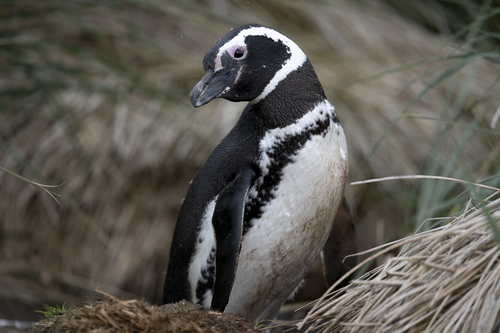 pinguim-de-magalhães
Em resumo
A marca de campo mais confiável entre o pinguim-de-humboldt e o pinguim-de-magalhães é o número e a forma das faixas pretas no peito dos adultos: os pinguins-de-magalhães apresentam duas faixas pretas distintas no peito superior e na barriga (a faixa inferior formando um arco invertido), enquanto os pinguins-de-humboldt têm uma única faixa preta larga que se estende pelas laterais. As aves juvenis de ambas as espécies não possuem essas faixas no peito, tornando-as muito mais difíceis de separar visualmente. Estruturalmente, ambos são pinguins de tamanho médio semelhantes, mas o pinguim-de-humboldt tende a ser ligeiramente mais pesado em média. No campo, a atenção cuidadosa ao padrão e à extensão das faixas no peito dos adultos é a melhor ferramenta de separação, enquanto a localização e o contexto podem ajudar quando a plumagem é ambígua.
Dicas de identificação
- O padrão da faixa no peito dos adultos é a marca de campo chave: Os pinguins-de-magalhães sempre mostram duas faixas pretas entre a cabeça e o peito, com a faixa inferior formando um arco invertido na barriga. Os pinguins-de-humboldt têm apenas uma única faixa preta larga que se estende pelas laterais. Isso é diagnóstico para adultos.
- Confusão juvenil: Os juvenis de ambas as espécies não possuem as faixas pretas no peito, tornando-os muito difíceis de separar visualmente. Os juvenis de humboldt têm cabeças escuras e partes inferiores simples; os juvenis de magalhães têm costas azul-escuras e peitos mais claros, mas isso é sutil e não confiável no campo.
- Padrão da cabeça e facial: Ambas as espécies têm uma cabeça preta com uma borda branca que vai de trás do olho, ao redor das coberturas auriculares e do queixo, unindo-se na garganta. Isso não é útil para separação.
- Estrutura do bico: Os machos de ambas as espécies têm bicos mais longos e pesados do que as fêmeas, mas a forma do bico não é uma marca de campo confiável a nível de espécie.
- Tamanho: Os pinguins-de-humboldt são em média ligeiramente mais pesados, mas o tamanho se sobrepõe bastante e não é uma marca de campo prática.
- Pés em aves jovens: Os jovens pinguins-de-magalhães têm pés manchados que se tornam totalmente pretos por volta dos dez anos de idade. Isso não é descrito para o humboldt, mas é sutil e provavelmente não será útil no campo.
- Habitat e distribuição: Se vistos na costa do Pacífico do Peru ou no norte do Chile, é quase certamente um pinguim-de-humboldt. Se no sul da Argentina, nas Malvinas, ou ao longo da costa atlântica, é magalhães. No sul do Chile, ambos podem ocorrer, então a plumagem deve ser verificada.
- Comportamento: Nenhuma diferença comportamental é diagnosticamente confiável no campo.
- Voz: Ambos têm chamadas semelhantes sem diferenças diagnósticas de campo descritas.
- Sexagem: Ambas as espécies são monomórficas em plumagem; os machos são maiores, mas isso não é útil para a identificação da espécie.
- Em voo: Ambas as espécies raramente são vistas voando, e não há diferenças descritas no padrão das asas ou na silhueta de voo.
- Muda e estação: Nenhuma diferença sazonal na plumagem é descrita que ajude na separação.
- Contexto: O pinguim-de-magalhães é muito mais numeroso no geral, mas a abundância local depende da localização.
- Quando em dúvida com juvenis: Se as faixas no peito estiverem ausentes e a distribuição for ambígua, a identificação pode não ser possível sem exame próximo ou contexto.
- Dica de resumo: Para adultos, sempre verifique o número e a forma das faixas pretas no peito; para juvenis, confie na distribuição e no contexto, pois a plumagem não é separável de forma confiável.
Tamanho
Ambas as espécies são pinguins de tamanho médio do gênero Spheniscus e se sobrepõem consideravelmente em tamanho. Os pinguins-de-magalhães têm tipicamente 61–76 cm de altura e pesam entre 2,7–6,5 kg, com uma massa média de adulto de cerca de 4,1 kg [wikidata]. Os pinguins-de-humboldt têm entre 56–70 cm de comprimento e uma média de 4,05 kg (fêmeas) a 4,7 kg (machos) [wikipedia]. Assim, o humboldt é em média ligeiramente mais pesado, mas o tamanho sozinho não é uma marca de campo confiável devido à sobreposição e ao dimorfismo sexual em ambas as espécies.
Plumagem
Os pinguins-de-magalhães adultos são distinguidos por duas faixas pretas entre a cabeça e o peito: a faixa superior é estreita e semelhante a um colar, enquanto a faixa inferior forma um arco invertido na barriga. Os pinguins-de-humboldt têm apenas uma única faixa preta larga que se curva pelas laterais até as coxas. Ambas as espécies têm cabeças pretas com uma borda branca que vai de trás do olho ao redor das coberturas auriculares e do queixo, unindo-se na garganta. As aves juvenis de ambas as espécies não possuem as faixas no peito: os juvenis de humboldt têm cabeças escuras e partes inferiores simples, enquanto os juvenis de magalhães têm costas azul-escuras e peitos mais claros. Portanto, os adultos são separáveis pelo padrão da faixa no peito, mas os juvenis são muito semelhantes e difíceis de distinguir visualmente.
Comportamento
Ambas as espécies são semelhantes em comportamento, sendo nidificadoras coloniais e forrageando por pequenos peixes e presas marinhas. Não há diferenças comportamentais fortes no campo que as separem de forma confiável. Ambas usam asas rígidas para nadar debaixo d'água e têm exibições sociais e territoriais semelhantes.
Habitat
A geografia é frequentemente a melhor pista: os pinguins-de-humboldt são encontrados ao longo da costa do Pacífico do Peru e do Chile, enquanto os pinguins-de-magalhães se reproduzem mais ao sul na Patagônia costeira (Argentina, Chile, Ilhas Malvinas) e migram para o norte ao longo da costa atlântica, às vezes alcançando o Brasil e o Uruguai. A sobreposição é possível no sul do Chile, mas na maior parte de sua distribuição, a localização é uma forte dica. Os pinguins-de-magalhães são muito mais numerosos no geral.
Voz
Ambas as espécies têm uma variedade de chamadas usadas para território, atração de parceiros e alerta, com funções e tipos semelhantes (gritos, batidas, relinchos, etc.). Não há diferenças diagnósticas de campo nas vocalizações descritas nas fontes.
humboldt penguin · pinguim-de-magalhães · Minhas aves difíceis