

Motmot

フンボルトペンギン 対 マゼランペンギン

Spheniscus humboldti 対 Spheniscus magellanicus

フンボルトペンギンとマゼランペンギンのクイズ
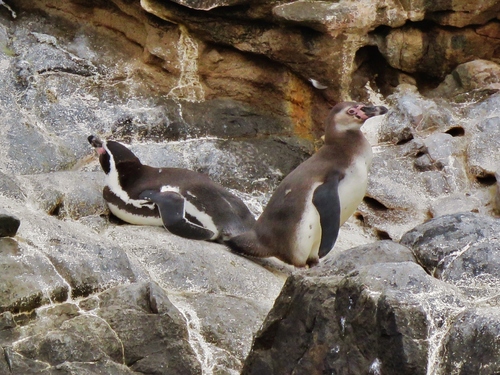
フンボルトペンギン (Spheniscus humboldti) フンボルトペンギン
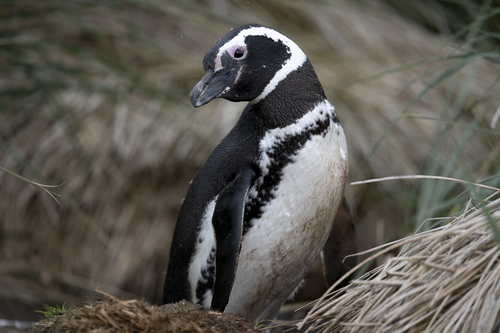
マゼランペンギン (Spheniscus magellanicus) マゼランペンギン

メディア

読み込み中…

要点

フンボルトペンギンとマゼランペンギンの最も信頼できるフィールドマークは、成鳥の黒い胸帯の数と形です:マゼランペンギンは上胸部と腹部に二つの明確な黒い帯を示し(下の帯は逆U字型を形成)、フンボルトペンギンは側面に沿って広い黒い胸帯が一つだけあります。両種の幼鳥はこれらの胸帯を欠いているため、視覚的に区別するのが非常に難しくなります。構造的には、両者は似た中型のペンギンですが、フンボルトは平均してやや重い傾向があります。フィールドでは、成鳥の胸帯のパターンと範囲に注意を払うことが最良の区別手段であり、羽毛が曖昧な場合は場所と文脈が役立ちます。

識別のコツ

  1. 成鳥の胸帯パターンが重要なフィールドマークです: マゼランペンギンは常に頭と胸の間に二つの黒い帯を示し、下の帯は腹部に逆U字型を形成します。フンボルトペンギンは側面に沿って広い黒い胸帯が一つだけあります。これは成鳥の診断に役立ちます。
  2. 幼鳥の混乱: 両種の幼鳥は黒い胸帯を欠いているため、視覚的に区別するのが非常に難しくなります。フンボルトの幼鳥は暗い頭と無地の腹部を持ち、マゼランの幼鳥は灰青色の背中と淡い胸を持ちますが、これは微妙でフィールドでは信頼できません。
  3. 頭部と顔のパターン: 両種は黒い頭を持ち、目の後ろから耳覆いと顎を回って喉で合流する白い縁があります。これは区別には役立ちません。
  4. くちばしの構造: 両種のオスはメスよりも長くて重いくちばしを持っていますが、くちばしの形は種レベルのフィールドマークとしては信頼できません。
  5. サイズ: フンボルトペンギンは平均してやや重いですが、サイズは大きく重なり、実用的なフィールドマークではありません。
  6. 若い鳥の足: 若いマゼランペンギンは斑点のある足を持ち、約10歳になると全て黒くなります。これはフンボルトには記載されていませんが、微妙でフィールドでは役立たない可能性があります。
  7. 生息地と範囲: ペルーの太平洋沿岸や北チリで見られた場合、ほぼ確実にフンボルトペンギンです。南アルゼンチン、フォークランド諸島、または大西洋沿岸にいる場合はマゼランです。南チリでは両者が発生する可能性があるため、羽毛を確認する必要があります。
  8. 行動: フィールドで信頼できる診断となる行動の違いはありません。
  9. 声: 両者は似たような鳴き声を持ち、フィールドでの診断の違いは記載されていません。
  10. 性別の判別: 両種は羽毛において単形であり、オスは大きいですが、これは種の同定には役立ちません。
  11. 飛行中: 両種は飛んでいるところはめったに見られず、翼のパターンや飛行のシルエットに違いは記載されていません。
  12. 換羽と季節: 区別を助ける季節的な羽毛の違いは記載されていません。
  13. 文脈: マゼランは全体的に非常に数が多いですが、地域の豊富さは場所によります。
  14. 幼鳥に疑問がある場合: 胸帯が欠けていて範囲が曖昧な場合、近くでの検査や文脈なしでは同定が不可能な場合があります。
  15. 要約のヒント: 成鳥の場合は、常に黒い胸帯の数と形を確認してください。幼鳥の場合は、範囲と文脈に頼ってください。羽毛は信頼できる区別ができません。

大きさ

両種は中型のSpheniscusペンギンであり、サイズはかなり重なります。マゼランペンギンは通常61〜76 cmの高さで、体重は2.7〜6.5 kgで、平均的な成鳥の質量は約4.1 kgです [wikidata]。フンボルトペンギンは56〜70 cmの長さで、平均4.05 kg(メス)から4.7 kg(オス)です [wikipedia]。したがって、フンボルトは平均してやや重いですが、サイズだけでは重なりと両種の性差によるため、信頼できるフィールドマークではありません。

羽色

成鳥のマゼランペンギンは、頭と胸の間に二つの黒い帯によって区別されます:上の帯は狭くて襟のようで、下の帯は腹部に逆U字型を形成します。フンボルトペンギンは側面に沿って太い黒い胸帯が一つだけあり、太ももまで曲がっています。両種は黒い頭を持ち、目の後ろから耳覆いと顎を回って喉で合流する白い縁があります。両種の幼鳥は胸帯を欠いています:フンボルトの幼鳥は暗い頭と無地の腹部を持ち、マゼランの幼鳥は灰青色の背中と淡い胸を持ちます。したがって、成鳥は胸帯のパターンによって区別できますが、幼鳥は非常に似ており、視覚的に区別するのが難しいです。

行動

両種は行動が似ており、コロニーで巣を作り、小魚や海洋の獲物を探します。フィールドで信頼できる区別を行う強い行動の違いはありません。両者は水中での泳ぎに硬い翼を使用し、似たような社会的および領土的なディスプレイを持っています。

生息環境

地理はしばしば最良の手がかりです:フンボルトペンギンはペルーとチリの太平洋沿岸に見られ、マゼランペンギンは南のパタゴニア(アルゼンチン、チリ、フォークランド諸島)で繁殖し、大西洋沿岸に沿って北に移動し、時にはブラジルやウルグアイに達します。南チリでは重なりが可能ですが、ほとんどの範囲では場所が強い手がかりです。マゼランペンギンは全体的に非常に数が多いです。

声

両種は領土、配偶者の引き寄せ、警告に使用されるさまざまな鳴き声を持ち、機能とタイプ(叫び声、うなり声、鳴き声など)が似ています。鳴き声においてフィールドでの診断の違いは記載されていません。

より良い説明を送る

比較と同じ項目を使ってください。文章はすぐに公開されます。

The most reliable field mark between Humboldt and Magellanic Penguins is the number and shape of the black breast bands on adults: Magellanic Penguins show two distinct black bands across the upper chest and belly (the lower one forming an inverted horseshoe), while Humboldt Penguins have a single, broad black breast-band that extends down the flanks. Juvenile birds of both species lack these breast bands, making them much harder to separate visually. Structurally, both are similar medium-sized penguins, but Humboldt tends to be slightly heavier on average. In the field, careful attention to the pattern and extent of the breast bands on adults is the best separation tool, while location and context can help when plumage is ambiguous.

  1. Adult breast band pattern is the key field mark: Magellanic Penguins always show two black bands between the head and breast, with the lower band forming an inverted horseshoe across the belly. Humboldt Penguins have only a single, broad black breast-band that extends down the flanks. This is diagnostic for adults.
  2. Juvenile confusion: Juveniles of both species lack the black breast bands, making them very difficult to separate visually. Humboldt juveniles have dark heads and plain underparts; Magellanic juveniles have grey-blue backs and paler chests, but this is subtle and unreliable in the field.
  3. Head and facial pattern: Both species have a black head with a white border running from behind the eye, around the ear-coverts and chin, joining at the throat. This is not useful for separation.
  4. Bill structure: Males of both species have longer, heavier bills than females, but bill shape is not a reliable species-level field mark.
  5. Size: Humboldt Penguins are on average slightly heavier, but size overlaps greatly and is not a practical field mark.
  6. Feet in young birds: Young Magellanic Penguins have blotched feet that become all black by about ten years of age. This is not described for Humboldt, but is subtle and not likely to be useful in the field.
  7. Habitat and range: If seen on the Pacific coast of Peru or northern Chile, it is almost certainly a Humboldt Penguin. If in southern Argentina, the Falklands, or along the Atlantic coast, it is Magellanic. In southern Chile, both may occur, so plumage must be checked.
  8. Behavior: No behavioral differences are reliably diagnostic in the field.
  9. Voice: Both have similar calls with no field-diagnostic differences described.
  10. Sexing: Both species are monomorphic in plumage; males are larger, but this is not helpful for species ID.
  11. In flight: Both species are rarely seen flying, and there are no described differences in wing pattern or flight silhouette.
  12. Molting and season: No seasonal plumage differences are described that aid separation.
  13. Context: Magellanic is much more numerous overall, but local abundance depends on location.
  14. When in doubt with juveniles: If breast bands are absent and range is ambiguous, identification may not be possible without close examination or context.
  15. Summary tip: For adults, always check the number and shape of the black breast bands; for juveniles, rely on range and context, as plumage is not reliably separable.

Both species are medium-sized Spheniscus penguins and overlap considerably in size. Magellanic Penguins are typically 61–76 cm tall and weigh 2.7–6.5 kg, with an average adult mass of about 4.1 kg [wikidata]. Humboldt Penguins are 56–70 cm long and average 4.05 kg (females) to 4.7 kg (males) [wikipedia]. Thus, Humboldt is on average slightly heavier, but size alone is not a reliable field mark due to overlap and sexual dimorphism in both species.

Adult Magellanic Penguins are distinguished by two black bands between the head and breast: the upper band is narrow and collar-like, while the lower band forms an inverted horseshoe across the belly. Humboldt Penguins have only a single, broad black breast-band that curves down the flanks to the thighs. Both species have black heads with a white border running from behind the eye around the ear-coverts and chin, joining at the throat. Juvenile birds of both species lack the breast bands: Humboldt juveniles have dark heads and plain underparts, while Magellanic juveniles have grey-blue backs and paler chests. Therefore, adults are separable by breast band pattern, but juveniles are very similar and difficult to distinguish visually.

Both species are similar in behavior, being colonial nesters and foraging for small fish and marine prey. There are no strong behavioral differences in the field that reliably separate them. Both use rigid wings for underwater swimming and have similar social and territorial displays.

Geography is often the best clue: Humboldt Penguins are found along the Pacific coast of Peru and Chile, while Magellanic Penguins breed further south in coastal Patagonia (Argentina, Chile, Falkland Islands) and migrate north along the Atlantic coast, sometimes reaching Brazil and Uruguay. Overlap is possible in southern Chile, but in most of their range, location is a strong hint. Magellanic Penguins are much more numerous overall.

Both species have a range of calls used for territory, mate attraction, and warning, with similar functions and types (yells, throbs, brays, etc.). There are no field-diagnostic differences in vocalizations described in the sources.

変更を破棄しますか?

保存していない編集があります。今離れると失われます。

フンボルトペンギン · マゼランペンギン · 苦手な鳥