

Pingüino de Humboldt vs Pingüino Magallánico
Spheniscus humboldti frente a Spheniscus magellanicus
Juega un quiz con Pingüino de Humboldt y Pingüino Magallánico
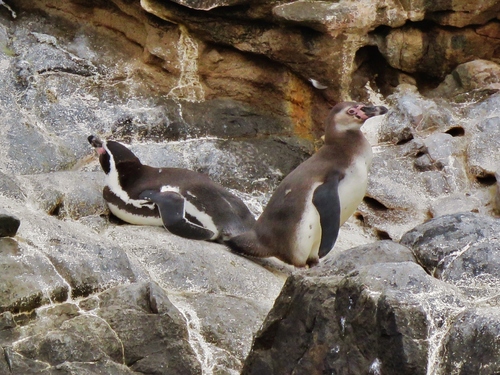 Pingüino de Humboldt
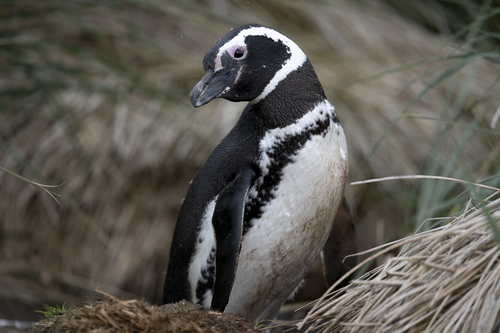 Pingüino Magallánico
En breve
La marca de campo más confiable entre el Pingüino de Humboldt y el Pingüino Magallánico es el número y la forma de las bandas negras en el pecho de los adultos: los Pingüinos Magallánicos muestran dos bandas negras distintas a través del pecho superior y el abdomen (la inferior formando un herradura invertida), mientras que los Pingüinos de Humboldt tienen una sola banda negra ancha en el pecho que se extiende por los flancos. Las aves juveniles de ambas especies carecen de estas bandas en el pecho, lo que las hace mucho más difíciles de separar visualmente. Estructuralmente, ambos son pingüinos de tamaño mediano similares, pero el de Humboldt tiende a ser ligeramente más pesado en promedio. En el campo, prestar atención cuidadosa al patrón y la extensión de las bandas en el pecho de los adultos es la mejor herramienta de separación, mientras que la ubicación y el contexto pueden ayudar cuando el plumaje es ambiguo.
Consejos de identificación
- El patrón de la banda en el pecho de los adultos es la clave de identificación: Los Pingüinos Magallánicos siempre muestran dos bandas negras entre la cabeza y el pecho, con la banda inferior formando un herradura invertida a través del abdomen. Los Pingüinos de Humboldt tienen solo una banda negra ancha en el pecho que se extiende por los flancos. Esto es diagnóstico para los adultos.
- Confusión juvenil: Los juveniles de ambas especies carecen de las bandas negras en el pecho, lo que los hace muy difíciles de separar visualmente. Los juveniles de Humboldt tienen cabezas oscuras y partes inferiores lisas; los juveniles Magallánicos tienen espaldas gris-azuladas y pechos más claros, pero esto es sutil y poco confiable en el campo.
- Patrón de cabeza y facial: Ambas especies tienen una cabeza negra con un borde blanco que va desde detrás del ojo, alrededor de las coberturas de las orejas y la barbilla, uniéndose en la garganta. Esto no es útil para la separación.
- Estructura del pico: Los machos de ambas especies tienen picos más largos y pesados que las hembras, pero la forma del pico no es una marca de campo confiable a nivel de especie.
- Tamaño: Los Pingüinos de Humboldt son en promedio ligeramente más pesados, pero el tamaño se superpone considerablemente y no es una marca de campo práctica.
- Pies en aves jóvenes: Los jóvenes Pingüinos Magallánicos tienen pies moteados que se vuelven completamente negros alrededor de los diez años de edad. Esto no se describe para el Humboldt, pero es sutil y poco probable que sea útil en el campo.
- Hábitat y rango: Si se ve en la costa del Pacífico de Perú o el norte de Chile, es casi seguramente un Pingüino de Humboldt. Si está en el sur de Argentina, las Malvinas, o a lo largo de la costa atlántica, es Magallánico. En el sur de Chile, ambas pueden ocurrir, por lo que se debe verificar el plumaje.
- Comportamiento: No hay diferencias de comportamiento que sean diagnósticas de manera confiable en el campo.
- Voz: Ambos tienen llamados similares sin diferencias diagnósticas en el campo descritas.
- Sexado: Ambas especies son monomórficas en plumaje; los machos son más grandes, pero esto no es útil para la identificación de especies.
- En vuelo: Ambas especies rara vez se ven volando, y no hay diferencias descritas en el patrón de las alas o la silueta de vuelo.
- Muda y temporada: No se describen diferencias estacionales en el plumaje que ayuden a la separación.
- Contexto: El Magallánico es mucho más numeroso en general, pero la abundancia local depende de la ubicación.
- Cuando haya dudas con los juveniles: Si las bandas en el pecho están ausentes y el rango es ambiguo, la identificación puede no ser posible sin un examen cercano o contexto.
- Consejo resumen: Para los adultos, siempre verifique el número y la forma de las bandas negras en el pecho; para los juveniles, confíe en el rango y el contexto, ya que el plumaje no es separable de manera confiable.
Tamaño
Ambas especies son pingüinos de tamaño mediano Spheniscus y se superponen considerablemente en tamaño. Los Pingüinos Magallánicos miden típicamente entre 61 y 76 cm de altura y pesan entre 2.7 y 6.5 kg, con una masa promedio de adulto de aproximadamente 4.1 kg [wikidata]. Los Pingüinos de Humboldt miden entre 56 y 70 cm de largo y promedian entre 4.05 kg (hembras) y 4.7 kg (machos) [wikipedia]. Por lo tanto, el Humboldt es en promedio ligeramente más pesado, pero el tamaño por sí solo no es una marca de campo confiable debido a la superposición y el dimorfismo sexual en ambas especies.
Plumaje
Los Pingüinos Magallánicos adultos se distinguen por dos bandas negras entre la cabeza y el pecho: la banda superior es estrecha y similar a un collar, mientras que la banda inferior forma un herradura invertida a través del abdomen. Los Pingüinos de Humboldt tienen solo una banda negra ancha en el pecho que se curva hacia abajo por los flancos hasta los muslos. Ambas especies tienen cabezas negras con un borde blanco que va desde detrás del ojo alrededor de las coberturas de las orejas y la barbilla, uniéndose en la garganta. Las aves juveniles de ambas especies carecen de las bandas en el pecho: los juveniles de Humboldt tienen cabezas oscuras y partes inferiores lisas, mientras que los juveniles Magallánicos tienen espaldas gris-azuladas y pechos más claros. Por lo tanto, los adultos son separables por el patrón de la banda en el pecho, pero los juveniles son muy similares y difíciles de distinguir visualmente.
Comportamiento
Ambas especies son similares en comportamiento, siendo nidos coloniales y buscando peces pequeños y presas marinas. No hay diferencias de comportamiento fuertes en el campo que los separen de manera confiable. Ambos utilizan alas rígidas para nadar bajo el agua y tienen exhibiciones sociales y territoriales similares.
Hábitat
La geografía es a menudo la mejor pista: los Pingüinos de Humboldt se encuentran a lo largo de la costa del Pacífico de Perú y Chile, mientras que los Pingüinos Magallánicos crían más al sur en la Patagonia costera (Argentina, Chile, Islas Malvinas) y migran hacia el norte a lo largo de la costa atlántica, a veces llegando a Brasil y Uruguay. La superposición es posible en el sur de Chile, pero en la mayor parte de su rango, la ubicación es una fuerte pista. Los Pingüinos Magallánicos son mucho más numerosos en general.
Voz
Ambas especies tienen una variedad de llamados utilizados para territorio, atracción de pareja y advertencia, con funciones y tipos similares (gritos, pulsos, rebuznos, etc.). No hay diferencias diagnósticas en el campo en las vocalizaciones descritas en las fuentes.
Pingüino de Humboldt · Pingüino Magallánico · Mis aves difíciles