

Humboldt Penguin vs Magellanic Penguin
Spheniscus humboldti contro Spheniscus magellanicus
Fai un quiz con Humboldt Penguin e Magellanic Penguin
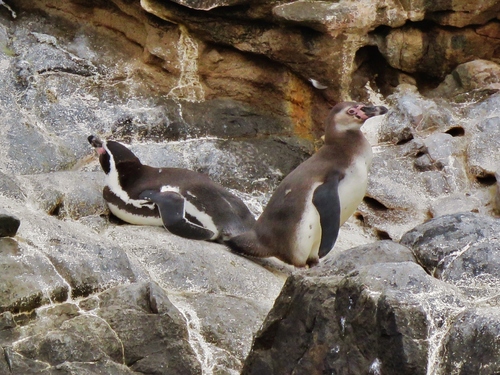 Humboldt Penguin
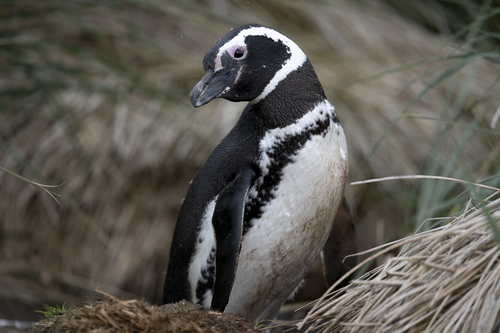 Magellanic Penguin
In breve
Il segno distintivo più affidabile tra i Pinguini Humboldt e i Pinguini Magellanic è il numero e la forma delle bande nere sul petto degli adulti: i Pinguini Magellanic mostrano due bande nere distinte attraverso la parte superiore del petto e della pancia (la banda inferiore forma un ferro di cavallo rovesciato), mentre i Pinguini Humboldt hanno una sola banda nera sul petto, larga, che si estende lungo i fianchi. Gli uccelli giovani di entrambe le specie mancano di queste bande sul petto, rendendoli molto più difficili da separare visivamente. Strutturalmente, entrambi sono pinguini di dimensioni medie simili, ma gli Humboldt tendono ad essere leggermente più pesanti in media. Sul campo, prestare attenzione al modello e all'estensione delle bande sul petto degli adulti è il miglior strumento di separazione, mentre la posizione e il contesto possono aiutare quando il piumaggio è ambiguo.
Consigli di identificazione
- Il modello della banda sul petto degli adulti è il segno distintivo chiave: I Pinguini Magellanic mostrano sempre due bande nere tra la testa e il petto, con la banda inferiore che forma un ferro di cavallo rovesciato attraverso la pancia. I Pinguini Humboldt hanno solo una banda nera sul petto, larga, che si estende lungo i fianchi. Questo è diagnostico per gli adulti.
- Confusione giovanile: Gli uccelli giovani di entrambe le specie mancano delle bande nere sul petto, rendendoli molto difficili da separare visivamente. I giovani Humboldt hanno teste scure e parti inferiori semplici; i giovani Magellanic hanno schiene grigio-blu e petti più chiari, ma questo è sottile e inaffidabile sul campo.
- Modello della testa e del viso: Entrambe le specie hanno una testa nera con un bordo bianco che corre da dietro l'occhio, intorno alle copritrici auricolari e al mento, unendosi alla gola. Questo non è utile per la separazione.
- Struttura del becco: I maschi di entrambe le specie hanno becchi più lunghi e pesanti delle femmine, ma la forma del becco non è un segno distintivo affidabile a livello di specie.
- Dimensioni: I Pinguini Humboldt sono in media leggermente più pesanti, ma le dimensioni si sovrappongono notevolmente e non sono un segno distintivo pratico.
- Piedi negli uccelli giovani: I giovani Pinguini Magellanic hanno piedi macchiati che diventano completamente neri a circa dieci anni di età. Questo non è descritto per gli Humboldt, ma è sottile e poco probabile che sia utile sul campo.
- Habitat e distribuzione: Se visti sulla costa pacifica del Perù o del Cile settentrionale, è quasi certamente un Pinguino Humboldt. Se in Argentina meridionale, nelle Falkland o lungo la costa atlantica, è Magellanic. Nel Cile meridionale, entrambe le specie possono verificarsi, quindi il piumaggio deve essere controllato.
- Comportamento: Non ci sono differenze comportamentali affidabili sul campo.
- Voce: Entrambi hanno richiami simili senza differenze diagnostiche sul campo descritte.
- Sesso: Entrambe le specie sono monomorfiche nel piumaggio; i maschi sono più grandi, ma questo non è utile per l'identificazione della specie.
- In volo: Entrambe le specie sono raramente viste volare, e non ci sono differenze descritte nel modello delle ali o nel profilo di volo.
- Muta e stagione: Non ci sono differenze stagionali nel piumaggio descritte che aiutino la separazione.
- Contesto: Il Pinguino Magellanic è molto più numeroso in generale, ma l'abbondanza locale dipende dalla posizione.
- Quando si ha dubbio con i giovani: Se le bande sul petto sono assenti e la distribuzione è ambigua, l'identificazione potrebbe non essere possibile senza un esame ravvicinato o un contesto.
- Suggerimento riassuntivo: Per gli adulti, controlla sempre il numero e la forma delle bande nere sul petto; per i giovani, fai affidamento sulla distribuzione e sul contesto, poiché il piumaggio non è separabile in modo affidabile.
Taglia
Entrambe le specie sono pinguini Spheniscus di dimensioni medie e si sovrappongono considerevolmente in dimensioni. I Pinguini Magellanic sono tipicamente alti 61–76 cm e pesano 2.7–6.5 kg, con una massa media adulta di circa 4.1 kg [wikidata]. I Pinguini Humboldt sono lunghi 56–70 cm e pesano in media 4.05 kg (femmine) a 4.7 kg (maschi) [wikipedia]. Pertanto, gli Humboldt sono in media leggermente più pesanti, ma le dimensioni da sole non sono un segno distintivo affidabile a causa della sovrapposizione e del dimorfismo sessuale in entrambe le specie.
Piumaggio
I Pinguini Magellanic adulti si distinguono per due bande nere tra la testa e il petto: la banda superiore è stretta e simile a un collare, mentre la banda inferiore forma un ferro di cavallo rovesciato attraverso la pancia. I Pinguini Humboldt hanno solo una banda nera sul petto, larga, che curva verso il basso lungo i fianchi fino alle cosce. Entrambe le specie hanno teste nere con un bordo bianco che corre da dietro l'occhio intorno alle copritrici auricolari e al mento, unendosi alla gola. Gli uccelli giovani di entrambe le specie mancano delle bande sul petto: i giovani Humboldt hanno teste scure e parti inferiori semplici, mentre i giovani Magellanic hanno schiene grigio-blu e petti più chiari. Pertanto, gli adulti sono separabili per il modello delle bande sul petto, ma i giovani sono molto simili e difficili da distinguere visivamente.
Comportamento
Entrambe le specie sono simili nel comportamento, essendo nidi coloniali e cercando pesci piccoli e prede marine. Non ci sono forti differenze comportamentali sul campo che li separino in modo affidabile. Entrambi usano ali rigide per nuotare sott'acqua e hanno simili manifestazioni sociali e territoriali.
Habitat
La geografia è spesso il miglior indizio: i Pinguini Humboldt si trovano lungo la costa pacifica del Perù e del Cile, mentre i Pinguini Magellanic nidificano più a sud nella Patagonia costiera (Argentina, Cile, Isole Falkland) e migrano a nord lungo la costa atlantica, raggiungendo talvolta il Brasile e l'Uruguay. È possibile una sovrapposizione nel Cile meridionale, ma nella maggior parte della loro distribuzione, la posizione è un forte indizio. I Pinguini Magellanic sono molto più numerosi in generale.
Voce
Entrambe le specie hanno una gamma di richiami utilizzati per il territorio, l'attrazione del partner e l'allerta, con funzioni e tipi simili (grida, colpi, bray, ecc.). Non ci sono differenze diagnostiche sul campo nelle vocalizzazioni descritte nelle fonti.
Humboldt Penguin · Magellanic Penguin · I miei uccelli difficili