

hairy-breasted barbet vs barbadinho-de-testa-vermelha
Tricholaema hirsuta versus Lybius vieilloti
Jogue um quiz com hairy-breasted barbet e barbadinho-de-testa-vermelha
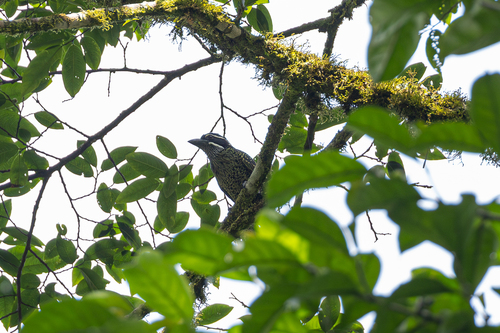 hairy-breasted barbet
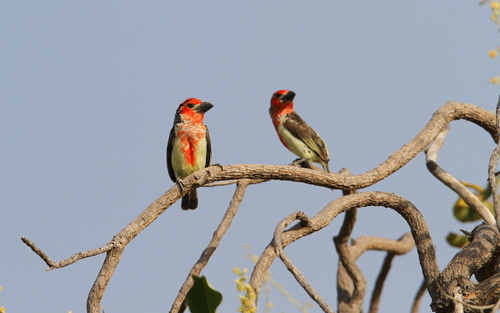 barbadinho-de-testa-vermelha
Em resumo
A marca de campo mais confiável para separar o barbatinho-de-testa-vermelha do hairy-breasted barbet é a cor da cabeça e do peito: o hairy-breasted mostra uma cabeça azul-preta ou preta com listras faciais brancas e um peito amarelo, fortemente marcado, enquanto o barbatinho-de-testa-vermelha tem uma cabeça e peito vermelhos brilhantes com mistura de branco e vermelho, sem listras faciais fortes. Os hairy-breasted barbets imaturos mostram manchas mais claras e esparsas e partes inferiores mais barradas, enquanto os imaturos do barbatinho são simplesmente mais apagados no geral. Em voo ou empoleirados, procure pelas partes superiores manchadas de amarelo e a garganta preta do hairy-breasted em comparação com a faixa de costas amarela e a cabeça vermelha do barbatinho. Ambos são barbets robustos, mas o hairy-breasted é maior e mais pesado. A voz também é distinta: o hairy-breasted emite notas repetidas de 'oork' ou 'oop', enquanto o barbatinho realiza um dueto complexo e polifônico com notas de yodel e 'poop-poop'.
Dicas de identificação
- Cor da cabeça (todas as idades): O hairy-breasted barbet tem uma cabeça azul-preta ou preta com listras superciliares e malares brancas (exceto algumas subespécies), enquanto o barbatinho-de-testa-vermelha sempre tem uma cabeça vermelha brilhante sem listras brancas fortes.
- Peito e garganta (adultos): O hairy-breasted mostra uma garganta preta e um peito amarelo com marcas pretas pesadas; o barbatinho tem um pescoço e peito vermelhos e brancos, sem garganta preta.
- Partes superiores (adultos): O hairy-breasted tem partes superiores pretas com manchas amarelas e um rabo com listras amarelas; o barbatinho tem partes superiores marrons escuras com uma faixa amarela distinta ao longo das costas.
- Partes inferiores (adultos): As partes inferiores do hairy-breasted são amarelas com marcas pretas; as do barbatinho são amareladas com manchas escuras nas laterais, mas o peito é vermelho e branco.
- Plumagem imatura: Os jovens hairy-breasted barbets têm partes superiores mais soltas, com manchas amarelas mais claras e esparsas e ventres mais barrados, enquanto os imaturos do barbatinho são apenas mais apagados, sem padrões diferentes.
- Bico e face: Ambos têm bicos grossos e escuros, mas apenas o hairy-breasted mostra listras faciais brancas fortes (superciliares e malares) na maioria das subespécies.
- Cauda e jizz: Ambos são barbets robustos e de cauda curta, mas o hairy-breasted é maior e mais volumoso; o barbatinho é mais compacto e do tamanho de um pardal.
- Tamanho em contexto: Se vistos com outros barbets ou aves familiares, o hairy-breasted se destacará como maior e mais pesado (17–18 cm, 43–63 g) em comparação com o menor barbatinho (15 cm, 36 g).
- Voz: Ouça notas simples e repetidas de 'oork' ou 'oop' do hairy-breasted, em comparação com o dueto complexo e polifônico (notas de yodel e 'poop-poop') do barbatinho, muitas vezes com reverências cerimoniais.
- Comportamento: Ambos podem se juntar a bandos mistos, mas apenas o barbatinho é provável de ser visto duetando com reverências sincronizadas.
- Habitat: O interior da densa floresta tropical sugere o hairy-breasted; a floresta aberta ou a borda, especialmente perto de vilarejos, sugere o barbatinho.
- Variação de subespécies (Hairy-breasted): Algumas subespécies (por exemplo, flavipunctata, angolensis, ansorgii) têm listras de cabeça reduzidas ou alteradas e tons mais marrons, mas nenhuma tem a cabeça vermelha sólida do barbatinho.
- Diferenças sexuais: As fêmeas do hairy-breasted barbets são mais amarelas douradas embaixo do que os machos, mas ambos os sexos mantêm a cabeça e a garganta pretas; os sexos do barbatinho são semelhantes.
- Visões de voo: Nenhum painel distinto na asa superior ou marca de voo é descrito para ambos, mas as penas das asas com bordas amarelas do hairy-breasted podem ser visíveis de perto.
- Armadilhas: O imaturo hairy-breasted pode parecer mais apagado e menos manchado, mas nunca mostrará a cabeça e o peito vermelhos do barbatinho. O barbatinho nunca mostra uma garganta preta ou listras faciais brancas fortes.
Tamanho
O hairy-breasted barbet é visivelmente maior e mais pesado, medindo 17–18 cm de comprimento e pesando 43–63 g, enquanto o barbatinho-de-testa-vermelha é menor, com cerca de 15 cm e 36 g. No campo, o hairy-breasted parecerá mais volumoso e longo, com uma presença mais robusta em comparação com o compacto e do tamanho de um pardal barbatinho.
Plumagem
- Aves imaturas: Os imaturos do hairy-breasted barbet têm plumagem mais solta, manchas amarelas mais claras e esparsas nas partes superiores, e marcas pretas mais barradas no ventro. Os imaturos do barbatinho são simplesmente mais apagados do que os adultos, sem mudanças específicas de padrão.
- Adultos: Os machos do hairy-breasted barbet têm uma cabeça azul-preta com uma faixa superciliar e malares brancas, partes superiores pretas com manchas amarelas, rabo com listras amarelas, garganta preta e peito/lados amarelos com marcas pretas. As fêmeas são mais amarelas douradas embaixo. Os adultos do barbatinho têm uma cabeça vermelha marcante, pescoço e peito vermelhos e brancos, partes superiores marrons escuras com uma faixa amarela ao longo das costas, e partes inferiores amareladas com manchas escuras nas laterais. Ambos os sexos são semelhantes no barbatinho, mas apenas o hairy-breasted mostra listras faciais fortes e uma garganta preta.
- Variação de subespécies: As subespécies do hairy-breasted mostram listras de cabeça variáveis e brilho das partes inferiores, mas todas carecem da cabeça vermelha sólida do barbatinho.
Comportamento
Ambas as espécies são frequentemente vistas sozinhas ou em pares e podem se juntar a bandos de espécies mistas. O hairy-breasted barbet é territorial e frequentemente forrageia sozinho ou em par, alimentando-se de frutas e insetos, às vezes batendo insetos em galhos. O barbatinho também é social, mas é especialmente notado por seu comportamento de dueto, com pares realizando elaboradas exibições de saudação e canto. Ambas as espécies podem ser vistas empoleiradas de forma proeminente, mas apenas o barbatinho é conhecido por suas reverências cerimoniais e duetos sincronizados.
Habitat
O hairy-breasted barbet é encontrado em toda a floresta tropical africana, favorecendo habitats florestais densos e úmidos. O barbatinho não é descrito em detalhes aqui, mas é tipicamente encontrado em habitats de floresta aberta e borda de savana, muitas vezes perto de habitações humanas. Assim, o contexto pode ajudar: a floresta tropical densa sugere o hairy-breasted, enquanto a floresta aberta ou a borda pode favorecer o barbatinho.
Voz
O hairy-breasted barbet emite notas repetidas de 'oork' ou 'oop', muitas vezes enquanto infla sua garganta e gira a cabeça. Sua canção é simples e repetida. O barbatinho, em contraste, realiza um dueto complexo e polifônico: um pássaro emite um yodel (duas notas semelhantes a flauta), respondido pela nota 'poop-poop' do parceiro, com ambos os pássaros fazendo reverências cerimoniais. O dueto é distinto por sua qualidade sobreposta e de muitas vozes e é realizado durante todo o ano, não apenas na época de reprodução.
hairy-breasted barbet · barbadinho-de-testa-vermelha · Minhas aves difíceis