

Motmot

キボシコゴシキドリ 対 マシコゴシキドリ

Tricholaema hirsuta 対 Lybius vieilloti

キボシコゴシキドリとマシコゴシキドリのクイズ
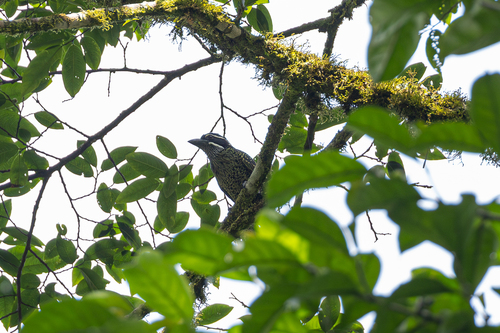
キボシコゴシキドリ (Tricholaema hirsuta) キボシコゴシキドリ
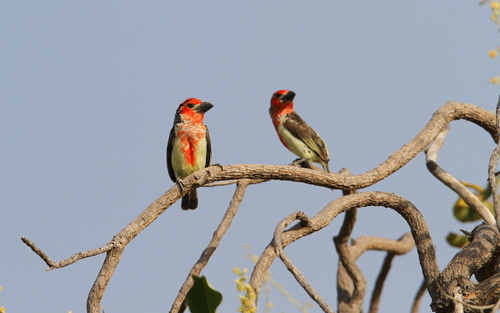
マシコゴシキドリ (Lybius vieilloti) マシコゴシキドリ

メディア

読み込み中…

要点

キボシコゴシキドリとマシコゴシキドリを区別する最も信頼できるフィールドマークは、頭部と胸の色です:キボシコゴシキドリは青黒または黒の頭に白い顔のストライプと黄色で強く模様のある胸を持ち、マシコゴシキドリは明るい赤の頭と胸を持ち、白と赤が混ざり合い、強い顔のストライプがありません。未熟なキボシコゴシキドリはより淡い、まばらな斑点とより多くの縞模様のある腹部を示し、未熟なマシコゴシキドリは単に全体的に鈍いです。飛行中または止まっているときは、キボシコゴシキドリの黄色の斑点のある上面と黒い喉を、マシコゴシキドリの黄色の背中のストライプと赤い頭と比較してください。どちらもずんぐりしたコゴシキドリですが、キボシコゴシキドリの方が大きくて重いです。声も特徴的です:キボシコゴシキドリは繰り返し「オーク」または「ウープ」の音を出し、マシコゴシキドリはヨーデルと「プープープー」の音を伴う複雑で多声音の二重唱を行います。

識別のコツ

  1. Head color (all ages): キボシコゴシキドリは青黒または黒の頭に白い眉と頬のストライプ(いくつかの亜種を除く)を持ち、マシコゴシキドリは常に強い白いストライプのない明るい赤の頭を持ちます。
  2. Breast and throat (adults): キボシコゴシキドリは黒い喉と重い黒い模様のある黄色の胸を示し、マシコゴシキドリは赤と白の首と胸を持ち、黒い喉がありません。
  3. Upperparts (adults): キボシコゴシキドリは黄色の斑点のある黒い上面と黄色の縞模様のある尾を持ち、マシコゴシキドリは背中に特徴的な黄色のストライプのある暗褐色の上面を持ちます。
  4. Underparts (adults): キボシコゴシキドリの腹部は黒い模様のある黄色で、マシコゴシキドリは暗い側面の斑点のある黄色がかっており、胸は赤と白です。
  5. Immature plumage: 若いキボシコゴシキドリはより緩い、淡い斑点のある上面とより多くの縞模様のある腹部を持ち、未熟なマシコゴシキドリは単に鈍いだけで、異なる模様はありません。
  6. Bill and face: 両方とも厚くて暗いくちばしを持っていますが、キボシコゴシキドリだけがほとんどの亜種で強い白い顔のストライプ(眉と頬)を示します。
  7. Tail and jizz: 両方ともずんぐりした短い尾のコゴシキドリですが、キボシコゴシキドリの方が大きくてずっしりしています;マシコゴシキドリはよりコンパクトでスズメサイズです。
  8. Size in context: 他のコゴシキドリや馴染みのある鳥と一緒に見られた場合、キボシコゴシキドリは小さいマシコゴシキドリ(15 cm、36 g)と比較して大きくて重い(17–18 cm、43–63 g)ことが際立ちます。
  9. Voice: キボシコゴシキドリからの単純で繰り返しの「オーク」または「ウープ」の音を聞き、マシコゴシキドリの複雑で多声音の二重唱(ヨーデルと「プープープー」の音)を聞いてください。しばしば儀式的なお辞儀を伴います。
  10. Behavior: 両方とも混合群れに参加することがありますが、マシコゴシキドリだけが同期したお辞儀でデュエットをしているのが見られる可能性があります。
  11. Habitat: 密な熱帯雨林の内部はキボシコゴシキドリを示唆し、開けた森林やエッジ、特に村の近くはマシコゴシキドリを示唆します。
  12. Subspecies variation (Hairy-breasted): 一部の亜種(例:flavipunctata、angolensis、ansorgii)は頭のストライプが減少または変化し、より茶色のトーンを持っていますが、マシコゴシキドリの固体赤の頭を持つものはいません。
  13. Sex differences: メスのキボシコゴシキドリはオスよりも下側がより金色の黄色ですが、両方の性は黒い頭と喉を保持します;マシコゴシキドリの性は似ています。
  14. Flight views: どちらにも特徴的な上翼のパネルや飛行マークは記載されていませんが、キボシコゴシキドリの黄色の縁取りのある翼の羽は近距離で見えるかもしれません。
  15. Pitfalls: 未熟なキボシコゴシキドリは鈍く見え、斑点が少なく見えることがありますが、マシコゴシキドリの赤い頭と胸を決して示すことはありません。マシコゴシキドリは黒い喉や強い白い顔のストライプを決して示しません。

大きさ

キボシコゴシキドリは明らかに大きくて重く、長さ17–18 cm、重さ43–63 gで、マシコゴシキドリは約15 cm、36 gと小さいです。フィールドでは、キボシコゴシキドリはずんぐりしていて長く見え、スズメサイズでコンパクトなマシコゴシキドリと比較してより頑丈な存在感を持ちます。

羽色

行動

両種はしばしば単独またはペアで見られ、混合種の群れに参加することがあります。キボシコゴシキドリはテリトリーを持ち、しばしば単独またはペアで果物や昆虫を食べ、時には枝で昆虫を叩きつけます。マシコゴシキドリも社交的ですが、特にデュエット行動が注目されており、ペアが精巧な挨拶や歌のディスプレイを行います。両種は目立って止まっているのが見られることがありますが、マシコゴシキドリだけが儀式的なお辞儀と同期したデュエットで知られています。

生息環境

キボシコゴシキドリはアフリカの熱帯雨林全体に分布し、密で湿った森林の生息地を好みます。マシコゴシキドリはここで詳細に説明されていませんが、通常はより開けた森林やサバンナのエッジの生息地に見られ、人間の居住地の近くにしばしば見られます。したがって、文脈が役立ちます:深い熱帯雨林はキボシコゴシキドリを示唆し、開けた森林やエッジはマシコゴシキドリを示唆します。

声

キボシコゴシキドリは繰り返し「オーク」または「ウープ」の音を出し、しばしば喉を膨らませて頭を回転させます。その歌は単純で繰り返されます。対照的に、マシコゴシキドリは複雑で多声音の二重唱を行います:一羽の鳥がヨーデル(2つのフルートのような音)を出し、パートナーの「プープープー」で応え、両方の鳥が儀式的にお辞儀をします。このデュエットは重なり合った多声的な質が特徴で、繁殖期だけでなく年間を通じて行われます。

より良い説明を送る

比較と同じ項目を使ってください。文章はすぐに公開されます。

The most reliable field mark to separate Hairy-breasted Barbet from Vieillot's Barbet is head and breast color: Hairy-breasted shows a blue-black or black head with white facial stripes and a yellow, heavily marked breast, while Vieillot's Barbet has a bright red head and breast with white and red blending, lacking strong facial stripes. Immature Hairy-breasted Barbets show paler, sparser spots and more barred underparts, while immature Vieillot's are simply duller overall. In flight or perched, look for the yellow-spotted upperparts and black throat of Hairy-breasted versus the yellow back stripe and red head of Vieillot's. Both are chunky barbets, but Hairy-breasted is larger and heavier. Voice is also distinctive: Hairy-breasted gives repeated 'oork' or 'oop' notes, while Vieillot's performs a complex, polyphonic duet with yodeling and 'poop-poop' notes.

  1. Head color (all ages): Hairy-breasted Barbet has a blue-black or black head with white superciliary and malar stripes (except some subspecies), while Vieillot's Barbet always has a bright red head with no strong white striping.
  2. Breast and throat (adults): Hairy-breasted shows a black throat and yellow breast with heavy black markings; Vieillot's has a red and white neck and breast, lacking a black throat.
  3. Upperparts (adults): Hairy-breasted has black upperparts with yellow spots and a yellow-barred rump; Vieillot's has dark brown upperparts with a distinctive yellow stripe down the back.
  4. Underparts (adults): Hairy-breasted's underparts are yellow with black markings; Vieillot's are yellowish with dark flank spots, but the breast is red and white.
  5. Immature plumage: Young Hairy-breasted Barbets have laxer, paler-spotted upperparts and more barred vents, while immature Vieillot's are just duller, not patterned differently.
  6. Bill and face: Both have thick, dark bills, but only Hairy-breasted shows strong white facial stripes (superciliary and malar) in most subspecies.
  7. Tail and jizz: Both are chunky, short-tailed barbets, but Hairy-breasted is larger and bulkier; Vieillot's is more compact and sparrow-sized.
  8. Size in context: If seen with other barbets or familiar birds, Hairy-breasted will stand out as larger and heavier (17–18 cm, 43–63 g) compared to the smaller Vieillot's (15 cm, 36 g).
  9. Voice: Listen for simple, repeated 'oork' or 'oop' notes from Hairy-breasted, versus the complex, polyphonic duet (yodeling and 'poop-poop' notes) of Vieillot's, often with ceremonial bowing.
  10. Behavior: Both may join mixed flocks, but only Vieillot's is likely to be seen duetting with synchronized bowing.
  11. Habitat: Dense rainforest interior suggests Hairy-breasted; open woodland or edge, especially near villages, suggests Vieillot's.
  12. Subspecies variation (Hairy-breasted): Some subspecies (e.g., flavipunctata, angolensis, ansorgii) have reduced or altered head striping and browner tones, but none have the solid red head of Vieillot's.
  13. Sex differences: Female Hairy-breasted Barbets are more golden yellow below than males, but both sexes retain the black head and throat; Vieillot's sexes are similar.
  14. Flight views: No distinctive upperwing panel or flight mark is described for either, but Hairy-breasted's yellow-edged wing feathers may be visible at close range.
  15. Pitfalls: Immature Hairy-breasted may appear duller and less spotted, but will never show the red head and breast of Vieillot's. Vieillot's never shows a black throat or strong white facial stripes.

Hairy-breasted Barbet is noticeably larger and heavier, measuring 17–18 cm in length and weighing 43–63 g, while Vieillot's Barbet is smaller at about 15 cm and 36 g. In the field, Hairy-breasted will appear bulkier and longer, with a more robust presence compared to the sparrow-sized, compact Vieillot's.

  • Immature birds: Hairy-breasted Barbet immatures have laxer plumage, paler and sparser yellow spotting on the upperparts, and more barred black markings on the vent. Vieillot's Barbet immatures are simply duller than adults, without specific pattern changes.
  • Adults: Hairy-breasted Barbet males have a blue-black head with a white superciliary and malar stripe, black upperparts with yellow spots, yellow-barred rump, black throat, and yellow breast/flanks with black markings. Females are more golden yellow below. Vieillot's Barbet adults have a striking red head, red and white neck and breast, dark brown upperparts with a yellow stripe down the back, and yellowish underparts with dark flank spots. Both sexes are similar in Vieillot's, but only Hairy-breasted shows strong facial stripes and a black throat.
  • Subspecies variation: Hairy-breasted subspecies show variable head striping and underpart brightness, but all lack the solid red head of Vieillot's.

Both species are often seen singly or in pairs and may join mixed-species flocks. Hairy-breasted Barbet is territorial and often forages alone or as a pair, feeding on fruit and insects, sometimes bashing insects on branches. Vieillot's Barbet is also social but is especially noted for its duetting behavior, with pairs performing elaborate greeting and song displays. Both species may be seen perched prominently, but only Vieillot's is known for its ceremonial bowing and synchronized duets.

Hairy-breasted Barbet is found throughout the African tropical rainforest, favoring dense, humid forest habitats. Vieillot's Barbet is not described in detail here, but is typically found in more open woodland and savanna-edge habitats, often near human habitation. Thus, context can help: deep rainforest suggests Hairy-breasted, while open woodland or edge may favor Vieillot's.

Hairy-breasted Barbet gives repeated 'oork' or 'oop' notes, often while puffing its throat and rotating its head. Its song is simple and repeated. Vieillot's Barbet, in contrast, performs a complex, polyphonic duet: one bird gives a yodel (two flute-like notes), answered by the partner's 'poop-poop', with both birds bowing ceremoniously. The duet is distinctive for its overlapping, many-voiced quality and is performed year-round, not just in breeding season.

変更を破棄しますか?

保存していない編集があります。今離れると失われます。

キボシコゴシキドリ · マシコゴシキドリ · 苦手な鳥