

Barbudo Hirsuto vs Barbudo Sangrante
Tricholaema hirsuta frente a Lybius vieilloti
Juega un quiz con Barbudo Hirsuto y Barbudo Sangrante
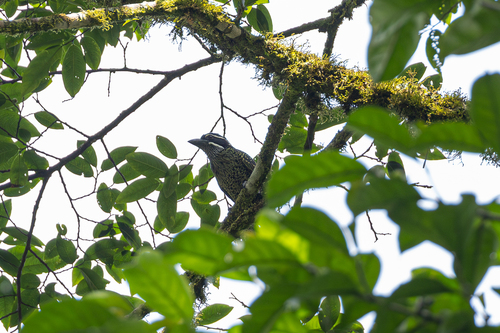 Barbudo Hirsuto
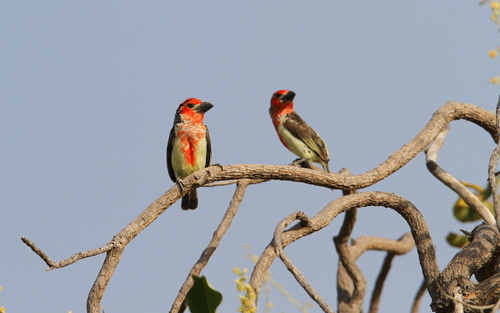 Barbudo Sangrante
En breve
La marca de campo más confiable para separar el Barbudo Hirsuto del Barbudo Sangrante es el color de la cabeza y el pecho: el Barbudo Hirsuto muestra una cabeza azul-negra o negra con franjas faciales blancas y un pecho amarillo, fuertemente marcado, mientras que el Barbudo Sangrante tiene una cabeza y un pecho rojos brillantes con una mezcla de blanco y rojo, careciendo de franjas faciales fuertes. Los Barbudos Hirsutos inmaduros muestran manchas más pálidas y escasas y partes inferiores más barradas, mientras que los inmaduros de Barbudo Sangrante son simplemente más apagados en general. En vuelo o posados, busca las partes superiores manchadas de amarillo y la garganta negra del Barbudo Hirsuto frente a la franja amarilla en la espalda y la cabeza roja del Barbudo Sangrante. Ambos son barbudos robustos, pero el Barbudo Hirsuto es más grande y pesado. La voz también es distintiva: el Barbudo Hirsuto emite notas repetidas de 'oork' o 'oop', mientras que el Barbudo Sangrante realiza un dúo complejo y polifónico con notas de yodel y 'poop-poop'.
Consejos de identificación
- Color de la cabeza (todas las edades): El Barbudo Hirsuto tiene una cabeza azul-negra o negra con franjas superciliares y malar blancas (excepto algunas subespecies), mientras que el Barbudo Sangrante siempre tiene una cabeza roja brillante sin franjas blancas fuertes.
- Pecho y garganta (adultos): El Barbudo Hirsuto muestra una garganta negra y un pecho amarillo con marcados negros; el Barbudo Sangrante tiene un cuello y pecho rojos y blancos, careciendo de garganta negra.
- Partes superiores (adultos): El Barbudo Hirsuto tiene partes superiores negras con manchas amarillas y un rabadilla barrada de amarillo; el Barbudo Sangrante tiene partes superiores marrón oscuro con una distintiva franja amarilla en la espalda.
- Partes inferiores (adultos): Las partes inferiores del Barbudo Hirsuto son amarillas con marcas negras; las del Barbudo Sangrante son amarillentas con manchas oscuras en los flancos, pero el pecho es rojo y blanco.
- Plumaje inmaduro: Los jóvenes Barbudos Hirsutos tienen partes superiores más laxas, con manchas amarillas más pálidas y escasas y más ventosas barradas, mientras que los inmaduros de Barbudo Sangrante son simplemente más apagados, sin patrones diferentes.
- Pico y cara: Ambos tienen picos gruesos y oscuros, pero solo el Barbudo Hirsuto muestra franjas faciales blancas fuertes (superciliares y malar) en la mayoría de las subespecies.
- Cola y apariencia: Ambos son barbudos robustos y de cola corta, pero el Barbudo Hirsuto es más grande y voluminoso; el Barbudo Sangrante es más compacto y del tamaño de un gorrión.
- Tamaño en contexto: Si se ve con otros barbudos o aves familiares, el Barbudo Hirsuto se destacará como más grande y pesado (17–18 cm, 43–63 g) en comparación con el más pequeño Barbudo Sangrante (15 cm, 36 g).
- Voz: Escucha notas simples y repetidas de 'oork' o 'oop' del Barbudo Hirsuto, frente al complejo dúo polifónico (notas de yodel y 'poop-poop') del Barbudo Sangrante, a menudo con reverencias ceremoniales.
- Comportamiento: Ambos pueden unirse a bandadas mixtas, pero solo el Barbudo Sangrante es probable que se vea haciendo dúos con reverencias sincronizadas.
- Hábitat: El interior de la densa selva tropical sugiere Barbudo Hirsuto; el bosque abierto o el borde, especialmente cerca de aldeas, sugiere Barbudo Sangrante.
- Variación de subespecies (Barbudo Hirsuto): Algunas subespecies (por ejemplo, flavipunctata, angolensis, ansorgii) tienen franjas de cabeza reducidas o alteradas y tonos más marrones, pero ninguna tiene la cabeza roja sólida del Barbudo Sangrante.
- Diferencias sexuales: Las hembras de Barbudo Hirsuto son más amarillas doradas por debajo que los machos, pero ambos sexos retienen la cabeza y garganta negras; los sexos del Barbudo Sangrante son similares.
- Vistas de vuelo: No se describe un panel distintivo en el ala superior o marca de vuelo para ninguno, pero las plumas del ala con borde amarillo del Barbudo Hirsuto pueden ser visibles a corta distancia.
- Trampas: El Barbudo Hirsuto inmaduro puede parecer más apagado y menos manchado, pero nunca mostrará la cabeza y el pecho rojos del Barbudo Sangrante. El Barbudo Sangrante nunca muestra una garganta negra o franjas faciales blancas fuertes.
Tamaño
El Barbudo Hirsuto es notablemente más grande y pesado, midiendo 17–18 cm de longitud y pesando 43–63 g, mientras que el Barbudo Sangrante es más pequeño, alrededor de 15 cm y 36 g. En el campo, el Barbudo Hirsuto aparecerá más voluminoso y largo, con una presencia más robusta en comparación con el compacto Barbudo Sangrante del tamaño de un gorrión.
Plumaje
- Aves inmaduras: Los inmaduros del Barbudo Hirsuto tienen plumaje más laxo, manchas amarillas más pálidas y escasas en las partes superiores, y más marcas negras barradas en el vent. Los inmaduros del Barbudo Sangrante son simplemente más apagados que los adultos, sin cambios de patrón específicos.
- Adultos: Los machos del Barbudo Hirsuto tienen una cabeza azul-negra con una franja superciliar y malar blanca, partes superiores negras con manchas amarillas, rabadilla barrada de amarillo, garganta negra y pecho/flancos amarillos con marcas negras. Las hembras son más amarillas doradas por debajo. Los adultos del Barbudo Sangrante tienen una cabeza roja llamativa, cuello y pecho rojos y blancos, partes superiores marrón oscuro con una franja amarilla en la espalda, y partes inferiores amarillentas con manchas oscuras en los flancos. Ambos sexos son similares en el Barbudo Sangrante, pero solo el Barbudo Hirsuto muestra franjas faciales fuertes y una garganta negra.
- Variación de subespecies: Las subespecies del Barbudo Hirsuto muestran franjas de cabeza variables y brillo en las partes inferiores, pero todas carecen de la cabeza roja sólida del Barbudo Sangrante.
Comportamiento
Ambas especies se ven a menudo solas o en parejas y pueden unirse a bandadas de especies mixtas. El Barbudo Hirsuto es territorial y a menudo forrajea solo o en pareja, alimentándose de frutas e insectos, a veces golpeando insectos en ramas. El Barbudo Sangrante también es social, pero es especialmente conocido por su comportamiento de dúo, con parejas realizando elaboradas exhibiciones de saludo y canto. Ambas especies pueden verse posadas de manera prominente, pero solo el Barbudo Sangrante es conocido por sus reverencias ceremoniales y dúos sincronizados.
Hábitat
El Barbudo Hirsuto se encuentra en toda la selva tropical africana, favoreciendo hábitats forestales densos y húmedos. El Barbudo Sangrante no se describe en detalle aquí, pero se encuentra típicamente en hábitats de bosque abierto y borde de sabana, a menudo cerca de la habitación humana. Por lo tanto, el contexto puede ayudar: la selva profunda sugiere Barbudo Hirsuto, mientras que el bosque abierto o el borde pueden favorecer al Barbudo Sangrante.
Voz
El Barbudo Hirsuto emite notas repetidas de 'oork' o 'oop', a menudo mientras infla su garganta y rota su cabeza. Su canto es simple y repetido. El Barbudo Sangrante, en contraste, realiza un dúo complejo y polifónico: un ave emite un yodel (dos notas similares a flautas), respondido por el 'poop-poop' de la pareja, con ambas aves inclinándose ceremoniosamente. El dúo es distintivo por su calidad superpuesta y de muchas voces y se realiza durante todo el año, no solo en la temporada de cría.