

Hairy-breasted Barbet vs Vieillot's Barbet
Tricholaema hirsuta contro Lybius vieilloti
Fai un quiz con Hairy-breasted Barbet e Vieillot's Barbet
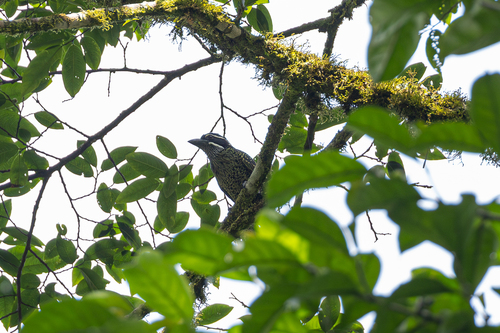 Hairy-breasted Barbet
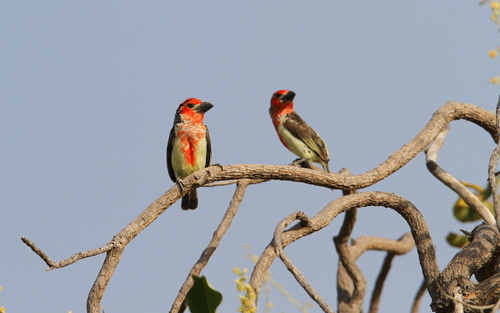 Vieillot's Barbet
In breve
Il segno di campo più affidabile per separare il Hairy-breasted Barbet dal Vieillot's Barbet è il colore della testa e del petto: il Hairy-breasted mostra una testa blu-nera o nera con strisce facciali bianche e un petto giallo, fortemente marcato, mentre il Vieillot's Barbet ha una testa e un petto rosso brillante con bianco e rosso che si mescolano, senza forti strisce facciali. I giovani Hairy-breasted Barbets mostrano macchie più chiare e rade e parti inferiori più barrate, mentre i giovani Vieillot's sono semplicemente più opachi nel complesso. In volo o posati, cerca le parti superiori macchiate di giallo e la gola nera del Hairy-breasted rispetto alla striscia gialla sulla schiena e alla testa rossa del Vieillot's. Entrambi sono barbets robusti, ma il Hairy-breasted è più grande e pesante. Anche la voce è distintiva: il Hairy-breasted emette note ripetute 'oork' o 'oop', mentre il Vieillot's esegue un duetto complesso e polifonico con yodeling e note 'poop-poop'.
Consigli di identificazione
- Colore della testa (tutte le età): Il Hairy-breasted Barbet ha una testa blu-nera o nera con strisce superciliari e malari bianche (eccetto alcune sottospecie), mentre il Vieillot's Barbet ha sempre una testa rossa brillante senza forti strisce bianche.
- Petto e gola (adulti): Il Hairy-breasted mostra una gola nera e un petto giallo con forti marcature nere; il Vieillot's ha un collo e un petto rossi e bianchi, privo di gola nera.
- Parti superiori (adulti): Il Hairy-breasted ha parti superiori nere con macchie gialle e un sottocoda barrato di giallo; il Vieillot's ha parti superiori marroni scure con una distintiva striscia gialla lungo la schiena.
- Parti inferiori (adulti): Le parti inferiori del Hairy-breasted sono gialle con marcature nere; quelle del Vieillot's sono giallastre con macchie scure ai fianchi, ma il petto è rosso e bianco.
- Piumaggio immaturo: I giovani Hairy-breasted Barbets hanno parti superiori più rade e macchiate di giallo più chiare e aperture più barrate, mentre i giovani Vieillot's sono semplicemente più opachi, senza differenze di pattern.
- Becco e faccia: Entrambi hanno becchi spessi e scuri, ma solo il Hairy-breasted mostra forti strisce facciali bianche (superciliari e malari) nella maggior parte delle sottospecie.
- Coda e jizz: Entrambi sono barbets robusti e dalla coda corta, ma il Hairy-breasted è più grande e massiccio; il Vieillot's è più compatto e delle dimensioni di un passero.
- Dimensioni nel contesto: Se visti con altri barbets o uccelli familiari, il Hairy-breasted si distinguerà come più grande e pesante (17–18 cm, 43–63 g) rispetto al più piccolo Vieillot's (15 cm, 36 g).
- Voce: Ascolta note semplici e ripetute 'oork' o 'oop' dal Hairy-breasted, rispetto al complesso duetto polifonico (yodeling e note 'poop-poop') del Vieillot's, spesso con inchini cerimoniali.
- Comportamento: Entrambi possono unirsi a stormi misti, ma solo il Vieillot's è probabile che venga visto duettare con inchini sincronizzati.
- Habitat: L'interno della foresta pluviale densa suggerisce il Hairy-breasted; la foresta aperta o il margine, specialmente vicino ai villaggi, suggerisce il Vieillot's.
- Variazione delle sottospecie (Hairy-breasted): Alcune sottospecie (ad es., flavipunctata, angolensis, ansorgii) hanno strisce della testa ridotte o alterate e toni più marroni, ma nessuna ha la testa rossa solida del Vieillot's.
- Differenze sessuali: Le femmine di Hairy-breasted Barbets sono più giallo dorato sotto rispetto ai maschi, ma entrambi i sessi mantengono la testa e la gola nere; i sessi del Vieillot's sono simili.
- Viste in volo: Non è descritto alcun pannello distintivo dell'ala superiore o segno di volo per entrambi, ma le piume dell'ala bordate di giallo del Hairy-breasted possono essere visibili a distanza ravvicinata.
- Insidie: I giovani Hairy-breasted possono apparire più opachi e meno macchiati, ma non mostreranno mai la testa e il petto rossi del Vieillot's. Il Vieillot's non mostra mai una gola nera o forti strisce facciali bianche.
Taglia
Il Hairy-breasted Barbet è notevolmente più grande e pesante, misurando 17–18 cm di lunghezza e pesando 43–63 g, mentre il Vieillot's Barbet è più piccolo, circa 15 cm e 36 g. Sul campo, il Hairy-breasted apparirà più massiccio e lungo, con una presenza più robusta rispetto al compatto Vieillot's delle dimensioni di un passero.
Piumaggio
- Uccelli immaturi: I giovani Hairy-breasted Barbet hanno piumaggio più lasso, macchie gialle più chiare e rade sulle parti superiori e marcature nere più barrate sul vent. I giovani Vieillot's Barbet sono semplicemente più opachi degli adulti, senza cambiamenti di pattern specifici.
- Adulti: I maschi di Hairy-breasted Barbet hanno una testa blu-nera con una striscia superciliare e malare bianca, parti superiori nere con macchie gialle, sottocoda barrato di giallo, gola nera e petto/fianchi gialli con marcature nere. Le femmine sono più giallo dorato sotto. Gli adulti di Vieillot's Barbet hanno una testa rossa sorprendente, collo e petto rossi e bianchi, parti superiori marroni scure con una striscia gialla lungo la schiena e parti inferiori giallastre con macchie scure ai fianchi. Entrambi i sessi sono simili nel Vieillot's, ma solo il Hairy-breasted mostra forti strisce facciali e una gola nera.
- Variazione delle sottospecie: Le sottospecie di Hairy-breasted mostrano strisce della testa variabili e luminosità delle parti inferiori, ma tutte mancano della testa rossa solida del Vieillot's.
Comportamento
Entrambe le specie sono spesso viste singolarmente o in coppie e possono unirsi a stormi misti. Il Hairy-breasted Barbet è territoriale e spesso cerca cibo da solo o in coppia, nutrendosi di frutta e insetti, a volte colpendo gli insetti sui rami. Il Vieillot's Barbet è anche sociale ma è particolarmente noto per il suo comportamento di duettare, con coppie che eseguono elaborate esibizioni di saluto e canto. Entrambe le specie possono essere viste posate in modo prominente, ma solo il Vieillot's è noto per i suoi inchini cerimoniali e duetti sincronizzati.
Habitat
Il Hairy-breasted Barbet si trova in tutta la foresta pluviale tropicale africana, preferendo habitat forestali densi e umidi. Il Vieillot's Barbet non è descritto in dettaglio qui, ma si trova tipicamente in habitat di foresta più aperta e ai margini della savana, spesso vicino all'abitazione umana. Pertanto, il contesto può aiutare: la foresta pluviale profonda suggerisce il Hairy-breasted, mentre la foresta aperta o il margine possono favorire il Vieillot's.
Voce
Il Hairy-breasted Barbet emette note ripetute 'oork' o 'oop', spesso mentre gonfia la gola e ruota la testa. Il suo canto è semplice e ripetuto. Il Vieillot's Barbet, al contrario, esegue un duetto complesso e polifonico: un uccello emette un yodel (due note simili a flauto), risposto dalla nota 'poop-poop' del partner, con entrambi gli uccelli che si inchinano cerimonialmente. Il duetto è distintivo per la sua qualità sovrapposta e multivocale ed è eseguito tutto l'anno, non solo durante la stagione degli amori.
Hairy-breasted Barbet · Vieillot's Barbet · I miei uccelli difficili