

hairy-backed bulbul vs yellow-bellied bulbul
Tricholestes criniger versus Alophoixus phaeocephalus
Jogue um quiz com hairy-backed bulbul e yellow-bellied bulbul
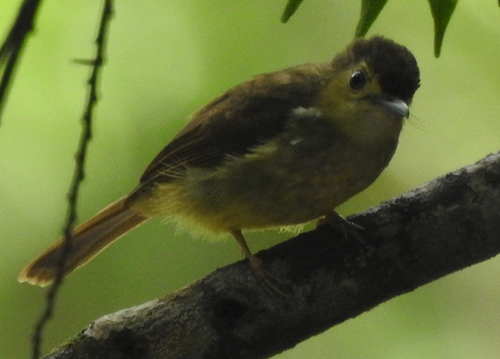 hairy-backed bulbul
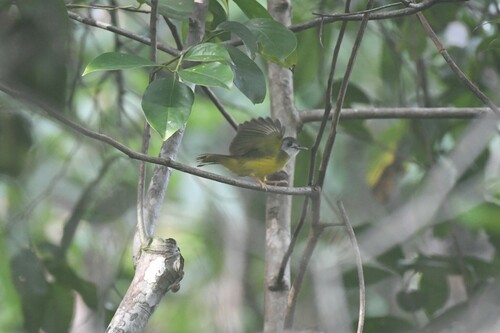 yellow-bellied bulbul
Em resumo
A marca de campo mais confiável para separar hairy-backed bulbul de yellow-bellied bulbul é a presença de filoplumas semelhantes a pelos e conspícuas nas costas do hairy-backed bulbul, que muitas vezes estão ocultas, mas são únicas quando vistas. O hairy-backed bulbul também apresenta uma lore amarelo-pálido e um anel ocular largo, uma cauda marrom-rúfio com pontas brancas cremosas e uma garganta branca cremosa que se funde em um peito amarelo. Em contraste, o yellow-bellied bulbul não possui a aparência de hairy-backed e tem uma barriga amarela mais uniforme com um boné e cabeça acinzentados ou marrons. Ambas as espécies se sobrepõem em alcance e habitat, portanto, atenção cuidadosa aos detalhes estruturais e de plumagem é essencial, especialmente porque ambas podem parecer semelhantes à primeira vista.
Dicas de identificação
- Procure por filoplumas semelhantes a pelos nas costas: Apenas o hairy-backed bulbul apresenta essas penas distintas semelhantes a cerda, embora possam estar ocultas. Se vistas, isso é diagnóstico para hairy-backed.
- Verifique as lores e o anel ocular: O hairy-backed bulbul tem lores amarelo-pálido e um anel ocular largo, enquanto o yellow-bellied bulbul não possui essas características.
- Examine o boné e o pescoço: O hairy-backed bulbul tem um boné e pescoço de oliva-marrom escuro, contrastando com o boné mais uniforme acinzentado ou marron do yellow-bellied bulbul.
- Cor e padrão da cauda: A cauda do hairy-backed bulbul é marrom-rúfio brilhante com pontas brancas cremosas, uma combinação não vista no yellow-bellied bulbul.
- Transição da garganta e peito: O queixo e a garganta brancos cremosos do hairy-backed bulbul se fundem em um peito amarelo, enquanto o yellow-bellied bulbul tende a ter uma parte inferior amarela mais uniforme sem a garganta branca cremosa acentuada.
- Coberturas superiores e de cauda: O hairy-backed bulbul apresenta coberturas de cauda e asas superiores oliva-rúfio, que podem ser uma marca sutil, mas útil, se vistas bem.
- Cor do bico e das pernas: O hairy-backed bulbul tem um bico azul-claro e cinza e pernas verde-acastanhadas pálidas (adultos), com os juvenis apresentando pernas rosa pálido e carnudas. Essas são sutis e são melhor utilizadas em boa luz a curta distância.
- Cor da íris: O hairy-backed bulbul adulto tem íris marrom escura, enquanto os juvenis têm íris acinzentada-marrom. A cor da íris do yellow-bellied bulbul não é especificada, portanto, use com cautela.
- Cor geral da parte inferior: Ambas as espécies são amarelas por baixo, mas o amarelo do hairy-backed bulbul é mais brilhante no peito e mais suave na barriga, enquanto o yellow-bellied bulbul é mais uniformemente amarelo.
- Ausência de crista: Ambas as espécies não possuem crista, portanto, isso não é um separador, mas tenha cuidado com a confusão com outros bulbuls crestados na região.
- Diferenças sexuais: Ambas as espécies são sexualmente monomórficas, portanto, o sexo não é útil para separação em campo.
- Marcas juvenis: Apenas a cor da íris e das pernas do juvenil do hairy-backed bulbul são descritas; essas são marcas menores, mas podem ajudar se vistas.
- Sobreposição de habitat: Como ambas as espécies ocorrem nas mesmas florestas, não confie em habitat ou alcance para separação.
- Voz: Nenhuma diferença vocal distinta é descrita nas fontes, portanto, não confie em chamadas ou canções para separação.
- Variação de subespécies: A subespécie sericeus do hairy-backed bulbul é maior e tem coberturas de cauda mais amarelas e opacas, e viridis é mais brilhante acima, mas essas são sutis e não devem causar confusão com o yellow-bellied bulbul.
Tamanho
O hairy-backed bulbul é um bulbul pequeno, medindo 16–17 cm de comprimento e pesando cerca de 17 g ([wikidata]). Nenhuma medida direta é dada para o yellow-bellied bulbul, mas ambos são considerados bulbuls pequenos e provavelmente são semelhantes em tamanho. No campo, o tamanho sozinho não é um separador confiável entre essas duas espécies.
Plumagem
- Juvenil/Imaturo: Para o hairy-backed bulbul, os juvenis têm íris acinzentada-marrom e pernas rosa pálido e carnudas, mas de outra forma se assemelham aos adultos. Nenhum detalhe específico de plumagem juvenil ou imatura está disponível para o yellow-bellied bulbul, portanto, a separação baseada na idade é limitada.
- Adultos: O hairy-backed bulbul é oliva por cima e amarelado por baixo, com um boné e pescoço de oliva-marrom escuro, coberturas de cauda e asas superiores oliva-rúfio, e uma cauda marrom-rúfio brilhante com pontas brancas cremosas. O queixo e a garganta brancos cremosos se misturam em um peito amarelo, e as lores amarelo-pálido e o anel ocular largo se destacam. A característica chave é a presença de filoplumas semelhantes a pelos nas costas (muitas vezes ocultas). O yellow-bellied bulbul, em contraste, não possui a característica hairy-backed e, em vez disso, apresenta uma barriga amarela mais uniforme, um boné e cabeça acinzentados ou marrons, e não tem a cauda rufosa ou a garganta e pontas de cauda brancas cremosas vistas no hairy-backed bulbul. Ambas as espécies têm partes inferiores amarelas, mas os padrões da cabeça e da cauda são distintos.
Comportamento
Ambas as espécies são relativamente silenciosas e podem ser inconspícuas no sub-bosque da floresta. O hairy-backed bulbul é notado como relativamente silencioso e tem pernas e pés pequenos e fracos, o que pode influenciar seu comportamento de forrageio, mas isso não é uma marca de campo forte. Não há traço comportamental descrito que separe confiavelmente os dois em campo.
Habitat
Ambas as espécies compartilham faixas e habitats semelhantes, sendo encontradas na Península Malaia, Sumatra e Bornéu, e ocupando florestas tropicais ou subtropicais úmidas de planície. O habitat sozinho não as separa, portanto, a identificação em campo deve depender da plumagem e da estrutura.
hairy-backed bulbul · yellow-bellied bulbul · Minhas aves difíceis