

Hairy-backed Bulbul vs Yellow-bellied Bulbul
Tricholestes criniger contro Alophoixus phaeocephalus
Fai un quiz con Hairy-backed Bulbul e Yellow-bellied Bulbul
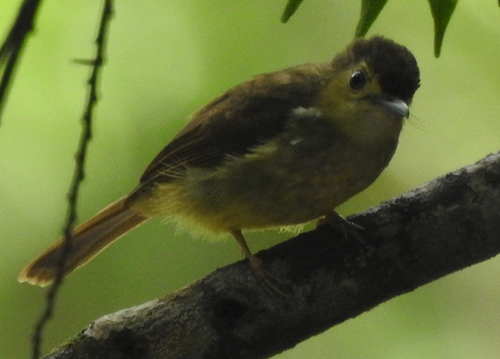 Hairy-backed Bulbul
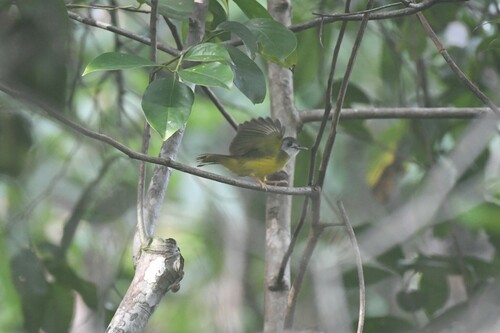 Yellow-bellied Bulbul
In breve
Il segno di campo più affidabile per separare il Hairy-backed Bulbul dal Yellow-bellied Bulbul è la presenza di filopiume simili a peli e ben visibili sulla schiena del Hairy-backed Bulbul, che sono spesso nascosti ma unici quando visti. Il Hairy-backed Bulbul mostra anche una lore giallastra pallida e un ampio anello oculare, una coda rufous-bruna con punte bianche crema e una gola bianca crema che si fonde in un petto giallo. Al contrario, il Yellow-bellied Bulbul manca dell'aspetto con schiena pelosa e ha un ventre giallo più uniforme con un cappuccio e una testa grigiastri o brunastri. Entrambe le specie si sovrappongono in distribuzione e habitat, quindi è essenziale prestare attenzione ai dettagli strutturali e del piumaggio, specialmente poiché entrambe possono apparire simili a un primo sguardo.
Consigli di identificazione
- Cerca filopiume simili a peli sulla schiena: Solo il Hairy-backed Bulbul mostra queste piume distintive simili a setole, anche se possono essere nascoste. Se viste, questo è diagnostico per il Hairy-backed.
- Controlla le lore e l'anello oculare: Il Hairy-backed Bulbul ha lore giallastre pallide e un ampio anello oculare, mentre il Yellow-bellied Bulbul manca di queste caratteristiche.
- Esamina il cappuccio e il collo: Il Hairy-backed Bulbul ha un cappuccio e un collo di un olivastro bruno scuro, in contrasto con il cappuccio più uniforme grigio o bruno del Yellow-bellied Bulbul.
- Colore e modello della coda: La coda del Hairy-backed Bulbul è di un rufous-bruno brillante con punte bianche crema, una combinazione non vista nel Yellow-bellied Bulbul.
- Transizione tra gola e petto: Il mento e la gola bianchi crema del Hairy-backed Bulbul si fondono in un petto giallo, mentre il Yellow-bellied Bulbul tende ad avere una parte inferiore gialla più uniforme senza la gola bianca crema netta.
- Copritrici superiori e coda superiore: Il Hairy-backed Bulbul mostra copritrici della coda e ali superiori olivastro-rufous, che possono essere un segno sottile ma utile se viste bene.
- Colore del becco e delle zampe: Il Hairy-backed Bulbul ha un becco blu-grigio chiaro e zampe verde-brune pallide (adulti), con i giovani che mostrano zampe rosa carne pallide. Questi sono segni sottili e meglio utilizzati in buona luce a distanza ravvicinata.
- Colore dell'iride: L'adulto Hairy-backed Bulbul ha un'iride marrone scuro, mentre i giovani hanno un'iride grigio-bruna. Il colore dell'iride per il Yellow-bellied Bulbul non è specificato, quindi usalo con cautela.
- Colore generale della parte inferiore: Entrambe le specie sono gialle sotto, ma il giallo del Hairy-backed Bulbul è più brillante sul petto e più attenuato sul ventre, mentre il Yellow-bellied Bulbul è più uniformemente giallo.
- Assenza di cresta: Entrambe le specie mancano di cresta, quindi questo non è un separatore, ma fai attenzione alla confusione con altri bulbul crestati nella regione.
- Differenze sessuali: Entrambe le specie sono sessualmente monomorfiche, quindi il sesso non è utile per la separazione sul campo.
- Segni giovanili: Solo il colore dell'iride e delle zampe del giovane Hairy-backed Bulbul sono descritti; questi sono segni minori ma possono aiutare se visti.
- Sovrapposizione dell'habitat: Poiché entrambe le specie si trovano nelle stesse foreste, non fare affidamento sull'habitat o sulla distribuzione per la separazione.
- Voce: Non sono descritte differenze vocali distintive nelle fonti, quindi non fare affidamento su richiami o canti per la separazione.
- Variazione delle sottospecie: La sottospecie sericeus del Hairy-backed Bulbul è più grande e ha copritrici della coda più gialle opache, e viridis è più brillante sopra, ma queste sono sottili e non dovrebbero causare confusione con il Yellow-bellied Bulbul.
Taglia
Il Hairy-backed Bulbul è un piccolo bulbul, che misura 16–17 cm di lunghezza e pesa circa 17 g ([wikidata]). Non è fornita alcuna misura diretta per il Yellow-bellied Bulbul, ma entrambi sono considerati piccoli bulbuli e probabilmente simili in dimensioni. Sul campo, la dimensione da sola non è un separatore affidabile tra queste due specie.
Piumaggio
- Giovanile/Immatura: Per il Hairy-backed Bulbul, i giovani hanno un'iride grigio-bruna e zampe rosa carne pallide, ma altrimenti assomigliano agli adulti. Non sono disponibili dettagli specifici sul piumaggio giovanile o immaturo per il Yellow-bellied Bulbul, quindi la separazione basata sull'età è limitata.
- Adulti: Il Hairy-backed Bulbul è olivastro sopra e giallastro sotto, con un cappuccio e un collo di un olivastro bruno scuro, copritrici della coda e ali superiori olivastro-rufous, e una coda rufous-bruna brillante con punte bianche crema. Il mento e la gola bianchi crema si fondono in un petto giallo, e le lore giallastre pallide e l'ampio anello oculare risaltano. La caratteristica chiave è la presenza di filopiume simili a peli sulla schiena (spesso nascosti). Il Yellow-bellied Bulbul, al contrario, manca della caratteristica con schiena pelosa e mostra invece un ventre giallo più uniforme, un cappuccio e una testa grigiastri o brunastri, e non ha la coda rufous o la gola bianca crema e le punte della coda viste nel Hairy-backed Bulbul. Entrambe le specie hanno parti inferiori gialle, ma i modelli della testa e della coda sono distinti.
Comportamento
Entrambe le specie sono relativamente silenziose e possono essere poco appariscenti nel sottobosco della foresta. Il Hairy-backed Bulbul è noto per essere relativamente silenzioso e ha zampe e piedi piccoli e deboli, il che può influenzare il suo comportamento di foraggiamento, ma questo non è un segno di campo forte. Non è descritto alcun tratto comportamentale che separi in modo affidabile i due sul campo.
Habitat
Entrambe le specie condividono gamme e habitat simili, trovandosi nella Penisola Malese, a Sumatra e a Borneo, e occupano foreste umide tropicali o subtropicali. L'habitat da solo non le separa, quindi l'identificazione sul campo deve basarsi su piumaggio e struttura.
Hairy-backed Bulbul · Yellow-bellied Bulbul · I miei uccelli difficili