

Motmot

エリゲヒヨドリ 対 ハイガシラアゴカンムリヒヨドリ

Tricholestes criniger 対 Alophoixus phaeocephalus

エリゲヒヨドリとハイガシラアゴカンムリヒヨドリのクイズ
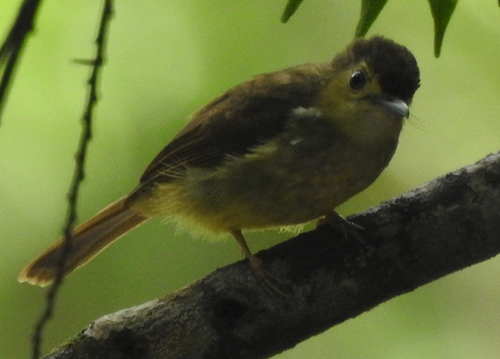
エリゲヒヨドリ (Tricholestes criniger) エリゲヒヨドリ
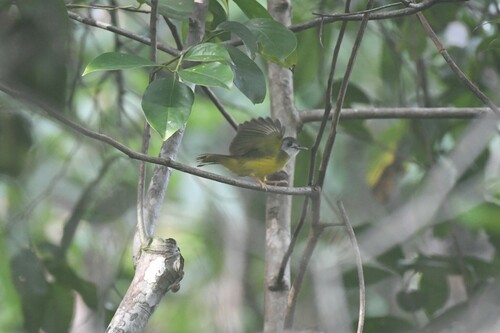
ハイガシラアゴカンムリヒヨドリ (Alophoixus phaeocephalus) ハイガシラアゴカンムリヒヨドリ

メディア

読み込み中…

要点

エリゲヒヨドリとハイガシラアゴカンムリヒヨドリを区別する最も信頼性の高いフィールドマークは、エリゲヒヨドリの背中に目立つ毛のようなフィロプラムが存在することです。これらはしばしば隠れていますが、見えると独特です。エリゲヒヨドリはまた、淡い黄色のロアと広いアイリング、クリーミーな白い先端を持つ赤褐色の尾、そして黄色の胸に融合するクリーミーな白い喉を示します。対照的に、ハイガシラアゴカンムリヒヨドリは毛のような外観がなく、灰色または茶色の帽子と頭を持つより均一な黄色の腹部を持っています。両種は範囲と生息地が重なるため、特に一見似ていることがあるため、構造と羽毛の詳細に注意を払うことが重要です。

識別のコツ

  1. 背中の毛のようなフィロプラムを探す: エリゲヒヨドリだけがこれらの特徴的な毛のような羽毛を示しますが、隠れていることがあります。見えた場合、これはエリゲヒヨドリの診断的な特徴です。
  2. ロアとアイリングを確認する: エリゲヒヨドリは淡い黄色のロアと広いアイリングを持っていますが、ハイガシラアゴカンムリヒヨドリはこれらの特徴がありません。
  3. 帽子と首を調べる: エリゲヒヨドリは暗い赤褐色のオリーブブラウンの帽子と首を持ち、ハイガシラアゴカンムリヒヨドリのより均一な灰色または茶色の帽子と対照的です。
  4. 尾の色とパターン: エリゲヒヨドリの尾は明るい赤褐色でクリーミーな白い先端を持ち、これはハイガシラアゴカンムリヒヨドリには見られません。
  5. 喉と胸の移行: エリゲヒヨドリのクリーミーな白い顎と喉は黄色の胸に融合しますが、ハイガシラアゴカンムリヒヨドリはシャープなクリーミーな白い喉なしでより均一な黄色の下部を持つ傾向があります。
  6. 上翼と上尾羽: エリゲヒヨドリはオリーブ赤褐色の上尾羽と上翼を示し、これは見えた場合に微妙ですが有用なマークです。
  7. くちばしと足の色: エリゲヒヨドリは淡い青灰色のくちばしと淡い緑がかった茶色の足(成鳥)を持ち、幼鳥は淡い肉色のピンクの足を示します。これらは微妙で、良い光の下で近距離で使用するのが最適です。
  8. 虹彩の色: 成鳥のエリゲヒヨドリは暗い茶色の虹彩を持ち、幼鳥は灰色の茶色の虹彩を持っています。ハイガシラアゴカンムリヒヨドリの虹彩の色は指定されていないため、注意して使用してください。
  9. 一般的な下部の色: 両種は下部が黄色ですが、エリゲヒヨドリの黄色は胸で最も明るく、腹部ではより控えめで、ハイガシラアゴカンムリヒヨドリはより均一に黄色です。
  10. 冠の欠如: 両種は冠を持たないため、これは区別要因ではありませんが、地域の他の冠羽のあるヒヨドリとの混同に注意してください。
  11. 性差: 両種は性別が同形であるため、性別はフィールドでの区別には役立ちません。
  12. 幼鳥のマーク: エリゲヒヨドリの幼鳥の虹彩と足の色のみが記載されています。これらは小さなマークですが、見えた場合に役立つことがあります。
  13. 生息地の重複: 両種が同じ森林に生息するため、生息地や範囲に頼って区別しないでください。
  14. 声: 情報源には明確な声の違いは記載されていないため、呼び声や歌に頼って区別しないでください。
  15. 亜種の変異: エリゲヒヨドリの亜種sericeusは大きく、鈍い黄色の下尾羽を持ち、viridisは上部が明るいですが、これらは微妙でハイガシラアゴカンムリヒヨドリとの混同を引き起こす可能性は低いです。

大きさ

エリゲヒヨドリは小型のヒヨドリで、体長は16〜17 cm、体重は約17 gです([wikidata])。ハイガシラアゴカンムリヒヨドリの直接的な測定値は示されていませんが、両者は小型のヒヨドリと見なされ、サイズは似ている可能性があります。フィールドでは、サイズだけではこれらの2種を信頼性のある区別要因とはなりません。

羽色

行動

両種は比較的静かで、森林の中層で目立たないことがあります。エリゲヒヨドリは比較的静かで、小さく弱い足と足を持ち、これが採餌行動に影響を与える可能性がありますが、これは強いフィールドマークではありません。フィールドで両者を確実に区別する行動特性は記載されていません。

生息環境

両種はマレー半島、スマトラ、ボルネオに見られ、亜熱帯または熱帯の湿った低地森林に生息しており、類似の範囲と生息地を共有しています。生息地だけでは区別できないため、フィールドでの識別は羽毛と構造に依存する必要があります。

より良い説明を送る

比較と同じ項目を使ってください。文章はすぐに公開されます。

The most reliable field mark to separate Hairy-backed Bulbul from Yellow-bellied Bulbul is the presence of conspicuous hair-like filoplumes on the back of the Hairy-backed Bulbul, which are often concealed but unique when seen. Hairy-backed Bulbul also shows a pale yellowish lore and broad eye ring, a rufous-brown tail with creamy white tips, and a creamy white throat merging into a yellow breast. In contrast, Yellow-bellied Bulbul lacks the hairy-backed appearance and has a more uniform yellow belly with a greyish or brownish cap and head. Both species overlap in range and habitat, so careful attention to structural and plumage details is essential, especially as both can appear similar at a glance.

  1. Look for hair-like filoplumes on the back: Only Hairy-backed Bulbul shows these distinctive bristle-like feathers, though they may be concealed. If seen, this is diagnostic for Hairy-backed.
  2. Check the lores and eye ring: Hairy-backed Bulbul has pale yellowish lores and a broad eye ring, while Yellow-bellied Bulbul lacks these features.
  3. Examine the cap and neck: Hairy-backed Bulbul has a dark rufescent olive-brown cap and neck, contrasting with the more uniform greyish or brownish cap of Yellow-bellied Bulbul.
  4. Tail color and pattern: Hairy-backed Bulbul's tail is bright rufous-brown with creamy white tips, a combination not seen in Yellow-bellied Bulbul.
  5. Throat and breast transition: The creamy white chin and throat of Hairy-backed Bulbul merge into a yellow breast, while Yellow-bellied Bulbul tends to have a more uniform yellow underpart without the sharp creamy white throat.
  6. Upperwing and uppertail-coverts: Hairy-backed Bulbul shows olive-rufous uppertail-coverts and upperwings, which can be a subtle but useful mark if seen well.
  7. Bill and leg color: Hairy-backed Bulbul has a light blue-grey bill and pale greenish-brown legs (adults), with juveniles showing pale fleshy pink legs. These are subtle and best used in good light at close range.
  8. Iris color: Adult Hairy-backed Bulbul has a dark brown iris, while juveniles have a grey-brown iris. Iris color for Yellow-bellied Bulbul is not specified, so use with caution.
  9. General underpart color: Both species are yellow below, but Hairy-backed Bulbul's yellow is brightest on the breast and more subdued on the belly, while Yellow-bellied Bulbul is more evenly yellow.
  10. Absence of crest: Both species lack a crest, so this is not a separator, but beware confusion with other crested bulbuls in the region.
  11. Sex differences: Both species are sexually monomorphic, so sex is not helpful for field separation.
  12. Juvenile marks: Only Hairy-backed Bulbul's juvenile iris and leg color are described; these are minor marks but can help if seen.
  13. Habitat overlap: Since both species occur in the same forests, do not rely on habitat or range for separation.
  14. Voice: No distinctive vocal differences are described in the sources, so do not rely on calls or song for separation.
  15. Subspecies variation: Hairy-backed Bulbul subspecies sericeus is larger and has duller yellow undertail-coverts, and viridis is brighter above, but these are subtle and not likely to cause confusion with Yellow-bellied Bulbul.

Hairy-backed Bulbul is a small bulbul, measuring 16–17 cm in length and weighing about 17 g ([wikidata]). No direct measurement is given for Yellow-bellied Bulbul, but both are considered small bulbuls and are likely similar in size. In the field, size alone is not a reliable separator between these two species.

  • Juvenile/Immature: For Hairy-backed Bulbul, juveniles have a grey-brown iris and pale fleshy pink legs, but otherwise resemble adults. No specific juvenile or immature plumage details are available for Yellow-bellied Bulbul, so age-based separation is limited.
  • Adults: Hairy-backed Bulbul is olive above and yellowish below, with a dark rufescent olive-brown cap and neck, olive-rufous uppertail-coverts and upperwings, and a bright rufous-brown tail tipped creamy white. The creamy white chin and throat blend into a yellow breast, and the pale yellowish lores and broad eye ring stand out. The key feature is the presence of hair-like filoplumes on the back (often hidden). Yellow-bellied Bulbul, by contrast, lacks the hairy-backed feature and instead shows a more uniform yellow belly, a greyish or brownish cap and head, and does not have the rufous tail or creamy white throat and tail tips seen in Hairy-backed Bulbul. Both species have yellow underparts, but the head and tail patterns are distinct.

Both species are relatively quiet and can be inconspicuous in the forest midstory. Hairy-backed Bulbul is noted as relatively quiet and has small, weak legs and feet, which may influence its foraging behavior, but this is not a strong field mark. There is no behavioral trait described that reliably separates the two in the field.

Both species share similar ranges and habitats, being found in the Malay Peninsula, Sumatra, and Borneo, and occupying subtropical or tropical moist lowland forests. Habitat alone does not separate them, so field identification must rely on plumage and structure.

変更を破棄しますか?

保存していない編集があります。今離れると失われます。

エリゲヒヨドリ · ハイガシラアゴカンムリヒヨドリ · 苦手な鳥