

gray-chinned minivet vs long-tailed minivet
Pericrocotus solaris versus Pericrocotus ethologus
Jogue um quiz com gray-chinned minivet e long-tailed minivet
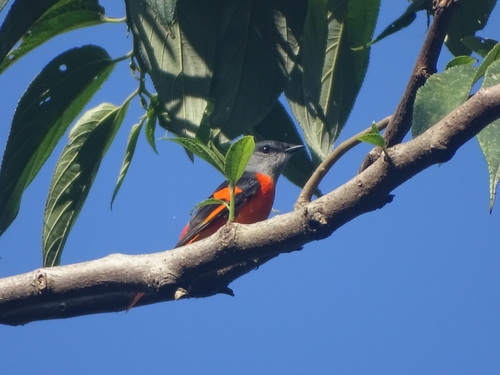 gray-chinned minivet
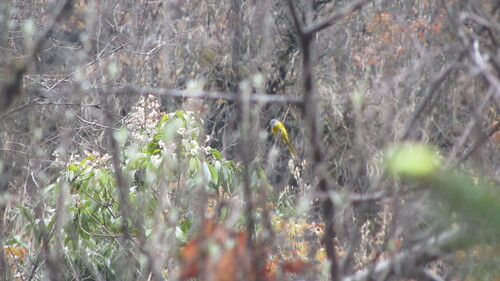 long-tailed minivet
Em resumo
A marca de campo mais confiável entre gray-chinned minivet e long-tailed minivet é a combinação da cor do queixo e o tom geral da plumagem, especialmente em machos adultos: gray-chinned apresenta um queixo cinza claro e cabeça cinza escura, enquanto long-tailed não possui esse contraste. Fêmeas e imaturos de gray-chinned minivets são amarelos brilhantes por baixo, mas os imaturos têm barras amarelo-oliva nas costas—uma característica não relatada em long-tailed. Ambas as espécies são semelhantes em tamanho e forma, mas o habitat e a altitude podem ajudar: gray-chinned prefere florestas de maior altitude (1.000–2.000 m), enquanto long-tailed é mais amplamente distribuído de florestas de planície a florestas montanas. Preste atenção especial à cor do queixo, ao padrão das costas em imaturos e à elevação para a melhor separação.
Dicas de identificação
- Cor do queixo (todas as idades): Gray-chinned minivet sempre mostra um queixo cinza claro, especialmente marcante em machos adultos. Long-tailed minivet não possui esse queixo claro—procure por esse contraste quando os pássaros estão de frente para você ou de perfil.
- Padrão das costas em imaturos: Juvenis e imaturos de gray-chinned minivets têm barras amarelo-oliva nas costas, que long-tailed minivets não mostram. Esta é a melhor marca para separar jovens pássaros.
- Cabeça e manto (machos adultos): Machos de gray-chinned têm uma cabeça e manto cinza escuro, contrastando com a garganta laranja-amarelada. Machos de long-tailed têm uma coloração de cabeça e garganta mais uniforme sem o queixo claro.
- Dicas das coberturas maiores: Gray-chinned mostra dicas laranja nas coberturas maiores, visíveis como uma barra de asa em boa luz. Isso é menos proeminente ou ausente em long-tailed.
- Cor das partes inferiores (sexo/idade): Fêmeas e imaturos de gray-chinned são amarelos brilhantes por baixo, mas fêmeas de long-tailed também são—não confie apenas na cor das partes inferiores.
- Cor da parte inferior das costas: Gray-chinned tem parte inferior das costas laranja (macho) ou amarela (fêmea); long-tailed é semelhante, mas geralmente menos vívido. Esta marca é sutil e deve ser usada em combinação com outras.
- Bico, pernas e olhos: Ambas as espécies têm bicos, pernas e olhos pretos—estes não são úteis para separação.
- Comprimento e forma da cauda: Nenhuma diferença diagnóstica é relatada nas fontes; ambas são de cauda longa e esbeltas.
- Habitat e elevação: Se o pássaro estiver em floresta montana acima de 1.000 m, especialmente nos Himalaias ou em Taiwan, gray-chinned é mais provável. Em florestas de planície, long-tailed é o padrão.
- Distribuição geográfica: Ambas se sobrepõem em grande parte da Ásia, mas gray-chinned se estende até Taiwan, onde long-tailed está ausente.
- Dimorfismo sexual: Ambas as espécies são sexualmente dimórficas, mas o queixo cinza em machos de gray-chinned é único e diagnóstico.
- Composição do bando: Ambas as espécies podem ocorrer em bandos mistos, então não confie em companheiros de bando para identificação.
- Visões empoleiradas vs. em voo: O queixo claro e o padrão das costas em imaturos são visíveis tanto empoleirados quanto em voo, mas são mais fáceis de ver quando o pássaro está de frente para você ou quando as costas estão expostas.
- Mudança sazonal: Nenhuma mudança sazonal significativa na plumagem é relatada para qualquer uma das espécies; use marcas de idade e sexo durante todo o ano.
- Armadilhas: Não confie apenas no brilho geral ou no comprimento da cauda; concentre-se na cor do queixo e no padrão das costas imaturas para a separação mais confiável.
Tamanho
Ambas as espécies são semelhantes em massa, com gray-chinned minivet averaging 14 g [wikidata]. O comprimento para gray-chinned é de 17–19 cm [wikipedia], que está dentro da faixa típica para minivets, e long-tailed não é relatado como notavelmente maior ou menor nas fontes disponíveis. No campo, o tamanho não é um separador confiável entre esses dois.
Plumagem
- Imaturos/Juvenis: Imaturos de gray-chinned minivet se assemelham a fêmeas, mas mostram barras amarelo-oliva nas costas, uma marca chave não mencionada para long-tailed. Use este padrão de costas para jovens pássaros.
- Machos adultos: Gray-chinned tem uma cabeça e manto cinza escuro com um queixo cinza claro distinto e garganta laranja-amarelada, enquanto long-tailed não possui o queixo claro e é geralmente mais uniformemente colorido na cabeça e na garganta. Ambos têm asas escuras, mas apenas gray-chinned tem dicas laranja nas coberturas maiores.
- Fêmeas adultas: A fêmea de gray-chinned é amarela brilhante por baixo e na parte inferior das costas, com uma cabeça cinza; fêmeas de long-tailed também são amareladas, mas não têm o queixo cinza e têm menos contraste na cabeça.
- Partes inferiores: Machos de gray-chinned são laranja por baixo, fêmeas e imaturos são amarelos; long-tailed é semelhante, mas não possui o queixo diagnóstico e o padrão das costas.
Comportamento
Ambas as espécies são insetívoras arbóreas ativas que se movem em pequenos bandos e atacam insetos na copa. Não há diferenças comportamentais fortes observadas nas fontes que separariam de forma confiável no campo.
Habitat
Gray-chinned minivet é mais frequentemente encontrado em florestas montanas em altitudes de 1.000–2.000 m, desde os Himalaias até o Sudeste Asiático e Taiwan. Long-tailed minivet tem uma faixa elevacional e geográfica mais ampla, ocorrendo de florestas de planície a florestas montanas em toda a Ásia do Sul e Sudeste, incluindo áreas onde gray-chinned está ausente. Se visto abaixo de 1.000 m, long-tailed é muito mais provável; em altitudes mais altas, ambos são possíveis, mas gray-chinned é mais típico.
gray-chinned minivet · long-tailed minivet · Minhas aves difíceis