

Gray-chinned Minivet vs Long-tailed Minivet
Pericrocotus solaris contro Pericrocotus ethologus
Fai un quiz con Gray-chinned Minivet e Long-tailed Minivet
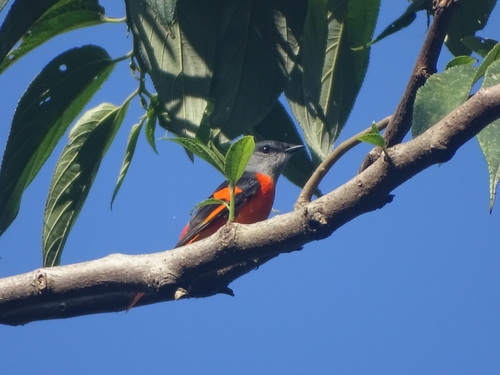 Gray-chinned Minivet
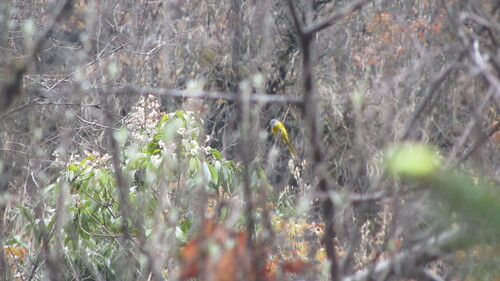 Long-tailed Minivet
In breve
Il segno distintivo più affidabile tra il Gray-chinned Minivet e il Long-tailed Minivet è la combinazione del colore del mento e del tono generale della livrea, specialmente nei maschi adulti: il Gray-chinned mostra un mento grigio chiaro e una testa grigia scura, mentre il Long-tailed manca di questo contrasto. Le femmine e i giovani Gray-chinned Minivets sono di un giallo brillante sotto, ma i giovani hanno barre giallo-olive sulla schiena—una caratteristica non riportata nel Long-tailed. Entrambe le specie sono simili in dimensioni e forma, ma l'habitat e l'altitudine possono aiutare: il Gray-chinned preferisce le foreste ad alta quota (1.000–2.000 m), mentre il Long-tailed è più diffuso dalle pianure alle foreste montane. Fai attenzione al colore del mento, al motivo della schiena nei giovani e all'altitudine per la migliore separazione.
Consigli di identificazione
- Chin color (all ages): Il Gray-chinned Minivet mostra sempre un mento grigio chiaro, particolarmente evidente nei maschi adulti. Il Long-tailed Minivet manca di questo mento chiaro—cerca questo contrasto quando gli uccelli ti stanno di fronte o di profilo.
- Immature back pattern: I giovani e i giovani Gray-chinned Minivets hanno barre giallo-olive sulla schiena, che i Long-tailed Minivets non mostrano. Questo è il miglior segno per separare i giovani uccelli.
- Head and mantle (adult males): I maschi Gray-chinned hanno una testa e un mantello grigi scuri, in contrasto con la gola arancio-gialla. I maschi Long-tailed hanno una colorazione della testa e della gola più uniforme senza il mento chiaro.
- Greater covert tips: Il Gray-chinned mostra punte arancioni nelle copritrici maggiori, visibili come una barra alare in buona luce. Questo è meno evidente o assente nel Long-tailed.
- Underparts color (sex/age): Le femmine e i giovani Gray-chinned sono di un giallo brillante sotto, ma anche le femmine Long-tailed lo sono—non fare affidamento solo sul colore della parte inferiore.
- Lower back color: Il Gray-chinned ha un dorso inferiore arancione (maschio) o giallo (femmina); il Long-tailed è simile ma di solito meno vivido. Questo segno è sottile e meglio utilizzato in combinazione con altri.
- Bill, legs, and eyes: Entrambe le specie hanno becchi, zampe e occhi neri—questi non sono utili per la separazione.
- Tail length and shape: Non è riportata alcuna differenza diagnostica nelle fonti; entrambi sono con la coda lunga e snella.
- Habitat and elevation: Se l'uccello si trova in una foresta montana sopra i 1.000 m, specialmente nell'Himalaya o a Taiwan, è più probabile che sia un Gray-chinned. Nelle foreste di pianura, il Long-tailed è il default.
- Geographic range: Entrambi si sovrappongono in gran parte dell'Asia, ma il Gray-chinned si estende a Taiwan, dove il Long-tailed è assente.
- Sexual dimorphism: Entrambe le specie sono sessualmente dimorfiche, ma il mento grigio nei maschi Gray-chinned è unico e diagnostico.
- Flock composition: Entrambe le specie possono verificarsi in stormi misti, quindi non fare affidamento sui compagni di stormo per l'identificazione.
- Perched vs. flight views: Il mento chiaro e il motivo della schiena nei giovani sono visibili sia in posizione perpendicolare che in volo, ma sono più facili da vedere quando l'uccello ti sta di fronte o quando la schiena è esposta.
- Seasonal change: Non sono riportati cambiamenti stagionali significativi nella livrea per entrambe le specie; usa i segni di età e sesso tutto l'anno.
- Pitfalls: Non fare affidamento solo sulla luminosità generale o sulla lunghezza della coda; concentrati sul colore del mento e sul motivo della schiena nei giovani per la separazione più affidabile.
Taglia
Entrambe le specie sono simili in massa, con il Gray-chinned Minivet che pesa in media 14 g [wikidata]. La lunghezza per il Gray-chinned è di 17–19 cm [wikipedia], che è all'interno dell'intervallo tipico per i minivets, e il Long-tailed non è riportato come notevolmente più grande o più piccolo nelle fonti disponibili. Sul campo, la dimensione non è un separatore affidabile tra questi due.
Piumaggio
- Immatures/Juveniles: I giovani Gray-chinned Minivet assomigliano alle femmine ma mostrano barre giallo-olive sulla schiena, un segno chiave non menzionato per il Long-tailed. Usa questo motivo della schiena per i giovani uccelli.
- Adult males: Il Gray-chinned ha una testa e un mantello grigi scuri con un mento grigio chiaro distintivo e una gola arancio-gialla, mentre il Long-tailed manca del mento chiaro ed è generalmente di un colore più uniforme sulla testa e sulla gola. Entrambi hanno ali nerastre, ma solo il Gray-chinned ha punte arancioni nelle copritrici maggiori.
- Adult females: La femmina Gray-chinned è di un giallo brillante sotto e sulla parte inferiore della schiena, con una testa grigia; le femmine Long-tailed sono anch'esse giallastre ma mancano del mento grigio e hanno meno contrasto sulla testa.
- Underparts: I maschi Gray-chinned sono arancioni sotto, le femmine e i giovani sono gialli; il Long-tailed è simile ma manca del mento diagnostico e del motivo della schiena.
Comportamento
Entrambe le specie sono attive, insetti arborei che si muovono in piccoli stormi e si lanciano per catturare insetti nella chioma. Non sono state notate differenze comportamentali forti nelle fonti che possano separarle in modo affidabile sul campo.
Habitat
Il Gray-chinned Minivet si trova più spesso in foreste montane a altitudini di 1.000–2.000 m, dall'Himalaya al Sud-est asiatico e a Taiwan. Il Long-tailed Minivet ha un'ampia gamma elevazionale e geografica, verificandosi dalle foreste di pianura a quelle montane in tutta l'Asia meridionale e sud-orientale, comprese le aree in cui il Gray-chinned è assente. Se visto sotto i 1.000 m, il Long-tailed è molto più probabile; a quote più elevate, entrambi sono possibili, ma il Gray-chinned è più tipico.
Gray-chinned Minivet · Long-tailed Minivet · I miei uccelli difficili