

Motmot

ベニサンショウクイ 対 オナガベニサンショウクイ

Pericrocotus solaris 対 Pericrocotus ethologus

ベニサンショウクイとオナガベニサンショウクイのクイズ
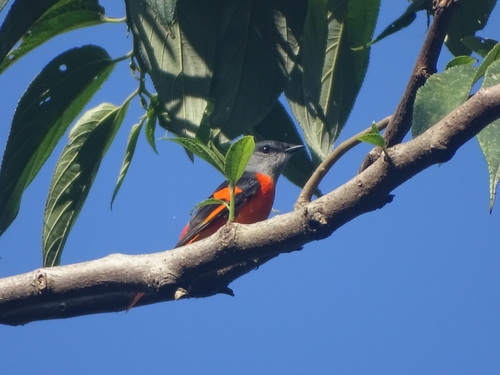
ベニサンショウクイ (Pericrocotus solaris) ベニサンショウクイ
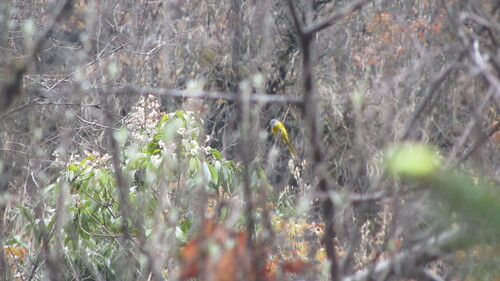
オナガベニサンショウクイ (Pericrocotus ethologus) オナガベニサンショウクイ

メディア

読み込み中…

要点

ベニサンショウクイとオナガベニサンショウクイの最も信頼できるフィールドマークは、顎の色と全体の羽色のトーンの組み合わせであり、特に成鳥のオスにおいて顕著です。Grey-chinnedは淡い灰色の顎と暗い灰色の頭を示しますが、Long-tailedはこのコントラストがありません。雌と未熟なベニサンショウクイは下側が明るい黄色ですが、未熟な個体は背中に黄色オリーブのバーがあり、これはLong-tailedでは報告されていません。両種はサイズと形が似ていますが、生息地と標高が役立つ場合があります。Grey-chinnedは高地の森林(1,000–2,000 m)を好み、Long-tailedは低地から山地の森林に広く分布しています。顎の色、未熟な個体の背中のパターン、標高に注意を払って、最も良い識別を行ってください。

識別のコツ

  1. 顎の色(すべての年齢): ベニサンショウクイは常に淡い灰色の顎を示し、特に成鳥のオスで際立っています。オナガベニサンショウクイはこの淡い顎がなく、鳥があなたに向かっているときや横から見たときにこのコントラストを探してください。
  2. 未熟な背中のパターン: 幼鳥と未熟なベニサンショウクイは背中に黄色オリーブのバーを持っており、これはオナガベニサンショウクイには見られません。これは若い鳥を分けるための最良のマークです。
  3. 頭と背中(成鳥のオス): Grey-chinnedのオスは暗い灰色の頭と背中を持ち、オレンジ黄色の喉と対照的です。Long-tailedのオスは淡い顎がなく、頭と喉の色がより均一です。
  4. 大覆羽の先端: Grey-chinnedは大覆羽の先端がオレンジ色で、良い光の中で翼のバーとして見えます。これはLong-tailedでは目立たないか、欠如しています。
  5. 下側の色(性別/年齢): 雌と未熟なGrey-chinnedは下側が明るい黄色ですが、Long-tailedの雌も同様です—下側の色だけに頼らないでください。
  6. 下背の色: Grey-chinnedはオレンジ(オス)または黄色(雌)の下背を持ち、Long-tailedは似ていますが通常はあまり鮮やかではありません。このマークは微妙で、他のマークと組み合わせて使用するのが最良です。
  7. くちばし、脚、目: 両種は黒いくちばし、脚、目を持っており、これらは識別には役立ちません。
  8. 尾の長さと形: いずれの情報源でも診断的な違いは報告されていません。両方とも長い尾を持ち、細身です。
  9. 生息地と標高: 鳥が1,000 m以上の山地の森林にいる場合、特にヒマラヤや台湾では、Grey-chinnedの可能性が高いです。低地の森林では、Long-tailedがデフォルトです。
  10. 地理的範囲: 両種はアジアの多くの地域で重なっていますが、Grey-chinnedは台湾にまで広がっており、Long-tailedは存在しません。
  11. 性差: 両種は性差がありますが、Grey-chinnedのオスの灰色の顎は独特で診断的です。
  12. 群れの構成: 両種は混合群れで発生することがあるため、識別のために群れの仲間に頼らないでください。
  13. 止まっているときと飛んでいるときの視点: 未熟な個体の淡い顎と背中のパターンは、止まっているときと飛んでいるときの両方で見えますが、鳥があなたに向かっているときや背中が露出しているときに最も見やすいです。
  14. 季節の変化: いずれの種でも大きな季節的羽毛の変化は報告されていません。年中、年齢と性別のマークを使用してください。
  15. 落とし穴: 全体の明るさや尾の長さだけに頼らないでください。最も信頼できる識別のために顎の色と未熟な背中のパターンに焦点を当ててください。

大きさ

両種は質量が似ており、ベニサンショウクイの平均は14 gです [wikidata]。Grey-chinnedの長さは17–19 cmで [wikipedia]、これはミニベットの典型的な範囲内であり、Long-tailedは利用可能な情報源では特に大きいまたは小さいとは報告されていません。フィールドでは、サイズはこれら二つの間の信頼できる識別要因ではありません。

羽色

行動

両種は活発で樹上性の昆虫食であり、小さな群れで移動し、樹冠で昆虫を捕まえます。フィールドで信頼できる識別を行うための強い行動の違いは、情報源には記載されていません。

生息環境

ベニサンショウクイは、ヒマラヤから東南アジア、台湾にかけて、1,000–2,000 mの標高の山地の森林で最もよく見られます。オナガベニサンショウクイは、南アジアおよび東南アジアの低地から山地の森林に広く分布しており、Grey-chinnedが存在しない地域でも見られます。1,000 m未満で見られた場合、Long-tailedの可能性が高く、高い標高では両方が可能ですが、Grey-chinnedがより典型的です。

より良い説明を送る

比較と同じ項目を使ってください。文章はすぐに公開されます。

The most reliable field mark between Grey-chinned Minivet and Long-tailed Minivet is the combination of chin color and overall plumage tone, especially in adult males: Grey-chinned shows a pale grey chin and dark grey head, while Long-tailed lacks this contrast. Female and immature Grey-chinned Minivets are bright yellow below, but immatures have yellow-olive bars on the back—a feature not reported in Long-tailed. Both species are similar in size and shape, but habitat and altitude can help: Grey-chinned prefers higher elevation forests (1,000–2,000 m), while Long-tailed is more widespread from lowlands to montane forests. Pay close attention to chin color, back pattern in immatures, and elevation for the best separation.

  1. Chin color (all ages): Grey-chinned Minivet always shows a pale grey chin, especially striking in adult males. Long-tailed Minivet lacks this pale chin—look for this contrast when birds are facing you or in profile.
  2. Immature back pattern: Juvenile and immature Grey-chinned Minivets have yellow-olive bars on their back, which Long-tailed Minivets do not show. This is the best mark for separating young birds.
  3. Head and mantle (adult males): Grey-chinned males have a dark grey head and mantle, contrasting with the orange-yellow throat. Long-tailed males have a more uniform head and throat coloration without the pale chin.
  4. Greater covert tips: Grey-chinned shows orange tips to the greater coverts, visible as a wing bar in good light. This is less prominent or absent in Long-tailed.
  5. Underparts color (sex/age): Female and immature Grey-chinned are bright yellow below, but so are Long-tailed females—do not rely on underpart color alone.
  6. Lower back color: Grey-chinned has orange (male) or yellow (female) lower back; Long-tailed is similar but usually less vivid. This mark is subtle and best used in combination with others.
  7. Bill, legs, and eyes: Both species have black bills, legs, and eyes—these are not useful for separation.
  8. Tail length and shape: No diagnostic difference is reported in the sources; both are long-tailed and slim.
  9. Habitat and elevation: If the bird is in montane forest above 1,000 m, especially in the Himalayas or Taiwan, Grey-chinned is more likely. In lowland forests, Long-tailed is the default.
  10. Geographic range: Both overlap in much of Asia, but Grey-chinned extends into Taiwan, where Long-tailed is absent.
  11. Sexual dimorphism: Both species are sexually dimorphic, but the grey chin in Grey-chinned males is unique and diagnostic.
  12. Flock composition: Both species can occur in mixed flocks, so do not rely on flockmates for ID.
  13. Perched vs. flight views: The pale chin and back pattern in immatures are visible both perched and in flight, but are easiest to see when the bird is facing you or when the back is exposed.
  14. Seasonal change: No major seasonal plumage changes are reported for either species; use age and sex marks year-round.
  15. Pitfalls: Do not rely on overall brightness or tail length alone; focus on chin color and immature back pattern for the most reliable separation.

Both species are similar in mass, with Grey-chinned Minivet averaging 14 g [wikidata]. Length for Grey-chinned is 17–19 cm [wikipedia], which is within the typical range for minivets, and Long-tailed is not reported as notably larger or smaller in the available sources. In the field, size is not a reliable separator between these two.

  • Immatures/Juveniles: Grey-chinned Minivet immatures resemble females but show yellow-olive bars on the back, a key mark not mentioned for Long-tailed. Use this back pattern for young birds.
  • Adult males: Grey-chinned has a dark grey head and mantle with a distinct pale grey chin and orange-yellow throat, while Long-tailed lacks the pale chin and is generally more uniformly colored on the head and throat. Both have blackish wings, but only Grey-chinned has orange tips to the greater coverts.
  • Adult females: Female Grey-chinned is bright yellow below and on the lower back, with a grey head; Long-tailed females are also yellowish but lack the grey chin and have less contrast on the head.
  • Underparts: Grey-chinned males are orange below, females and immatures are yellow; Long-tailed is similar but lacks the diagnostic chin and back pattern.

Both species are active, arboreal insectivores that move in small flocks and sally for insects in the canopy. There are no strong behavioral differences noted in the sources that would reliably separate them in the field.

Grey-chinned Minivet is most often found in montane forests at elevations of 1,000–2,000 m, from the Himalayas to Southeast Asia and Taiwan. Long-tailed Minivet has a broader elevational and geographic range, occurring from lowland to montane forests across southern and southeastern Asia, including areas where Grey-chinned is absent. If seen below 1,000 m, Long-tailed is much more likely; at higher elevations, both are possible, but Grey-chinned is more typical.

変更を破棄しますか?

保存していない編集があります。今離れると失われます。

ベニサンショウクイ · オナガベニサンショウクイ · 苦手な鳥