

Minivet Gorjigrís vs Minivet Colilargo
Pericrocotus solaris frente a Pericrocotus ethologus
Juega un quiz con Minivet Gorjigrís y Minivet Colilargo
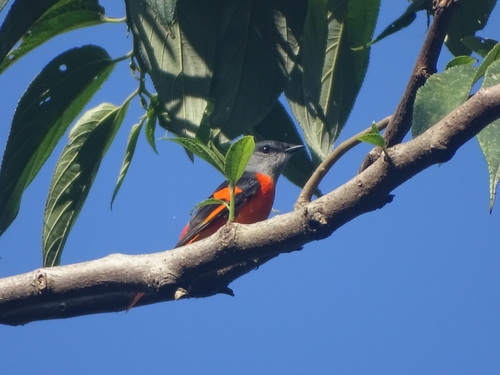 Minivet Gorjigrís
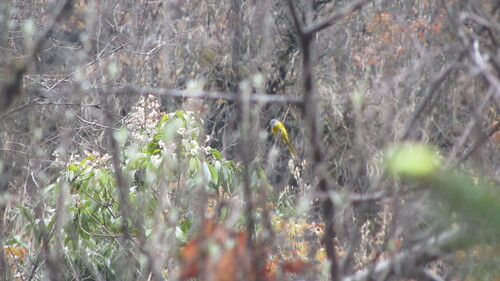 Minivet Colilargo
En breve
La marca de campo más confiable entre el Minivet Gorjigrís y el Minivet Colilargo es la combinación del color del mentón y el tono general del plumaje, especialmente en los machos adultos: el Gorjigrís muestra un mentón gris pálido y una cabeza gris oscura, mientras que el Colilargo carece de este contraste. Las hembras y los inmaduros de Minivet Gorjigrís son de un brillante color amarillo por debajo, pero los inmaduros tienen barras amarillas-oliva en la espalda, una característica no reportada en el Colilargo. Ambas especies son similares en tamaño y forma, pero el hábitat y la altitud pueden ayudar: el Gorjigrís prefiere bosques de mayor elevación (1,000–2,000 m), mientras que el Colilargo es más común desde las tierras bajas hasta los bosques montanos. Presta atención al color del mentón, el patrón de la espalda en los inmaduros y la elevación para la mejor separación.
Consejos de identificación
- Color del mentón (todas las edades): El Minivet Gorjigrís siempre muestra un mentón gris pálido, especialmente notable en los machos adultos. El Minivet Colilargo carece de este mentón pálido; busca este contraste cuando los pájaros te miran o están de perfil.
- Patrón de la espalda en inmaduros: Los juveniles e inmaduros de Minivet Gorjigrís tienen barras amarillas-oliva en su espalda, que los Minivets Colilargos no muestran. Esta es la mejor marca para separar a los jóvenes.
- Cabeza y manto (machos adultos): Los machos Gorjigrís tienen una cabeza y un manto gris oscuro, en contraste con la garganta naranja-amarilla. Los machos Colilargos tienen una coloración más uniforme en la cabeza y la garganta sin el mentón pálido.
- Puntas de las cobertoras mayores: El Gorjigrís muestra puntas naranjas en las cobertoras mayores, visibles como una barra alar en buena luz. Esto es menos prominente o ausente en el Colilargo.
- Color de las partes inferiores (sexo/edad): Las hembras y los inmaduros de Gorjigrís son de un brillante color amarillo por debajo, pero también lo son las hembras de Colilargo; no te fíes solo del color de las partes inferiores.
- Color de la parte baja de la espalda: El Gorjigrís tiene la parte baja de la espalda naranja (macho) o amarilla (hembra); el Colilargo es similar pero generalmente menos vívido. Esta marca es sutil y se debe usar en combinación con otras.
- Pico, patas y ojos: Ambas especies tienen picos, patas y ojos negros; estos no son útiles para la separación.
- Longitud y forma de la cola: No se reporta ninguna diferencia diagnóstica en las fuentes; ambos son de cola larga y delgados.
- Hábitat y elevación: Si el pájaro está en un bosque montano por encima de 1,000 m, especialmente en el Himalaya o Taiwán, es más probable que sea Gorjigrís. En bosques de tierras bajas, el Colilargo es el predeterminado.
- Rango geográfico: Ambas especies se superponen en gran parte de Asia, pero el Gorjigrís se extiende hasta Taiwán, donde el Colilargo está ausente.
- Dimorfismo sexual: Ambas especies son dimórficas sexualmente, pero el mentón gris en los machos Gorjigrís es único y diagnóstico.
- Composición de bandadas: Ambas especies pueden ocurrir en bandadas mixtas, así que no te fíes de los compañeros de bandada para la identificación.
- Vistas posadas vs. en vuelo: El mentón pálido y el patrón de la espalda en los inmaduros son visibles tanto posados como en vuelo, pero son más fáciles de ver cuando el pájaro te mira o cuando la espalda está expuesta.
- Cambio estacional: No se reportan cambios estacionales importantes en el plumaje para ninguna de las especies; usa marcas de edad y sexo durante todo el año.
- Trampas: No te fíes solo del brillo general o la longitud de la cola; concéntrate en el color del mentón y el patrón de la espalda en los inmaduros para la separación más confiable.
Tamaño
Ambas especies son similares en masa, con el Minivet Gorjigrís promediando 14 g [wikidata]. La longitud del Gorjigrís es de 17–19 cm [wikipedia], que está dentro del rango típico para minivets, y no se reporta que el Colilargo sea notablemente más grande o más pequeño en las fuentes disponibles. En el campo, el tamaño no es un separador confiable entre estos dos.
Plumaje
- Inmaduros/Juveniles: Los inmaduros de Minivet Gorjigrís se asemejan a las hembras pero muestran barras amarillas-oliva en la espalda, una marca clave no mencionada para el Colilargo. Usa este patrón de espalda para los jóvenes.
- Machos adultos: El Gorjigrís tiene una cabeza y un manto gris oscuro con un distintivo mentón gris pálido y garganta naranja-amarilla, mientras que el Colilargo carece del mentón pálido y generalmente tiene un color más uniforme en la cabeza y la garganta. Ambos tienen alas negruzcas, pero solo el Gorjigrís tiene puntas naranjas en las cobertoras mayores.
- Hembras adultas: La hembra de Gorjigrís es de un brillante color amarillo por debajo y en la parte baja de la espalda, con una cabeza gris; las hembras de Colilargo también son amarillentas pero carecen del mentón gris y tienen menos contraste en la cabeza.
- Partes inferiores: Los machos de Gorjigrís son naranjas por debajo, las hembras y los inmaduros son amarillos; el Colilargo es similar pero carece del mentón diagnóstico y del patrón de la espalda.
Comportamiento
Ambas especies son insectívoras arbóreas activas que se mueven en pequeñas bandadas y cazan insectos en el dosel. No se han notado diferencias de comportamiento fuertes en las fuentes que permitan separarlas de manera confiable en el campo.
Hábitat
El Minivet Gorjigrís se encuentra más a menudo en bosques montanos a elevaciones de 1,000–2,000 m, desde el Himalaya hasta el sudeste asiático y Taiwán. El Minivet Colilargo tiene un rango elevacional y geográfico más amplio, ocurriendo desde bosques de tierras bajas hasta bosques montanos en el sur y sureste de Asia, incluyendo áreas donde el Gorjigrís está ausente. Si se ve por debajo de 1,000 m, es mucho más probable que sea Colilargo; a mayores elevaciones, ambos son posibles, pero el Gorjigrís es más típico.