

pi-puí vs pichororé
Synallaxis cinerascens versus Synallaxis ruficapilla
Jogue um quiz com pi-puí e pichororé
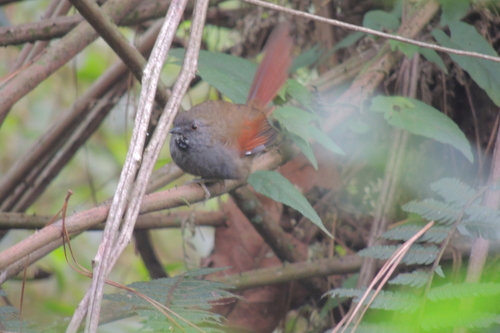 pi-puí
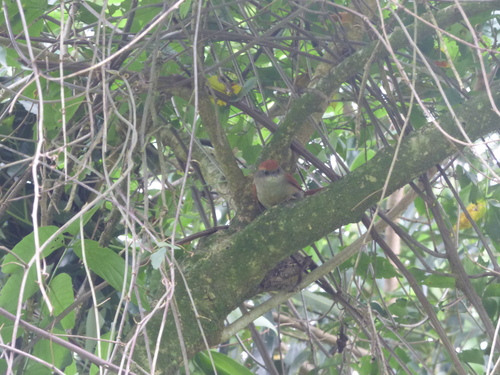 pichororé
Em resumo
A marca de campo mais confiável para separar o pi-puí do pichororé é o padrão da cabeça: o pi-puí tem uma coroa escura, marrom-acinzentada que se mistura em um rosto marrom-acinzentado com lore escuros e apenas uma linha cinza fraca atrás do olho, enquanto o pichororé apresenta uma coroa e nuca laranja-rufas brilhantes com um supercílio buff ousado. As diferenças juvenis são sutis, mas presentes, com o pi-puí mostrando uma mancha de garganta menos distinta e o pichororé uma coroa mais opaca. Ambas as espécies têm caudas e asas castanhas, mas as partes inferiores e os padrões da garganta diferem. As preferências de habitat e a altura de forrageio também podem ajudar, já que o pi-puí prefere interiores de florestas densas e forrageio mais baixo, enquanto o pichororé é mais frequentemente encontrado nas bordas da floresta e em bambuzais.
Dicas de identificação
- Cor e padrão da coroa (todas as idades): O pichororé sempre apresenta uma coroa e nuca laranja-rufas brilhantes, contrastando fortemente com o resto da cabeça. O pi-puí tem uma coroa e testa marrom-acinzentadas escuras, que se misturam ao rosto, nunca sendo rufas brilhantes.
- Supercílio (adultos e a maioria dos juvenis): O pichororé tem um supercílio buff largo que se destaca em perfil. O pi-puí não possui um supercílio forte, mostrando apenas uma linha cinza fraca atrás do olho.
- Lores e rosto: O pi-puí tem lores escuros e um rosto marrom-acinzentado, enquanto os lores e coberturas auriculares do pichororé são de um cinza marrom escuro, mas menos contrastantes devido ao supercílio ousado.
- Padrão da garganta: O pi-puí apresenta um queixo esbranquiçado, garganta superior manchada de preto e cinza pálido, e uma garganta inferior sólida e preta. O pichororé tem uma pequena mancha de queixo tawny (às vezes ausente em juvenis), com o resto do queixo e da garganta esbranquiçados e levemente estriados de cinza—nunca solidamente pretos.
- Partes inferiores: As partes inferiores do pi-puí são principalmente cinza marrom com um centro de barriga mais claro e cinza e flancos/cauda mais marrons. O pichororé é mais claro e buffy embaixo, especialmente na barriga e no peito inferior.
- Estrutura da cauda: Ambas têm caudas castanhas, mas a do pi-puí é mais escura, com pontas espinhosas (as pontas das penas não têm barbículas), enquanto a cauda do pichororé é graduada e as penas são pontiagudas, mas não espinhosas.
- Diferenças juvenis: O juvenil do pi-puí mostra uma mancha de garganta menos distinta e mais manchas embaixo; os juvenis do pichororé têm uma coroa mais opaca, pouca ou nenhuma mancha de queixo, e um tom mais marrom nas partes inferiores. Essas diferenças são sutis e são melhor usadas em combinação com o padrão da cabeça.
- Cor das asas: Ambas têm asas castanhas ou castanho-avermelhadas, não sendo um separador forte.
- Cor do bico: Ambas as espécies têm um bico escuro, com o pichororé às vezes mostrando uma mandíbula cinza com uma ponta escura; não é uma marca de campo confiável.
- Íris e pernas: Ambas têm íris marrom-avermelhadas e pernas/pés cinza-esverdeados; não são úteis para separação.
- Altura e contexto de forrageio: O pi-puí é mais propenso a ser visto no chão ou próximo a ele em interiores de florestas densas, enquanto o pichororé é frequentemente mais alto no sub-bosque, nas bordas, ou em bambuzais, e mais propenso a se juntar a bandos mistos.
- Habitat: Se visto em bambuzal ou na borda da floresta, é mais provável que seja o pichororé; florestas interiores profundas com pouco bambu sugerem o pi-puí.
- Voz: Ouça a canção muito alta e de duas notas do pi-puí em comparação com a canção mais baixa, trilhada ou ralada do pichororé. Se apenas chamados forem ouvidos, use com cautela.
- Distribuição: Ambas se sobrepõem amplamente, mas apenas o pi-puí ocorre no Uruguai.
- Tamanho e estrutura: Ambas são semelhantes em tamanho e massa; a estrutura não é um separador confiável em campo.
Para melhores resultados, concentre-se na cor da coroa e no supercílio, depois na garganta e nas partes inferiores, e finalmente no habitat e no contexto de forrageio. As aves juvenis são melhor identificadas pelo padrão da cabeça e diferenças sutis na garganta e nas partes inferiores.
Tamanho
Ambas as espécies são muito próximas em tamanho e massa, com o pi-puí pesando em média 13,8 g e o pichororé 14,0 g [wikidata]. O comprimento se sobrepõe: o pi-puí mede 13,5–15 cm, o pichororé 13–17 cm [wikipedia]. Em campo, o tamanho não é um separador confiável.
Plumagem
- Juvenis: Os juvenis do pi-puí têm uma mancha de garganta menos distinta e partes inferiores mais claras e manchadas. Os juvenis do pichororé mostram uma coroa mais opaca (menos laranja), pouca ou nenhuma mancha de queixo, e um tom ocre ou marrom nas partes inferiores. Essas diferenças são sutis e melhor vistas de perto.
- Adultos: O pi-puí tem uma testa e coroa marrom-acinzentadas escuras, lores escuros, uma linha cinza fraca atrás do olho, e um rosto marrom-acinzentado. A garganta é manchada de preto e cinza pálido acima, preta abaixo, e as partes inferiores são cinza marrom com um centro de barriga mais claro e cinza. O pichororé tem uma coroa e nuca laranja-rufas brilhantes, um supercílio buff largo, lores e coberturas auriculares cinza marrom escuro, e uma pequena mancha de queixo tawny. Sua garganta é principalmente esbranquiçada com estrias cinzas fracas, e as partes inferiores são mais claras e marrons. Ambas têm caudas e asas castanhas, mas a cauda do pi-puí é mais escura e com pontas espinhosas, enquanto a do pichororé é graduada e pontiaguda.
Comportamento
Ambas as espécies forrageiam em pares e principalmente colhem artrópodes da vegetação baixa. O pi-puí tende a ficar mais próximo do chão (no chão ou até 2 m), enquanto o pichororé forrageia no sub-bosque e às vezes sobe para o meio do dossel, frequentemente se juntando a bandos de espécies mistas. O pichororé também forrageia com mais frequência em bambuzais e é mais propenso a ser visto nas bordas da floresta.
Habitat
O pi-puí é mais frequentemente encontrado no interior de florestas densas de baixa altitude e montanhas perenes e florestas secundárias maduras, evitando bordas. O pichororé é mais flexível, habitando sub-bosques e bordas de vários tipos de florestas, tanto primárias quanto secundárias, e está fortemente associado ao bambu Chusquea. Ambas se sobrepõem em distribuição (Argentina, Brasil, Paraguai), mas o pi-puí se estende ao Uruguai e é mais restrito a florestas interiores, enquanto o pichororé é mais provável de ser encontrado em bordas e em manchas de bambu.
Voz
O pi-puí emite um 'weeet-sweet' muito alto e penetrante, com a primeira nota mais alta que a segunda. A canção do pichororé é mais variada e de tom mais baixo, descrita como um 'di-di-di-réét' nasal rápido, 'tdrrrWit', ou um 'drrrrrt wee' quieto e insistente, com um trinado ou rattle baixo distinto como chamado. Essas diferenças são úteis se a canção for claramente ouvida, mas ambas podem ser ignoradas em bandos mistos.