

Gray-bellied Spinetail vs Rufous-capped Spinetail
Synallaxis cinerascens contro Synallaxis ruficapilla
Fai un quiz con Gray-bellied Spinetail e Rufous-capped Spinetail
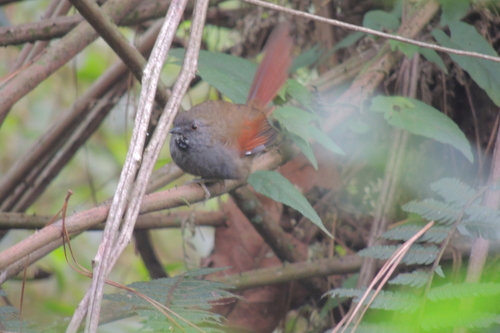 Gray-bellied Spinetail
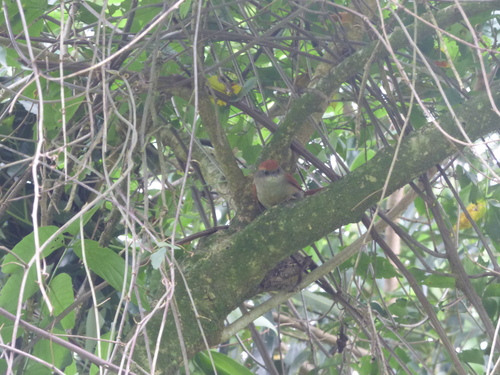 Rufous-capped Spinetail
In breve
Il segno di campo più affidabile per separare il Gray-bellied Spinetail dal Rufous-capped Spinetail è il motivo della testa: il Gray-bellied ha una corona scura, grigio-marrone che si fonde in un volto grigio-marrone con lore nere e solo una debole linea grigia dietro l'occhio, mentre il Rufous-capped mostra una corona e una nuca di un brillante arancio-ruggine con un bold buff supercilium. Le differenze giovanili sono sottili ma presenti, con il Gray-bellied che mostra una macchia della gola meno distinta e il Rufous-capped una corona più opaca. Entrambe le specie hanno code e ali castagne, ma i pattern delle parti inferiori e della gola differiscono. Le preferenze di habitat e l'altezza di foraggiamento possono anche aiutare, poiché il Gray-bellied preferisce interni di foresta densa e foraggiamento più basso, mentre il Rufous-capped è più spesso ai margini della foresta e in boschetti di bambù.
Consigli di identificazione
- Crown color and pattern (all ages): Il Rufous-capped Spinetail mostra sempre una brillante corona arancio-ruggine e una nuca, in forte contrasto con il resto della testa. Il Gray-bellied Spinetail ha una corona e una fronte grigio-marrone scuro, che si fonde nel volto, mai ruggine brillante.
- Supercilium (adults and most juveniles): Il Rufous-capped ha un ampio supercilium buff che spicca di profilo. Il Gray-bellied manca di un forte supercilium, mostrando solo una debole linea grigia dietro l'occhio.
- Lores and face: Il Gray-bellied ha lore nere e un volto grigio-marrone, mentre le lore e le copritrici auricolari del Rufous-capped sono grigio-marrone scuro ma meno contrastanti a causa del bold supercilium.
- Throat pattern: Il Gray-bellied mostra un mento biancastro, la parte superiore della gola macchiata di nero e grigio chiaro, e una parte inferiore della gola nera solida. Il Rufous-capped ha una piccola macchia di mento ruggine (a volte assente nei giovanili), con il resto del mento e della gola biancastri e leggermente striati di grigio—mai solidamente neri.
- Underparts: Le parti inferiori del Gray-bellied sono per lo più grigio-marrone con un centro della pancia più chiaro e grigio e fianchi/parte inferiore più marroni. Il Rufous-capped è più chiaro e buffy sotto, specialmente sulla pancia e sul petto inferiore.
- Tail structure: Entrambi hanno code castagne, ma quella del Gray-bellied è più scura, con punte spinose (le punte delle penne mancano di barbigli), mentre la coda del Rufous-capped è graduata e le penne sono appuntite ma non spine.
- Juvenile differences: Il giovanile Gray-bellied mostra una macchia della gola meno distinta e più maculature sotto; i giovanili del Rufous-capped hanno una corona più opaca, poca o nessuna macchia di mento, e un lavaggio più marrone sulle parti inferiori. Queste sono sottili e meglio utilizzate in combinazione con il motivo della testa.
- Wing color: Entrambi hanno ali castagne o castagne rosse, non un forte separatore.
- Bill color: Entrambe le specie hanno un becco grigio scuro, con il Rufous-capped che a volte mostra una mandibola grigia con una punta scura; non è un segno di campo affidabile.
- Iris and legs: Entrambi hanno iridi marrone rossiccio e gambe/piedi grigio-verdastri; non utili per la separazione.
- Foraging height and context: Il Gray-bellied è più probabile che venga visto a terra o vicino al suolo in interni di foresta densa, mentre il Rufous-capped è spesso più in alto nel sottobosco, ai margini, o in bambù, e più probabile che si unisca a stormi misti.
- Habitat: Se visto in bambù o ai margini della foresta, è più probabile che sia il Rufous-capped; una foresta interna profonda con poco bambù suggerisce il Gray-bellied.
- Voice: Ascolta il canto molto alto e a due note del Gray-bellied rispetto al canto più basso, trillato o rattled del Rufous-capped. Se si sentono solo richiami, usa con cautela.
- Range: Entrambi si sovrappongono ampiamente, ma solo il Gray-bellied si trova in Uruguay.
- Size and structure: Entrambi sono simili in dimensioni e massa; la struttura non è un separatore affidabile sul campo.
Per i migliori risultati, concentrati sul colore della corona e sul supercilium, poi sulla gola e sulle parti inferiori, e infine sull'habitat e sul contesto di foraggiamento.
Taglia
Entrambe le specie sono molto simili in dimensioni e massa, con il Gray-bellied Spinetail che pesa in media 13.8 g e il Rufous-capped Spinetail 14.0 g [wikidata]. Le lunghezze si sovrappongono: il Gray-bellied è 13.5–15 cm, il Rufous-capped 13–17 cm [wikipedia]. Sul campo, la dimensione non è un separatore affidabile.
Piumaggio
- Juveniles: I giovanili del Gray-bellied hanno una macchia della gola meno distinta e parti inferiori più chiare e macchiate. I giovanili del Rufous-capped mostrano una corona più opaca (meno arancio), poca o nessuna macchia di mento, e un lavaggio ocra o marrone sotto. Queste differenze sono sottili e meglio viste da vicino.
- Adults: Il Gray-bellied ha una fronte e una corona grigio-marrone scuro, lore nere, una debole linea grigia dietro l'occhio, e un volto grigio-marrone. La gola è macchiata di nero e grigio chiaro sopra, nera sotto, e le parti inferiori sono grigio-marrone con un centro della pancia più chiaro e grigio. Il Rufous-capped ha una corona e una nuca arancio-ruggine brillante, un ampio supercilium buff, lore e copritrici auricolari grigio-marrone scuro, e una piccola macchia di mento ruggine. La sua gola è per lo più biancastra con striature grigie deboli, e le parti inferiori sono più chiare e marrone buffy. Entrambi hanno code e ali castagne, ma la coda del Gray-bellied è più scura e con punte spine, mentre quella del Rufous-capped è graduata e appuntita.
Comportamento
Entrambe le specie foraggiano in coppie e principalmente raccolgono artropodi dalla vegetazione bassa. Il Gray-bellied Spinetail tende a rimanere più vicino al suolo (a terra o fino a 2 m), mentre il Rufous-capped foraggia nel sottobosco e a volte fino al mid-storey, spesso unendosi a stormi di specie miste. Il Rufous-capped foraggia anche più frequentemente in boschetti di bambù ed è più probabile che venga visto ai margini della foresta.
Habitat
Il Gray-bellied Spinetail si trova più spesso nell'interno di foreste sempreverdi dense di pianura e montane e in foreste secondarie mature, evitando i margini. Il Rufous-capped Spinetail è più flessibile, abitante del sottobosco e dei margini di vari tipi di foresta, sia primari che secondari, ed è fortemente associato al bambù Chusquea. Entrambi si sovrappongono in distribuzione (Argentina, Brasile, Paraguay), ma il Gray-bellied si estende in Uruguay ed è più ristretto a foreste interne, mentre il Rufous-capped è più probabile ai margini e in macchie di bambù.
Voce
Il Gray-bellied Spinetail emette un 'weeet-sweet' molto alto e penetrante, con la prima nota più alta della seconda. Il canto del Rufous-capped Spinetail è più vario e a tono più basso, descritto come un 'di-di-di-réét' nasale veloce, 'tdrrrWit', o un 'drrrrrt wee' silenzioso e insistente, con un trill o un secco rattling a bassa tonalità come richiamo. Queste differenze sono utili se il canto è chiaramente udito, ma entrambi possono essere trascurati in stormi misti.
Gray-bellied Spinetail · Rufous-capped Spinetail · I miei uccelli difficili