

Motmot

ハイバラオナガカマドドリ 対 ズアカオナガカマドドリ

Synallaxis cinerascens 対 Synallaxis ruficapilla

ハイバラオナガカマドドリとズアカオナガカマドドリのクイズ
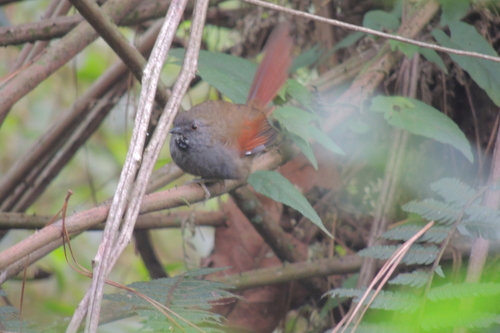
ハイバラオナガカマドドリ (Synallaxis cinerascens) ハイバラオナガカマドドリ
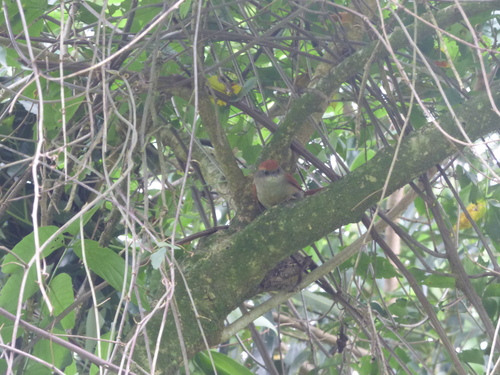
ズアカオナガカマドドリ (Synallaxis ruficapilla) ズアカオナガカマドドリ

メディア

読み込み中…

要点

ハイバラオナガカマドドリとズアカオナガカマドドリを区別するための最も信頼できるフィールドマークは頭部の模様です:Grey-belliedは暗い灰褐色の冠が灰褐色の顔に溶け込み、黒っぽいロアと目の後ろにかすかな灰色の線があるのに対し、Rufous-cappedは鮮やかなオレンジルーフスの冠と後頭部、太いバフのスーパシリウムを示します。幼鳥の違いは微妙ですが存在し、Grey-belliedはあまり明確でない喉の斑点を示し、Rufous-cappedは鈍い冠を持っています。両種は栗色の尾と翼を持っていますが、腹部と喉の模様は異なります。生息地の好みや採餌の高さも役立ちます。Grey-belliedは密な森林の内部と低い採餌を好むのに対し、Rufous-cappedは森林の端や竹林でより頻繁に見られます。

識別のコツ

  1. 冠の色と模様(すべての年齢): ズアカオナガカマドドリは常に明るいオレンジルーフスの冠と後頭部を示し、頭の他の部分と強く対照的です。ハイバラオナガカマドドリは暗い灰褐色の冠と額を持ち、顔に溶け込み、決して明るいルーフスではありません。
  2. スーパシリウム(成鳥とほとんどの幼鳥): Rufous-cappedは側面で目立つ広いバフのスーパシリウムを持っています。Grey-belliedは強いスーパシリウムを欠き、目の後ろにかすかな灰色の線しか示しません。
  3. ロアと顔: Grey-belliedは黒っぽいロアと灰褐色の顔を持っていますが、Rufous-cappedのロアと耳の覆い羽は暗い褐色がかった灰色ですが、太いスーパシリウムのために対照が少なくなっています。
  4. 喉の模様: Grey-belliedは白っぽい顎、上喉が黒と淡い灰色のまだら模様、下喉が黒の固体を示します。Rufous-cappedは小さな黄褐色の顎の斑点(幼鳥では時々欠如)を持ち、顎と喉の残りは白っぽく、かすかに灰色の筋が入っており、決して固体の黒ではありません。
  5. 腹部: Grey-belliedの腹部は主に灰褐色で、中央の腹部は淡い灰色で、側面/尾の下はより褐色です。Rufous-cappedは下側がより淡く、特に腹部と下胸部でバフ色が強いです。
  6. 尾の構造: 両者は栗色の尾を持っていますが、Grey-belliedの尾はより暗く、棘のある先端(羽の先端にはバーブがありません)を持ち、Rufous-cappedの尾は段階的で羽は尖っていますが棘はありません。
  7. 幼鳥の違い: 幼鳥のGrey-belliedはあまり明確でない喉の斑点と下側のより多くのまだら模様を示します。Rufous-cappedの幼鳥は鈍い冠を持ち、顎の斑点はほとんどないか、または欠如し、下側により褐色の洗いがかかっています。これらは微妙で、頭部の模様と組み合わせて使用するのが最良です。
  8. 翼の色: 両者は栗色または赤栗色の翼を持っており、強い区別にはなりません。
  9. くちばしの色: 両種は黒っぽいくちばしを持ち、Rufous-cappedは時々暗い先端の灰色の下顎を示しますが、信頼できるフィールドマークではありません。
  10. 虹彩と脚: 両者は赤褐色の虹彩と緑がかった灰色の脚/足を持ち、区別には役立ちません。
  11. 採餌の高さと文脈: Grey-belliedは密な森林の内部で地面またはその近くに見られる可能性が高いのに対し、Rufous-cappedはしばしば下層で、端や竹の中でより高く見られ、混合群れに参加する可能性が高いです。
  12. 生息地: 竹や森林の端で見られた場合、Rufous-cappedの可能性が高いです。竹が少ない深い内部森林はGrey-belliedを示唆します。
  13. 声: Grey-belliedの非常に高い二音の歌と、Rufous-cappedの低く、トリルまたはラトルの歌を聞いてください。呼び声だけが聞こえる場合は注意して使用してください。
  14. 範囲: 両者は広く重なりますが、Grey-belliedはウルグアイにのみ生息します。
  15. サイズと構造: 両者はサイズと質量が似ており、構造はフィールドでの信頼できる区別ではありません。

最良の結果を得るためには、冠の色とスーパシリウムに焦点を当て、その後喉と腹部、最後に生息地と採餌の文脈に注目してください。幼鳥は頭部の模様と喉と腹部の微妙な違いで最もよく識別されます。

大きさ

両種はサイズと質量が非常に近く、ハイバラオナガカマドドリは平均13.8g、ズアカオナガカマドドリは14.0gです [wikidata]。長さは重なります:Grey-belliedは13.5–15 cm、Rufous-cappedは13–17 cmです [wikipedia]。フィールドでは、サイズは信頼できる区別ではありません。

羽色

行動

両種はペアで採餌し、主に低い植生から節足動物を採取します。ハイバラオナガカマドドリは地面に近い(地面または最大2m)ところに留まる傾向がありますが、Rufous-cappedは下層で採餌し、時には中層に上がり、しばしば混合種の群れに参加します。Rufous-cappedは竹林でより頻繁に採餌し、森林の端で見られる可能性が高いです。

生息環境

ハイバラオナガカマドドリは主に密な低地および山地の常緑樹林や成熟した二次林の内部に見られ、端を避けます。ズアカオナガカマドドリはより柔軟で、さまざまな森林タイプの下層や端に生息し、一次林と二次林の両方に関連し、Chusquea竹に強く関連しています。両者は範囲が重なります(アルゼンチン、ブラジル、パラグアイ)が、Grey-belliedはウルグアイにまで広がり、内部森林により制限され、Rufous-cappedは端や竹の斑点で見られる可能性が高いです。

声

ハイバラオナガカマドドリは非常に高く、鋭い「ウィート-スイート」を発し、最初の音が二番目より高いです。ズアカオナガカマドドリの歌はより多様で低音で、速い鼻音の「ディ-ディ-ディ-レート」、「トゥルルウィット」、または静かでしつこい「ドゥルルルートウィー」として説明され、呼び声として特徴的な低音のトリルや乾いたラトルがあります。これらの違いは歌が明確に聞こえる場合に役立ちますが、両者は混合群れで見落とされることがあります。

より良い説明を送る

比較と同じ項目を使ってください。文章はすぐに公開されます。

The most reliable field mark for separating Grey-bellied Spinetail from Rufous-capped Spinetail is the head pattern: Grey-bellied has a dark, grayish-brown crown blending into a gray-brown face with blackish lores and only a faint gray line behind the eye, while Rufous-capped shows a strikingly bright orange-rufous crown and nape with a bold buff supercilium. Juvenile differences are subtle but present, with Grey-bellied showing a less distinct throat patch and Rufous-capped a duller crown. Both species have chestnut tails and wings, but the underparts and throat patterns differ. Habitat preferences and foraging height can also help, as Grey-bellied prefers dense forest interiors and lower foraging, while Rufous-capped is more often at forest edges and in bamboo stands.

  1. Crown color and pattern (all ages): Rufous-capped Spinetail always shows a bright orange-rufous crown and nape, contrasting strongly with the rest of the head. Grey-bellied Spinetail has a dark grayish-brown crown and forehead, blending into the face, never bright rufous.
  2. Supercilium (adults and most juveniles): Rufous-capped has a broad, buff supercilium that stands out in profile. Grey-bellied lacks a strong supercilium, only showing a faint gray line behind the eye.
  3. Lores and face: Grey-bellied has blackish lores and a gray-brown face, while Rufous-capped's lores and ear coverts are dark brownish gray but less contrasting due to the bold supercilium.
  4. Throat pattern: Grey-bellied shows a whitish chin, upper throat mottled black and pale gray, and a solid black lower throat. Rufous-capped has a tiny tawny chin spot (sometimes absent in juveniles), with the rest of the chin and throat whitish and faintly streaked gray—never solidly black.
  5. Underparts: Grey-bellied's underparts are mostly brownish gray with a paler, grayer belly center and browner flanks/undertail. Rufous-capped is paler and buffier below, especially on the belly and lower breast.
  6. Tail structure: Both have chestnut tails, but Grey-bellied's is darker, with spiny tips (feather tips lack barbs), while Rufous-capped's tail is graduated and the feathers are pointed but not spiny.
  7. Juvenile differences: Juvenile Grey-bellied shows a less distinct throat patch and more mottling below; Rufous-capped juveniles have a duller crown, little or no chin spot, and a browner wash on the underparts. These are subtle and best used in combination with head pattern.
  8. Wing color: Both have chestnut or reddish chestnut wings, not a strong separator.
  9. Bill color: Both species have a blackish bill, with Rufous-capped sometimes showing a gray mandible with a dark tip; not a reliable field mark.
  10. Iris and legs: Both have reddish brown irises and greenish gray legs/feet; not useful for separation.
  11. Foraging height and context: Grey-bellied is more likely to be seen on or near the ground in dense forest interiors, while Rufous-capped is often higher in the understorey, at edges, or in bamboo, and more likely to join mixed flocks.
  12. Habitat: If seen in bamboo or at forest edge, Rufous-capped is more likely; deep interior forest with little bamboo suggests Grey-bellied.
  13. Voice: Listen for the very high, two-note song of Grey-bellied versus the lower, trilled or rattled song of Rufous-capped. If only calls are heard, use with caution.
  14. Range: Both overlap widely, but only Grey-bellied occurs in Uruguay.
  15. Size and structure: Both are similar in size and mass; structure is not a reliable separator in the field.

For best results, focus on the crown color and supercilium, then throat and underparts, and finally habitat and foraging context. Juvenile birds are best identified by head pattern and subtle differences in throat and underparts.

Both species are very close in size and mass, with Grey-bellied Spinetail averaging 13.8 g and Rufous-capped Spinetail 14.0 g [wikidata]. Length overlaps: Grey-bellied is 13.5–15 cm, Rufous-capped 13–17 cm [wikipedia]. In the field, size is not a reliable separator.

  • Juveniles: Grey-bellied juveniles have a less distinct throat patch and paler, mottled underparts. Rufous-capped juveniles show a duller crown (less orange), little or no chin spot, and an ochraceous or brownish wash below. These differences are subtle and best seen at close range.
  • Adults: Grey-bellied has a dark grayish-brown forehead and crown, blackish lores, faint gray line behind the eye, and a gray-brown face. The throat is mottled black and pale gray above, black below, and the underparts are brownish gray with a paler, grayer belly center. Rufous-capped has a bright orange-rufous crown and nape, broad buff supercilium, dark brownish gray lores and ear coverts, and a tiny tawny chin spot. Its throat is mostly whitish with faint gray streaks, and the underparts are paler buffy brownish. Both have chestnut tails and wings, but Grey-bellied's tail is darker and spiny-tipped, while Rufous-capped's is graduated and pointed.

Both species forage in pairs and primarily glean arthropods from low vegetation. Grey-bellied Spinetail tends to stay closer to the ground (on the ground or up to 2 m), while Rufous-capped forages in the understorey and sometimes up into the mid-storey, often joining mixed-species flocks. Rufous-capped also forages more frequently in bamboo stands and is more likely to be seen at forest edges.

Grey-bellied Spinetail is most often found in the interior of dense lowland and montane evergreen forest and mature secondary forest, avoiding edges. Rufous-capped Spinetail is more flexible, inhabiting undergrowth and edges of various forest types, both primary and secondary, and is strongly associated with Chusquea bamboo. Both overlap in range (Argentina, Brazil, Paraguay), but Grey-bellied extends into Uruguay and is more restricted to interior forest, while Rufous-capped is more likely at edges and in bamboo patches.

Grey-bellied Spinetail gives a very high, piercing 'weeet-sweet', with the first note higher than the second. Rufous-capped Spinetail's song is more varied and lower-pitched, described as a fast nasal 'di-di-di-réét', 'tdrrrWit', or a quiet, insistent 'drrrrrt wee', with a distinctive low-pitched trill or dry rattle as a call. These differences are useful if the song is clearly heard, but both can be overlooked in mixed flocks.

変更を破棄しますか?

保存していない編集があります。今離れると失われます。

ハイバラオナガカマドドリ · ズアカオナガカマドドリ · 苦手な鳥