

green-breasted mango vs veraguan mango
Anthracothorax prevostii versus Anthracothorax veraguensis
Jogue um quiz com green-breasted mango e veraguan mango
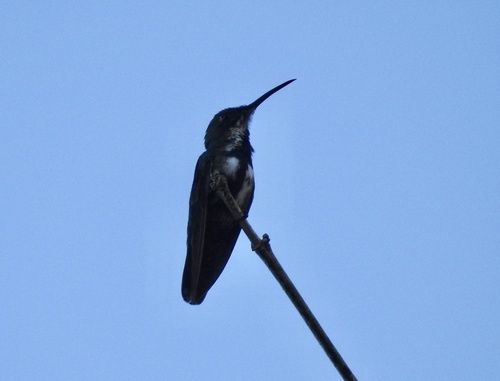 green-breasted mango
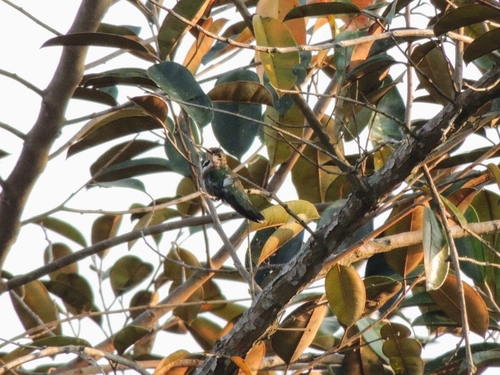 veraguan mango
Em resumo
A maneira mais confiável de separar o green-breasted mango do veraguan mango é pela cor e extensão da faixa ventral (parte inferior): o green-breasted mango sempre apresenta uma faixa preta, aveludada e ousada no centro da garganta e do peito (machos e fêmeas), enquanto o veraguan mango não tem preto na garganta e, em vez disso, possui uma faixa ventral verde-azulada (fêmea) ou azulada (macho), com fêmeas mostrando uma barriga branca ou creme. Ambas as espécies são beija-flores verdes metálicos com tamanho e estrutura semelhantes, mas os detalhes da cauda e da parte inferior são fundamentais. Juvenis de green-breasted mango podem mostrar uma garganta e centro do peito brancos com castanho nas laterais, o que não é igualado pelo veraguan mango. A distribuição também é útil: o veraguan mango é restrito ao Panamá e Costa Rica, enquanto o green-breasted mango é amplamente distribuído do leste do México ao norte da América do Sul.
Dicas de identificação
- Cor da Faixa Ventral (Todas as Idades): O green-breasted mango sempre apresenta uma faixa preta, aveludada e ousada que vai do queixo ao peito inferior (ambos os sexos). O veraguan mango nunca tem preto na garganta; a faixa ventral é azulada (macho) ou verde-azulada escura (fêmea), e nas fêmeas está situada em uma barriga branca ou creme.
- Cor da Garganta (Todas as Idades): O green-breasted mango tem preto na garganta em ambos os sexos; a garganta do veraguan mango é verde metálico ou azulada, nunca preta.
- Cor da Barriga (Fêmeas): A fêmea do green-breasted mango tem partes inferiores verdes metálicas com uma faixa preta/verde-azulada contornada; a fêmea do veraguan mango tem uma barriga branca ou creme com uma única faixa verde-azulada escura no centro.
- Padrão Juvenil: O juvenil do green-breasted mango pode mostrar um queixo, garganta e centro do peito brancos com castanho nas laterais—essa combinação não é descrita para o veraguan mango e é uma forte pista se vista.
- Padrão da Cauda (Ambos os Sexos): O green-breasted mango tem penas externas da cauda roxas ou azul-negras com brilho metálico (machos) ou azul-negras com base roxa e pontas esbranquiçadas (fêmeas). O veraguan mango tem penas da cauda pretas com um círculo vermelho central em cada pena (ambos os sexos). Procure o círculo vermelho se a cauda estiver espalhada ou bem iluminada.
- Coroa e Partes Superiores: Machos do green-breasted mango têm uma coroa e nuca verde metálico bronze; o veraguan mango é verde metálico acima, mas não possui o tom bronzeado.
- Coberturas da Cauda Inferior: Fêmeas do green-breasted mango têm coberturas da cauda inferior escuras com largas bordas brancas; as coberturas da cauda inferior do veraguan mango não são descritas como distintas.
- Formato do Bico: Ambas as espécies têm um bico ligeiramente curvado para baixo e escuro; essa não é uma marca de separação útil.
- Tamanho: Ambas são beija-flores de tamanho médio com comprimento e massa semelhantes; o tamanho não é uma marca de campo confiável.
- Distribuição: O veraguan mango é encontrado apenas no Panamá e na Costa Rica. O green-breasted mango é muito mais amplamente distribuído. Se visto fora do Panamá/Costa Rica, é quase certamente um green-breasted mango.
- Dimorfismo Sexual: Ambas as espécies mostram dimorfismo sexual, mas a cor da faixa ventral e da barriga é a diferença mais confiável ligada ao sexo.
- Visões em Voo e Empoleiradas: Em voo, a cor da cauda e a faixa ventral podem ser visíveis; empoleiradas, o padrão da parte inferior é geralmente mais fácil de ver. Tente obter uma visão clara da garganta e da barriga.
- Armadilhas de Plumagem: A semelhança na coloração verde geral e na estrutura pode causar confusão; concentre-se na faixa da parte inferior e no padrão da cauda em vez da cor da parte superior.
- Variação Sazonal: Nenhuma diferença sazonal forte de plumagem é descrita para qualquer uma das espécies, mas o juvenil do green-breasted mango pode ser distintivo.
- Voz: Nenhuma diferença vocal diagnóstica é descrita nas fontes; confie nas marcas visuais.
Tamanho
Ambas as espécies são muito semelhantes em tamanho e estrutura. O green-breasted mango mede de 10,3 a 12,1 cm de comprimento e pesa de 5,7 a 7,0 g. O veraguan mango é listado com 11 a 12 cm de comprimento, sem peso fornecido, mas é descrito como de tamanho médio e semelhante ao green-breasted mango. O formato do bico também é semelhante: ambos têm um bico ligeiramente curvado para baixo e escuro. O tamanho não é uma marca de campo confiável entre estes dois.
Plumagem
-
Juvenis: O juvenil do green-breasted mango se assemelha à fêmea adulta, mas com um queixo, garganta e centro do peito brancos, e castanho nas laterais. Nenhum padrão semelhante é descrito para os juvenis do veraguan mango, que não são detalhados nas fontes, mas não são notados por mostrar essa combinação.
-
Machos adultos: Os machos do green-breasted mango têm uma coroa e partes superiores verde metálico bronze, com uma faixa preta, aveludada e ousada que vai do queixo ao peito, contornada por verde metálico azulada. A cauda é principalmente roxa com brilho metálico, com penas centrais de verde metálico bronze. Os machos do veraguan mango são verdes metálicos acima, têm um peito e barriga azulados (não pretos) e penas da cauda pretas com um círculo vermelho central em cada pena.
-
Fêmeas adultas: As fêmeas do green-breasted mango têm menos verde bronze acima, uma faixa preta no queixo e na garganta que se torna verde azulada no peito, e uma borda branca. O restante das partes inferiores é verde metálico, com coberturas da cauda inferior escuras com bordas brancas. Sua cauda tem penas externas azul-negras com largas bases roxas e pontas esbranquiçadas. As fêmeas do veraguan mango têm uma barriga branca-creme com uma faixa verde-azulada escura descendo pelo peito (não preta), e penas da cauda pretas com um círculo vermelho em cada pena.
-
Cauda: Green-breasted mango: penas externas da cauda roxas ou azul-negras com brilho metálico (machos) ou azul-negras com base roxa e pontas esbranquiçadas (fêmeas). Veraguan mango: penas da cauda pretas com um círculo vermelho central em cada pena (ambos os sexos).
Comportamento
Ambas as espécies forrageiam por néctar e artrópodes em todos os níveis de seu habitat, desde o sub-bosque até o dossel, e ambas visitarão alimentadores. Nenhuma diferença comportamental é destacada nas fontes que seja diagnóstica em campo.
Habitat
O green-breasted mango é amplamente distribuído do leste do México através da maior parte da América Central, Colômbia e Venezuela, e é um raro vagante nos Estados Unidos. O veraguan mango é muito mais localizado, encontrado apenas no Panamá e recentemente na Costa Rica. Se você estiver fora do Panamá ou Costa Rica, é extremamente improvável encontrar o veraguan mango. Ambas as espécies utilizam uma variedade de habitats florestais e abertos, incluindo áreas alteradas pelo homem, portanto, o tipo de habitat é menos útil do que a localização geográfica.
green-breasted mango · veraguan mango · Minhas aves difíceis