

Green-breasted Mango vs Veraguan Mango
Anthracothorax prevostii contro Anthracothorax veraguensis
Fai un quiz con Green-breasted Mango e Veraguan Mango
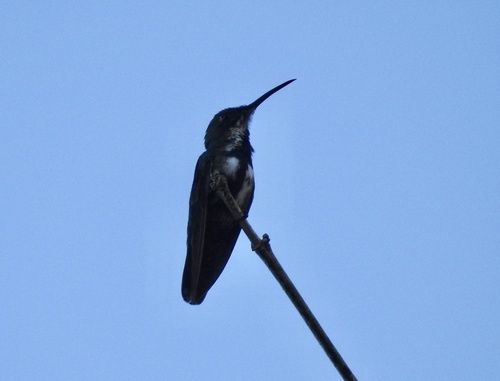 Green-breasted Mango
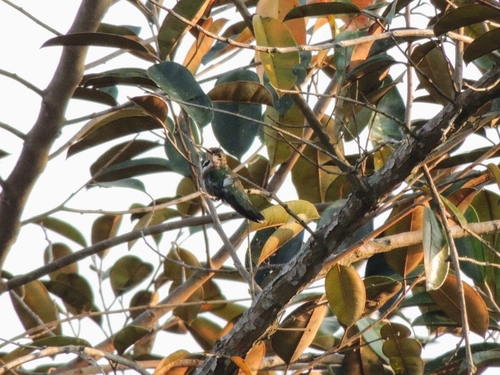 Veraguan Mango
In breve
Il modo più affidabile per separare il Green-breasted Mango dal Veraguan Mango è il colore e l'estensione della striscia ventrale (parte inferiore): il Green-breasted Mango mostra sempre una striscia nera, audace e vellutata lungo il centro della gola e del petto (maschio e femmina), mentre il Veraguan Mango non ha nero sulla gola e ha invece una striscia ventrale color teal (femmina) o bluastro (maschio), con le femmine che mostrano un ventre bianco o crema. Entrambe le specie sono colibrì verdi metallici di dimensioni e struttura simili, ma i dettagli della coda e della parte inferiore sono fondamentali. I giovani Green-breasted Mango possono mostrare una gola e un centro del petto bianchi con castano sui lati, cosa che non è riscontrabile nel Veraguan Mango. Anche l'areale è utile: il Veraguan Mango è limitato a Panama e Costa Rica, mentre il Green-breasted Mango è diffuso dal Messico orientale al nord dell'America del Sud.
Consigli di identificazione
- Colore della Striscia Ventral (Tutte le Età): Il Green-breasted Mango mostra sempre una striscia nera, audace e vellutata che va dal mento al petto inferiore (entrambi i sessi). Il Veraguan Mango non ha mai nero sulla gola; la striscia ventrale è bluastro (maschio) o teal scuro (femmina), e nelle femmine è posizionata su un ventre bianco o crema.
- Colore della Gola (Tutte le Età): Il Green-breasted Mango ha nero sulla gola in entrambi i sessi; la gola del Veraguan Mango è verde metallico o bluastro, mai nera.
- Colore del Ventre (Femmine): La femmina del Green-breasted Mango ha parti inferiori verdi metalliche con una striscia nera/verde-blu bordata; la femmina del Veraguan Mango ha un ventre bianco o crema con una singola striscia teal scuro lungo il centro.
- Pattern Giovanile: Il giovane Green-breasted Mango può mostrare un mento, una gola e un centro del petto bianchi con castano sui lati—questa combinazione non è descritta per il Veraguan Mango ed è un forte indizio se vista.
- Pattern della Coda (Entrambi i Sessi): Il Green-breasted Mango ha piume esterne della coda viola o blu-nerastre con lucentezza metallica (maschi) o blu-nerastre con base viola e punte bianche (femmine). Il Veraguan Mango ha piume della coda nere con un cerchio rosso centrale su ciascuna piuma (entrambi i sessi). Cerca il cerchio rosso se la coda è aperta o ben illuminata.
- Corona e Parti Superiori: I maschi del Green-breasted Mango hanno una corona e una nuca verde bronzo-metallico; il Veraguan Mango è verde metallico sopra ma manca del tono bronzato.
- Copritrici della Coda Inferiore: Le femmine del Green-breasted Mango hanno copritrici della coda inferiore scure con ampi bordi bianchi; le copritrici della coda inferiore del Veraguan Mango non sono descritte come distintive.
- Forma del Becco: Entrambe le specie hanno un becco leggermente ricurvo e scuro; questo non è un segno di separazione utile.
- Dimensioni: Entrambi sono colibrì di dimensioni medie di lunghezza e massa simili; le dimensioni non sono un segno di campo affidabile.
- Areale: Il Veraguan Mango si trova solo a Panama e Costa Rica. Il Green-breasted Mango è molto più diffuso. Se visto al di fuori di Panama/Costa Rica, è quasi certamente un Green-breasted Mango.
- Dimorfismo Sessuale: Entrambe le specie mostrano dimorfismo sessuale, ma il colore della striscia ventrale e del ventre è la differenza sessuale più affidabile.
- Visioni in Volo e Posato: In volo, il colore della coda e la striscia ventrale possono essere visibili; posato, il pattern della parte inferiore è solitamente più facile da vedere. Cerca di ottenere una vista chiara della gola e del ventre.
- Trappole del Piumaggio: La somiglianza nel colore verde generale e nella struttura può causare confusione; concentrati sulla striscia della parte inferiore e sul pattern della coda piuttosto che sul colore della parte superiore.
- Variazione Stagionale: Non sono descritte forti differenze di piumaggio stagionali per nessuna delle due specie, ma il giovane Green-breasted Mango può essere distintivo.
- Voce: Non sono descritte differenze vocali diagnostiche nelle fonti; fai affidamento sui segni visivi.
Taglia
Entrambe le specie sono molto simili in dimensioni e struttura. Il Green-breasted Mango misura 10,3–12,1 cm di lunghezza e pesa 5,7–7,0 g. Il Veraguan Mango è elencato a 11–12 cm di lunghezza, senza peso fornito, ma è descritto come di dimensioni medie e simile al Green-breasted Mango. La forma del becco è anche simile: entrambi hanno un becco leggermente ricurvo e scuro. Le dimensioni non sono un segno di campo affidabile tra questi due.
Piumaggio
-
Giovani: Il giovane Green-breasted Mango assomiglia alla femmina adulta ma con un mento, una gola e un centro del petto bianchi, e castano sui lati. Nessun pattern del genere è descritto per i giovani del Veraguan Mango, che non sono dettagliati nelle fonti, ma non è notato che mostrino questa combinazione.
-
Maschi adulti: I maschi del Green-breasted Mango hanno una corona e parti superiori verde bronzo-metallico, con una striscia nera, audace e vellutata che va dal mento al petto, bordata di verde bluastro metallico. La coda è per lo più viola con lucentezza metallica, con piume centrali di un verde bronzo opaco. I maschi del Veraguan Mango sono verdi metallici sopra, hanno un petto e un ventre bluastro (non nero), e piume della coda nere con un cerchio rosso centrale su ciascuna piuma.
-
Femmine adulte: Le femmine del Green-breasted Mango hanno meno verde bronzato sopra, una striscia nera sul mento e sulla gola che diventa verde bluastro sul petto, e un bordo bianco. Il resto delle parti inferiori è verde metallico, con copritrici della coda inferiore scure bordate di bianco. La loro coda ha piume esterne blu-nerastre con ampie basi viola e punte bianche. Le femmine del Veraguan Mango hanno un ventre bianco-crema con una striscia teal scuro lungo il petto (non nera), e piume della coda nere con un cerchio rosso su ciascuna piuma.
-
Coda: Green-breasted Mango: piume esterne della coda viola o blu-nerastre con lucentezza metallica (maschi) o blu-nerastre con base viola e punte bianche (femmine). Veraguan Mango: piume della coda nere con un cerchio rosso centrale su ciascuna piuma (entrambi i sessi).
Comportamento
Entrambe le specie cercano nettare e artropodi a tutti i livelli del loro habitat, dall'understory alla chioma, e entrambe visiteranno i mangiatoie. Nessuna differenza comportamentale è evidenziata nelle fonti che sia diagnostica sul campo.
Habitat
Il Green-breasted Mango è diffuso dal Messico orientale attraverso la maggior parte dell'America Centrale, Colombia e Venezuela, ed è un raro vagabondo negli Stati Uniti. Il Veraguan Mango è molto più localizzato, trovato solo a Panama e recentemente in Costa Rica. Se ti trovi al di fuori di Panama o Costa Rica, il Veraguan Mango è estremamente improbabile. Entrambe le specie utilizzano una gamma di habitat boschivi e aperti, comprese le aree alterate dall'uomo, quindi il tipo di habitat è meno utile rispetto alla posizione geografica.
Green-breasted Mango · Veraguan Mango · I miei uccelli difficili