

seixoeira-grande vs maçarico-pernilongo
Calidris tenuirostris versus Calidris himantopus
Jogue um quiz com seixoeira-grande e maçarico-pernilongo
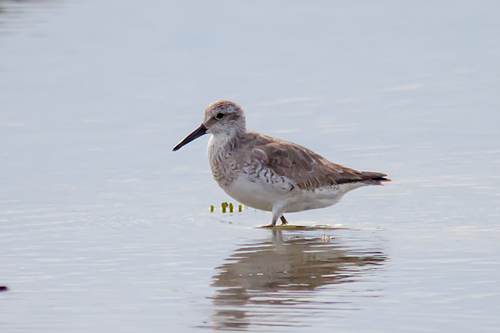 seixoeira-grande
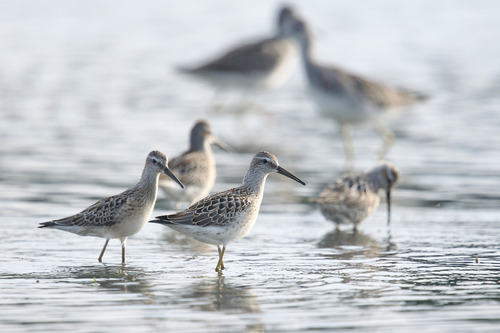 maçarico-pernilongo
Em resumo
A marca de campo mais confiável para separar a seixoeira-grande do maçarico-pernilongo é o tamanho: a seixoeira-grande é muito maior e mais robusta, com um peito mais profundo e uma construção mais pesada, enquanto o maçarico-pernilongo é distintamente menor e mais esbelto. Em voo, o maçarico-pernilongo não possui uma faixa alar, enquanto a seixoeira-grande apresenta uma faixa alar pálida, especialmente em plumagem fresca. A cor das pernas também é fundamental: a seixoeira-grande tem pernas curtas e escuras; as pernas do maçarico-pernilongo são mais longas e verde-amareladas. A estrutura do bico difere: o bico da seixoeira-grande é de comprimento médio e reto, enquanto o do maçarico-pernilongo é mais longo, mais fino e apenas levemente curvado para baixo. A plumagem de reprodução é distinta para ambos, mas cuidado com as aves não reprodutoras, que são ambas cinzas por cima e brancas por baixo—procure por tamanho, estrutura e cor das pernas nesses casos.
Dicas de identificação
- O tamanho é a marca mais consistente: A seixoeira-grande é muito maior e mais robusta que o maçarico-pernilongo. Use comparação direta se ambos estiverem presentes; se sozinho, note a aparência robusta e de peito profundo da seixoeira-grande em comparação com o esbelto e delicado maçarico-pernilongo.
- Cor e comprimento das pernas: A seixoeira-grande tem pernas curtas e escuras; o maçarico-pernilongo tem pernas mais longas e verde-amareladas. Isso é visível tanto quando está em pé quanto em voo, especialmente se as pernas ficarem para trás.
- Formato do bico: O bico da seixoeira-grande é de comprimento médio, reto e bastante grosso; o bico do maçarico-pernilongo é mais longo, mais fino e apenas levemente curvado para baixo (não tão claramente curvado para baixo como o maçarico-de-bico-curvo, mas mais do que a seixoeira-grande). Isso é melhor visto de perfil.
- Padrão das asas em voo: O maçarico-pernilongo não possui uma faixa alar; a seixoeira-grande apresenta uma faixa alar pálida, especialmente em plumagem fresca. Esta é uma marca chave para aves em voo ou em movimento.
- Padrão da cabeça: O maçarico-pernilongo tem um supercílios branco forte (sobrancelha), especialmente em juvenis e adultos não reprodutores; a cabeça da seixoeira-grande é mais simples, sem um supercílios forte.
- Marcas nas partes inferiores (reprodução): A seixoeira-grande tem manchas pretas pesadas no rosto, garganta e peito, com algumas estrias na barriga; o maçarico-pernilongo é fortemente riscado por baixo (preto em branco), com manchas avermelhadas acima e abaixo do supercílios.
- Cor e padrão das partes superiores: A seixoeira-grande em plumagem de reprodução apresenta uma faixa ruiva nos escapulares e partes superiores cinzentas manchadas; o maçarico-pernilongo tem um dorso marrom com centros escuros e franjas brancas em juvenis.
- Contraste juvenil: Os juvenis do maçarico-pernilongo têm um padrão de cabeça forte e penas de dorso com franjas brancas, mas não são riscado por baixo; os juvenis da seixoeira-grande são cinzentos simples por cima e não têm um padrão de cabeça forte.
- Rabo e cauda: O maçarico-pernilongo tem um rabo branco, que pode ser visto em voo; o rabo da seixoeira-grande não é tão contrastante.
- Comprimento das pernas na postura de alimentação: O maçarico-pernilongo frequentemente se aprofunda mais devido às pernas mais longas; a seixoeira-grande geralmente se alimenta em águas mais rasas.
- Contexto do habitat: A seixoeira-grande é quase sempre costeira; o maçarico-pernilongo é mais provável de ser encontrado em áreas interiores ou na borda da água, mas pode se sobrepor durante a migração.
- Comportamento: O maçarico-pernilongo pode mostrar uma ação de alimentação mais ativa e pode ser visto se aprofundando até a barriga; a seixoeira-grande se move de forma mais deliberada e frequentemente está em bandos mais densos.
- Confusão em não-reprodução: Em plumagem cinza de inverno, confie em tamanho, estrutura, cor das pernas e padrão da cabeça, já que ambos são cinzas por cima e brancos por baixo.
- Comprimento do bico em relação à cabeça: O bico do maçarico-pernilongo é notavelmente mais longo que sua cabeça; o bico da seixoeira-grande é apenas moderadamente mais longo que a cabeça.
- Contexto de bando misto: Se visto com outros Calidris, a seixoeira-grande se destacará como a maior, enquanto o maçarico-pernilongo será mais próximo em tamanho do pilrito-de-peito-preto ou do maçarico-de-bico-curvo.
Tamanho
A seixoeira-grande é substancialmente maior: 26–30 cm de comprimento, 56–66 cm de envergadura e cerca de 165 g de massa ([wikidata]). O maçarico-pernilongo é muito menor: 18–23 cm de comprimento, 37–42 cm de envergadura e 50–70 g de massa ([wikipedia]). No campo, a seixoeira-grande parece robusta e com peito pesado, enquanto o maçarico-pernilongo é esbelto e levemente construído. Essa diferença é óbvia em bandos mistos e à distância.
Plumagem
- Juvenil/imaturo/fresca não-reprodutora: Os juvenis do maçarico-pernilongo têm um padrão de cabeça forte com um supercílios pálido proeminente e dorso marrom com franjas brancas, mas não são riscado por baixo. Os juvenis da seixoeira-grande e as aves não reprodutoras são uniformemente cinzas pálidos por cima e carecem de um padrão de cabeça forte, parecendo mais simples no geral.
- Adulto reprodutor: A seixoeira-grande apresenta partes superiores cinzentas manchadas com uma faixa ruiva nos escapulares e manchas pretas pesadas no rosto, garganta e peito; algumas estrias se estendem até a barriga. O maçarico-pernilongo em plumagem de reprodução é fortemente riscado por baixo (preto em branco), com manchas avermelhadas acima e abaixo do supercílios, e um dorso marrom com centros escuros.
- Adulto não-reprodutor: Ambas as espécies são cinzas por cima e brancas por baixo, mas a seixoeira-grande é mais simples e robusta, enquanto o maçarico-pernilongo mantém um supercílios branco e um padrão de cabeça mais contrastante.
- Em voo: O maçarico-pernilongo não possui uma faixa alar; a seixoeira-grande apresenta uma faixa alar pálida, especialmente em plumagem fresca. O maçarico-pernilongo também tem um rabo branco, que pode ser uma marca de apoio.
Comportamento
A seixoeira-grande se alimenta sondando ou pegando comida à vista, principalmente em bancos de lama e praias, e tende a se mover em bandos densos. O maçarico-pernilongo também se alimenta em bancos de lama, mas frequentemente se alimenta em águas mais profundas, às vezes se aprofundando até a barriga, e pode mostrar uma ação de alimentação mais ativa, semelhante a uma máquina de costura. As pernas mais longas do maçarico-pernilongo permitem que ele se alimente em águas ligeiramente mais profundas do que a seixoeira-grande.
Habitat
A seixoeira-grande é tipicamente encontrada em bancos de lama costeiros e praias arenosas, especialmente durante a migração e o inverno. O maçarico-pernilongo prefere pântanos de água doce ou salobra e campos alagados, mas também pode ser encontrado em bancos de lama. A sobreposição é possível durante a migração, mas a seixoeira-grande é mais estritamente costeira, enquanto o maçarico-pernilongo é mais provável de ser encontrado em áreas interiores ou na borda da água.
seixoeira-grande · maçarico-pernilongo · Minhas aves difíceis