

Great Knot vs Stilt Sandpiper
Calidris tenuirostris contro Calidris himantopus
Fai un quiz con Great Knot e Stilt Sandpiper
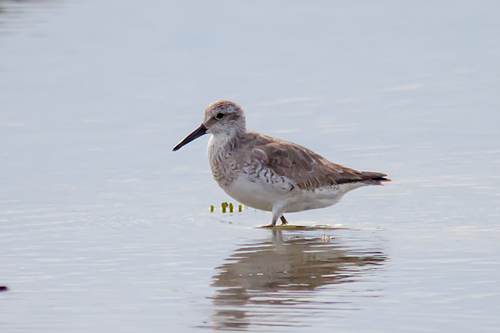 Great Knot
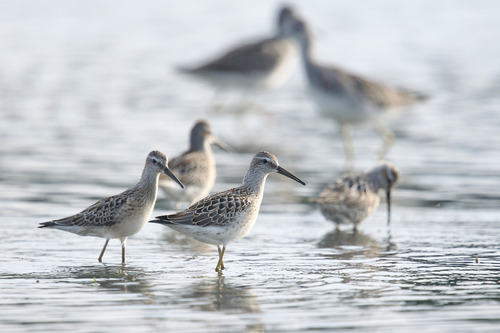 Stilt Sandpiper
In breve
Il segno di campo più affidabile per separare il Great Knot dallo Stilt Sandpiper è la dimensione: il Great Knot è molto più grande e massiccio, con un torace più profondo e una corporatura più pesante, mentre lo Stilt Sandpiper è decisamente più piccolo e snello. In volo, lo Stilt Sandpiper non ha una banda alare, mentre il Great Knot mostra una banda alare chiara, specialmente nel piumaggio fresco. Anche il colore delle gambe è fondamentale: il Great Knot ha gambe corte e scure; le gambe dello Stilt Sandpiper sono più lunghe e di colore giallo-verde. La struttura del becco differisce: il becco del Great Knot è di lunghezza media e dritto, mentre quello dello Stilt Sandpiper è più lungo, più fine e solo leggermente ricurvo. Il piumaggio nuziale è distintivo per entrambi, ma fai attenzione agli uccelli non in riproduzione, che sono entrambi grigi sopra e bianchi sotto: cerca dimensione, struttura e colore delle gambe in questi casi.
Consigli di identificazione
- La dimensione è il segno più consistente: il Great Knot è molto più grande e massiccio dello Stilt Sandpiper. Usa un confronto diretto se entrambi sono presenti; se sei solo, nota l'aspetto robusto e profondo del Great Knot rispetto allo Stilt Sandpiper snello e delicato.
- Colore e lunghezza delle gambe: il Great Knot ha gambe corte e scure; lo Stilt Sandpiper ha gambe più lunghe e di colore giallo-verde. Questo è visibile sia quando è in piedi che in volo, specialmente se le gambe sono in ritardo.
- Forma del becco: il becco del Great Knot è di lunghezza media, dritto e piuttosto spesso; il becco dello Stilt Sandpiper è più lungo, più fine e solo leggermente ricurvo (non così ovviamente ricurvo come il Piovanello comune, ma più di quanto non lo sia il Great Knot). Questo è meglio visto di profilo.
- Schema alare in volo: lo Stilt Sandpiper non ha una banda alare; il Great Knot mostra una banda alare chiara, specialmente nel piumaggio fresco. Questo è un segno chiave per gli uccelli in volo o in movimento.
- Schema della testa: lo Stilt Sandpiper ha un forte supercilium bianco (sopracciglio), specialmente nei giovani e negli adulti non in riproduzione; la testa del Great Knot è più semplice, priva di un forte supercilium.
- Marcature delle parti inferiori (riproduzione): il Great Knot ha pesanti macchie nere sul viso, sulla gola e sul petto, con alcune striature sull'addome; lo Stilt Sandpiper è pesantemente barrato sotto (nerastro su bianco), con macchie rosso-arancioni sopra e sotto il supercilium.
- Colore e schema delle parti superiori: il Great Knot in piumaggio nuziale mostra una banda rugginosa sulle scapole e parti superiori grigie macchiate; lo Stilt Sandpiper ha un dorso marrone con centri scuri e frange bianche nei giovani.
- Contrasto giovanile: i giovani dello Stilt Sandpiper hanno un forte schema della testa e piume del dorso con frange bianche, ma non sono barrati sotto; i giovani del Great Knot sono grigi uniformi sopra e mancano di un forte schema della testa.
- Coda e coda: lo Stilt Sandpiper ha un'area bianca, che può essere vista in volo; la parte posteriore del Great Knot non è così contrastante.
- Lunghezza delle gambe in postura di alimentazione: lo Stilt Sandpiper spesso si immerge più a fondo a causa delle gambe più lunghe; il Great Knot di solito si nutre in acque più basse.
- Contesto dell'habitat: il Great Knot è quasi sempre costiero; lo Stilt Sandpiper è più probabile che si trovi nell'entroterra o al margine dell'acqua, ma può sovrapporsi durante la migrazione.
- Comportamento: lo Stilt Sandpiper può mostrare un'azione di alimentazione più attiva e simile a una macchina da cucire e può essere visto che si immerge fino alla pancia; il Great Knot si muove in modo più deliberato ed è spesso in stormi più densi.
- Confusione non in riproduzione: nel piumaggio grigio invernale, fai affidamento su dimensione, struttura, colore delle gambe e schema della testa, poiché entrambi sono grigi sopra e bianchi sotto.
- Lunghezza del becco rispetto alla testa: il becco dello Stilt Sandpiper è visibilmente più lungo della sua testa; il becco del Great Knot è solo moderatamente più lungo della testa.
- Contesto di stormo misto: se visto con altri Calidris, il Great Knot si distinguerà come il più grande, mentre lo Stilt Sandpiper sarà più vicino in dimensione al Piovanello pancianera o al Piovanello comune.
Taglia
Il Great Knot è sostanzialmente più grande: 26–30 cm di lunghezza, 56–66 cm di apertura alare e circa 165 g di massa ([wikidata]). Lo Stilt Sandpiper è molto più piccolo: 18–23 cm di lunghezza, 37–42 cm di apertura alare e 50–70 g di massa ([wikipedia]). Sul campo, il Great Knot appare robusto e con un torace pesante, mentre lo Stilt Sandpiper è snello e leggero. Questa differenza è ovvia in stormi misti e a distanza.
Piumaggio
- Giovanile/immaturo/non in riproduzione fresco: i giovani dello Stilt Sandpiper hanno un forte schema della testa con un supercilium chiaro prominente e un dorso marrone con frange bianche, ma non sono barrati sotto. I giovani del Great Knot e gli uccelli non in riproduzione sono uniformemente grigi chiari sopra e mancano di un forte schema della testa, apparendo più semplici nel complesso.
- Adulto in riproduzione: il Great Knot mostra parti superiori grigie macchiate con una banda scapolare rugginosa e pesanti macchie nere sul viso, sulla gola e sul petto; alcune striature si estendono sull'addome. Lo Stilt Sandpiper in piumaggio nuziale è pesantemente barrato sotto (nerastro su bianco), con macchie rosso-arancioni sopra e sotto il supercilium, e un dorso marrone con centri scuri.
- Adulto non in riproduzione: entrambe le specie sono grigie sopra e bianche sotto, ma il Great Knot è più semplice e massiccio, mentre lo Stilt Sandpiper mantiene un supercilium bianco e un schema della testa più contrastante.
- In volo: lo Stilt Sandpiper non ha una banda alare; il Great Knot mostra una banda alare chiara, specialmente nel piumaggio fresco. Lo Stilt Sandpiper ha anche una parte posteriore bianca, che può essere un segno di supporto.
Comportamento
Il Great Knot si nutre sondando o raccogliendo cibo a vista, principalmente su fanghi e spiagge, e tende a muoversi in stormi densi. Anche lo Stilt Sandpiper si nutre su fanghi, ma spesso si alimenta in acque più profonde, a volte immergendosi fino alla pancia, e può mostrare un'azione di alimentazione più attiva e simile a una macchina da cucire. Le gambe più lunghe dello Stilt Sandpiper gli consentono di nutrirsi in acque leggermente più profonde rispetto al Great Knot.
Habitat
Il Great Knot si trova tipicamente su fanghi costieri e spiagge sabbiose, specialmente durante la migrazione e l'inverno. Lo Stilt Sandpiper preferisce paludi d'acqua dolce o salmastra e campi allagati, ma può anche essere trovato su fanghi. È possibile una sovrapposizione durante la migrazione, ma il Great Knot è più strettamente costiero, mentre lo Stilt Sandpiper è più probabile che si trovi nell'entroterra o al margine dell'acqua.