

Motmot

オバシギ 対 アシナガシギ

Calidris tenuirostris 対 Calidris himantopus

オバシギとアシナガシギのクイズ
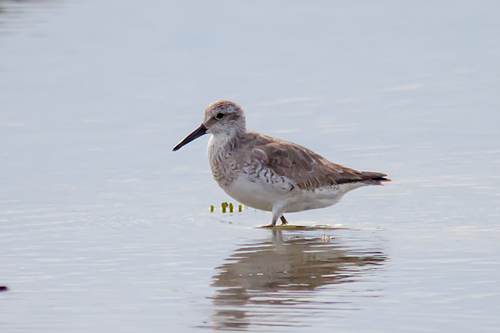
オバシギ (Calidris tenuirostris) オバシギ
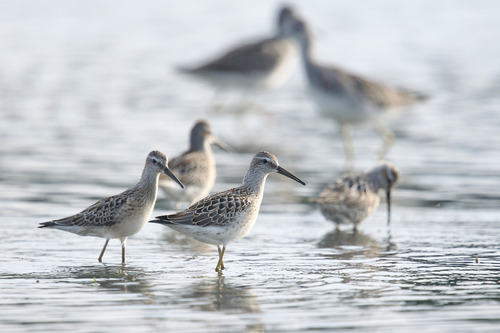
アシナガシギ (Calidris himantopus) アシナガシギ

メディア

読み込み中…

要点

グレートノットとアシナガシギを区別する最も信頼できるフィールドマークはサイズです:グレートノットははるかに大きく、ずんぐりした体型で、胸が深く、体格が重いのに対し、アシナガシギは明らかに小さく、より細身です。飛行中、アシナガシギには翼帯がなく、グレートノットは特に新しい羽毛の時に淡い翼帯を示します。脚の色も重要です:グレートノットは短くて暗い脚を持ち、アシナガシギの脚は長く、緑がかった黄色です。くちばしの構造も異なります:グレートノットのくちばしは中程度の長さでまっすぐですが、アシナガシギのくちばしはより長く、細く、わずかに下向きに曲がっています。繁殖羽毛は両者に特徴的ですが、非繁殖の鳥には注意が必要です。これらは両方とも上面が灰色で下面が白です—この場合はサイズ、構造、脚の色に注目してください。

識別のコツ

  1. Size is the most consistent mark: グレートノットはアシナガシギよりもはるかに大きく、ずんぐりしています。両方が存在する場合は直接比較を使用してください;単独の場合は、グレートノットの頑丈で深い胸の外観と、スリムで繊細なアシナガシギの外観に注目してください。
  2. Leg color and length: グレートノットは短くて暗い脚を持ち、アシナガシギは長くて緑がかった黄色の脚を持っています。これは立っているときと飛行中の両方で見え、特に脚が後ろに引きずられる場合に顕著です。
  3. Bill shape: グレートノットのくちばしは中程度の長さでまっすぐでかなり太い;アシナガシギのくちばしはより長く、細く、わずかに下向きに曲がっています(サルハマシギほど明らかに下向きではありませんが、グレートノットよりは曲がっています)。これは横から見ると最もよくわかります。
  4. Wing pattern in flight: アシナガシギには翼帯がありません;グレートノットは特に新しい羽毛の時に淡い翼帯を示します。これは飛行中または翼の上の鳥にとって重要なマークです。
  5. Head pattern: アシナガシギは特に幼鳥や非繁殖の成鳥において強い白い眉斑を持っています;グレートノットの頭はより地味で、強い眉斑がありません。
  6. Underpart markings (breeding): グレートノットは顔、喉、胸に重い黒い斑点があり、腹部にはいくつかの縞模様があります;アシナガシギは下面が重く縞模様(白地に黒っぽい)で、眉斑の上と下に赤橙色があります。
  7. Upperpart color and pattern: 繁殖羽毛のグレートノットは肩羽に赤褐色の帯があり、斑点のある灰色の上面を示します;アシナガシギは幼鳥において暗い中心と白い縁取りのある茶色の背中を持っています。
  8. Juvenile contrast: アシナガシギの幼鳥は強い頭模様と白い縁取りのある背羽を持っていますが、下面には縞模様がありません;グレートノットの幼鳥は上面が単調な灰色で、強い頭模様がありません。
  9. Rump and tail: アシナガシギは白い尾羽を持ち、飛行中に見ることができます;グレートノットの尾羽はそれほど対照的ではありません。
  10. Leg length in feeding posture: アシナガシギは長い脚のため、しばしばより深く水に浸かります;グレートノットは通常、浅い水で餌を取ります。
  11. Habitat context: グレートノットはほぼ常に沿岸にいます;アシナガシギは内陸または水辺にいる可能性が高いですが、渡りの際には重なることがあります。
  12. Behavior: アシナガシギはより活発で、ミシンのような餌の取り方を示し、腹まで浸かっていることが見られます;グレートノットはより慎重に動き、しばしばより密な群れにいます。
  13. Non-breeding confusion: 灰色の冬羽毛では、サイズ、構造、脚の色、頭模様に依存してください。両者は上面が灰色で下面が白です。
  14. Bill length relative to head: アシナガシギのくちばしは頭よりも明らかに長い;グレートノットのくちばしは頭よりもわずかに長いだけです。
  15. Mixed flock context: 他のカリドリスと一緒に見られた場合、グレートノットは最も大きく目立ち、アシナガシギはハマシギやサルハマシギに近いサイズになります。

大きさ

グレートノットははるかに大きいです:長さ26〜30 cm、翼幅56〜66 cm、質量約165 g([wikidata])。アシナガシギははるかに小さいです:長さ18〜23 cm、翼幅37〜42 cm、質量50〜70 g([wikipedia])。フィールドでは、グレートノットは頑丈で重い胸を持ち、アシナガシギはスリムで軽やかな体型です。この違いは混合群れや距離で明らかです。

羽色

行動

グレートノットは泥干潟やビーチで主に視覚で食べ物を探し、密な群れで移動する傾向があります。アシナガシギも泥干潟で餌を探しますが、しばしばより深い水で餌を取り、時には腹まで浸かり、より活発でミシンのような餌の取り方を示すことがあります。アシナガシギの長い脚は、グレートノットよりもわずかに深い水で餌を取ることを可能にします。

生息環境

グレートノットは通常、沿岸の泥干潟や砂浜に生息し、特に渡りや冬の間に見られます。アシナガシギは淡水または塩水の湿地や浸水した田んぼを好みますが、泥干潟でも見られることがあります。渡りの際には重なる可能性がありますが、グレートノットはより厳密に沿岸に生息し、アシナガシギは内陸または水辺にいる可能性が高いです。

より良い説明を送る

比較と同じ項目を使ってください。文章はすぐに公開されます。

The most reliable field mark to separate Great Knot from Stilt Sandpiper is size: Great Knot is much larger and bulkier, with a deeper chest and heavier build, while Stilt Sandpiper is distinctly smaller and more slender. In flight, Stilt Sandpiper lacks a wingbar, whereas Great Knot shows a pale wingbar, especially in fresh plumage. Leg color is also key: Great Knot has short, dark legs; Stilt Sandpiper’s legs are longer and greenish-yellow. Bill structure differs: Great Knot’s bill is medium-length and straight, while Stilt Sandpiper’s is longer, finer, and only slightly decurved. Breeding plumage is distinctive for both, but beware non-breeding birds, which are both gray above and white below—look for size, structure, and leg color in these cases.

  1. Size is the most consistent mark: Great Knot is much larger and bulkier than Stilt Sandpiper. Use direct comparison if both are present; if alone, note the robust, deep-chested look of Great Knot versus the slim, delicate Stilt Sandpiper.
  2. Leg color and length: Great Knot has short, dark legs; Stilt Sandpiper has longer, greenish-yellow legs. This is visible both when standing and in flight, especially if legs trail behind.
  3. Bill shape: Great Knot’s bill is medium-length, straight, and fairly thick; Stilt Sandpiper’s bill is longer, finer, and only slightly decurved (not as obviously downcurved as Curlew Sandpiper, but more so than Great Knot). This is best seen in profile.
  4. Wing pattern in flight: Stilt Sandpiper lacks a wingbar; Great Knot shows a pale wingbar, especially in fresh plumage. This is a key mark for birds in flight or on the wing.
  5. Head pattern: Stilt Sandpiper has a strong white supercilium (eyebrow), especially in juveniles and non-breeding adults; Great Knot’s head is plainer, lacking a strong supercilium.
  6. Underpart markings (breeding): Great Knot has heavy black spotting on the face, throat, and breast, with some streaking on the belly; Stilt Sandpiper is heavily barred below (blackish on white), with reddish-orange above and below the supercilium.
  7. Upperpart color and pattern: Great Knot in breeding plumage shows a rufous band on the scapulars and mottled grayish upperparts; Stilt Sandpiper has a brown back with dark centers and white fringes in juveniles.
  8. Juvenile contrast: Stilt Sandpiper juveniles have a strong head pattern and white-fringed back feathers, but are not barred below; Great Knot juveniles are plain gray above and lack strong head patterning.
  9. Rump and tail: Stilt Sandpiper has a white rump, which can be seen in flight; Great Knot’s rump is not as contrasting.
  10. Leg length in feeding posture: Stilt Sandpiper often wades deeper due to longer legs; Great Knot usually feeds in shallower water.
  11. Habitat context: Great Knot is almost always coastal; Stilt Sandpiper is more likely inland or at the edge of water, but can overlap on migration.
  12. Behavior: Stilt Sandpiper may show a more active, sewing-machine feeding action and can be seen wading up to its belly; Great Knot moves more deliberately and is often in denser flocks.
  13. Non-breeding confusion: In gray winter plumage, rely on size, structure, leg color, and head pattern, as both are gray above and white below.
  14. Bill length relative to head: Stilt Sandpiper’s bill is noticeably longer than its head; Great Knot’s bill is only moderately longer than the head.
  15. Mixed flock context: If seen with other Calidris, Great Knot will stand out as the largest, while Stilt Sandpiper will be closer in size to Dunlin or Curlew Sandpiper.

Great Knot is substantially larger: 26–30 cm in length, 56–66 cm wingspan, and about 165 g in mass ([wikidata]). Stilt Sandpiper is much smaller: 18–23 cm in length, 37–42 cm wingspan, and 50–70 g in mass ([wikipedia]). In the field, Great Knot appears robust and heavy-chested, while Stilt Sandpiper is slim and lightly built. This difference is obvious in mixed flocks and at a distance.

  • Juvenile/immature/fresh non-breeding: Stilt Sandpiper juveniles have a strong head pattern with a prominent pale supercilium and brownish back with white fringes, but are not barred below. Great Knot juveniles and non-breeding birds are uniformly pale gray above and lack strong head patterning, appearing plainer overall.
  • Adult breeding: Great Knot shows mottled grayish upperparts with a rufous scapular band and heavy black spotting on the face, throat, and breast; some streaking extends onto the belly. Stilt Sandpiper in breeding plumage is heavily barred below (blackish on white), with reddish-orange patches above and below the supercilium, and a brown back with dark centers.
  • Adult non-breeding: Both species are gray above and white below, but Great Knot is plainer and bulkier, while Stilt Sandpiper retains a white supercilium and a more contrasting head pattern.
  • In flight: Stilt Sandpiper lacks a wingbar; Great Knot shows a pale wingbar, especially in fresh plumage. Stilt Sandpiper also has a white rump, which can be a supporting mark.

Great Knot forages by probing or picking up food by sight, mainly on mudflats and beaches, and tends to move in dense flocks. Stilt Sandpiper also forages on mudflats but often feeds in deeper water, sometimes wading up to its belly, and can show a more active, sewing-machine feeding action. Stilt Sandpiper’s longer legs allow it to feed in slightly deeper water than Great Knot.

Great Knot is typically found on coastal mudflats and sandy beaches, especially during migration and winter. Stilt Sandpiper prefers freshwater or brackish marshes and flooded fields, but can also be found on mudflats. Overlap is possible on migration, but Great Knot is more strictly coastal, while Stilt Sandpiper is more likely inland or at the edge of water.

変更を破棄しますか?

保存していない編集があります。今離れると失われます。

オバシギ · アシナガシギ · 苦手な鳥