

Correlimos Grande vs Correlimos Zancolín
Calidris tenuirostris frente a Calidris himantopus
Juega un quiz con Correlimos Grande y Correlimos Zancolín
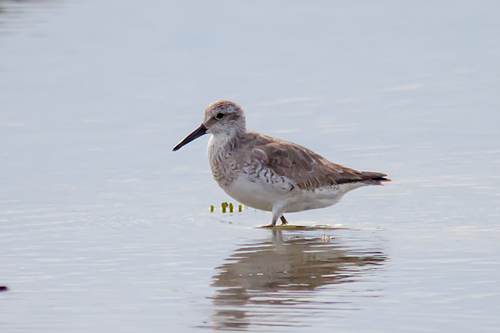 Correlimos Grande
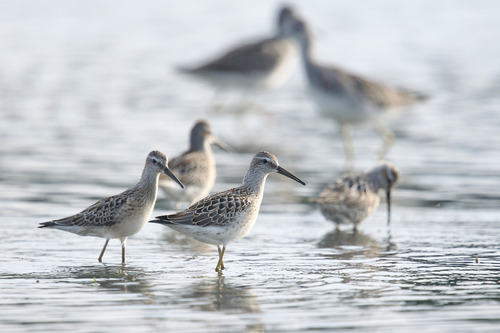 Correlimos Zancolín
En breve
La marca de campo más confiable para separar el Correlimos Grande del Correlimos Zancolín es el tamaño: el Correlimos Grande es mucho más grande y robusto, con un pecho más profundo y una construcción más pesada, mientras que el Correlimos Zancolín es claramente más pequeño y más esbelto. En vuelo, el Correlimos Zancolín carece de una barra alar, mientras que el Correlimos Grande muestra una barra alar pálida, especialmente en plumaje fresco. El color de las patas también es clave: el Correlimos Grande tiene patas cortas y oscuras; las patas del Correlimos Zancolín son más largas y de color verdeamarillo. La estructura del pico difiere: el pico del Correlimos Grande es de longitud media y recto, mientras que el del Correlimos Zancolín es más largo, más fino y solo ligeramente curvado hacia abajo. El plumaje de cría es distintivo para ambos, pero cuidado con las aves no reproductoras, que son grises por encima y blancas por debajo; busca el tamaño, la estructura y el color de las patas en estos casos.
Consejos de identificación
- El tamaño es la marca más consistente: El Correlimos Grande es mucho más grande y robusto que el Correlimos Zancolín. Usa la comparación directa si ambos están presentes; si estás solo, nota el aspecto robusto y de pecho profundo del Correlimos Grande frente al Correlimos Zancolín, que es delgado y delicado.
- Color y longitud de las patas: El Correlimos Grande tiene patas cortas y oscuras; el Correlimos Zancolín tiene patas más largas y de color verdeamarillo. Esto es visible tanto cuando está de pie como en vuelo, especialmente si las patas quedan atrás.
- Forma del pico: El pico del Correlimos Grande es de longitud media, recto y bastante grueso; el pico del Correlimos Zancolín es más largo, más fino y solo ligeramente curvado hacia abajo (no tan evidentemente curvado hacia abajo como el Correlimos Zarapitín, pero más que el Correlimos Grande). Esto se ve mejor de perfil.
- Patrón de alas en vuelo: El Correlimos Zancolín carece de una barra alar; el Correlimos Grande muestra una barra alar pálida, especialmente en plumaje fresco. Esta es una marca clave para las aves en vuelo o en el aire.
- Patrón de la cabeza: El Correlimos Zancolín tiene un fuerte supercilio blanco (ceja), especialmente en juveniles y adultos no reproductores; la cabeza del Correlimos Grande es más sencilla, careciendo de un supercilio fuerte.
- Marcas en las partes inferiores (cría): El Correlimos Grande tiene manchas negras pesadas en la cara, la garganta y el pecho, con algunas estrías en el vientre; el Correlimos Zancolín está fuertemente barrado por debajo (negruzco sobre blanco), con parches anaranjados rojizos por encima y por debajo del supercilio.
- Color y patrón de las partes superiores: El Correlimos Grande en plumaje de cría muestra una banda rufo en los escapulares y partes superiores moteadas de gris; el Correlimos Zancolín tiene un dorso marrón con centros oscuros y bordes blancos en juveniles.
- Contraste juvenil: Los juveniles del Correlimos Zancolín tienen un fuerte patrón en la cabeza y plumas de la espalda con bordes blancos, pero no están barrados por debajo; los juveniles del Correlimos Grande son de un gris uniforme por encima y carecen de un patrón fuerte en la cabeza.
- Rabadilla y cola: El Correlimos Zancolín tiene una rabadilla blanca, que se puede ver en vuelo; la rabadilla del Correlimos Grande no es tan contrastante.
- Longitud de las patas en postura de alimentación: El Correlimos Zancolín a menudo se adentra más debido a sus patas más largas; el Correlimos Grande generalmente se alimenta en aguas más someras.
- Contexto del hábitat: El Correlimos Grande es casi siempre costero; el Correlimos Zancolín es más probable que se encuentre en el interior o en el borde del agua, pero puede superponerse durante la migración.
- Comportamiento: El Correlimos Zancolín puede mostrar una acción de alimentación más activa y puede verse hurgando hasta su vientre; el Correlimos Grande se mueve de manera más deliberada y a menudo está en bandadas más densas.
- Confusión en no reproducción: En plumaje gris de invierno, confía en el tamaño, la estructura, el color de las patas y el patrón de la cabeza, ya que ambos son grises por encima y blancos por debajo.
- Longitud del pico en relación con la cabeza: El pico del Correlimos Zancolín es notablemente más largo que su cabeza; el pico del Correlimos Grande es solo moderadamente más largo que la cabeza.
- Contexto de bandada mixta: Si se ve con otros Calidris, el Correlimos Grande se destacará como el más grande, mientras que el Correlimos Zancolín estará más cerca en tamaño del Correlimos Común o del Correlimos Zarapitín.
Tamaño
El Correlimos Grande es sustancialmente más grande: 26–30 cm de longitud, 56–66 cm de envergadura y aproximadamente 165 g de masa ([wikidata]). El Correlimos Zancolín es mucho más pequeño: 18–23 cm de longitud, 37–42 cm de envergadura y 50–70 g de masa ([wikipedia]). En el campo, el Correlimos Grande parece robusto y de pecho pesado, mientras que el Correlimos Zancolín es delgado y de construcción ligera. Esta diferencia es obvia en bandadas mixtas y a distancia.
Plumaje
- Juvenil/inmaduro/fresco no reproductor: Los juveniles del Correlimos Zancolín tienen un fuerte patrón en la cabeza con un supercilio pálido prominente y un dorso marrón con bordes blancos, pero no están barrados por debajo. Los juveniles del Correlimos Grande y las aves no reproductoras son uniformemente de un gris pálido por encima y carecen de un patrón fuerte en la cabeza, apareciendo más sencillos en general.
- Adulto en cría: El Correlimos Grande muestra partes superiores moteadas de gris con una banda escamosa rufo y manchas negras pesadas en la cara, la garganta y el pecho; algunas estrías se extienden hacia el vientre. El Correlimos Zancolín en plumaje de cría está fuertemente barrado por debajo (negruzco sobre blanco), con parches anaranjados rojizos por encima y por debajo del supercilio, y un dorso marrón con centros oscuros.
- Adulto no reproductor: Ambas especies son grises por encima y blancas por debajo, pero el Correlimos Grande es más sencillo y robusto, mientras que el Correlimos Zancolín conserva un supercilio blanco y un patrón de cabeza más contrastante.
- En vuelo: El Correlimos Zancolín carece de una barra alar; el Correlimos Grande muestra una barra alar pálida, especialmente en plumaje fresco. El Correlimos Zancolín también tiene una rabadilla blanca, que puede ser una marca de apoyo.
Comportamiento
El Correlimos Grande forrajea sondeando o recogiendo comida a la vista, principalmente en planicies de barro y playas, y tiende a moverse en bandadas densas. El Correlimos Zancolín también forrajea en planicies de barro, pero a menudo se alimenta en aguas más profundas, a veces hurgando hasta su vientre, y puede mostrar una acción de alimentación más activa, como una máquina de coser. Las patas más largas del Correlimos Zancolín le permiten alimentarse en aguas ligeramente más profundas que el Correlimos Grande.
Hábitat
El Correlimos Grande se encuentra típicamente en planicies de barro costeras y playas arenosas, especialmente durante la migración y el invierno. El Correlimos Zancolín prefiere marismas de agua dulce o salobre y campos inundados, pero también se puede encontrar en planicies de barro. La superposición es posible durante la migración, pero el Correlimos Grande es más estrictamente costero, mientras que el Correlimos Zancolín es más probable que se encuentre en el interior o en el borde del agua.
Correlimos Grande · Correlimos Zancolín · Mis aves difíciles