

great crested flycatcher vs maria-cavaleira-de-rabo-enferrujado
Myiarchus crinitus versus Myiarchus tyrannulus
Jogue um quiz com great crested flycatcher e maria-cavaleira-de-rabo-enferrujado
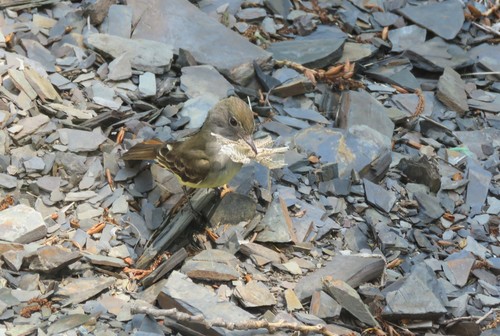 great crested flycatcher
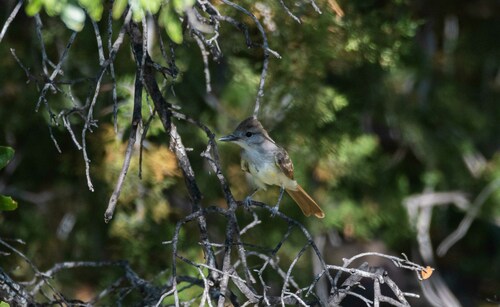 maria-cavaleira-de-rabo-enferrujado
Em resumo
A marca de campo mais confiável para separar o great crested flycatcher do maria-cavaleira-de-rabo-enferrujado é a cor e o padrão da cauda e das bordas das asas: o great crested mostra uma cauda longa e rica em rufo e menos rufo nas asas, enquanto o maria-cavaleira-de-rabo-enferrujado (especialmente a subespécie do sudoeste dos EUA) tem uma cauda mais escura com rufo principalmente nas penas internas e bordas rufo mais extensas nas asas. Ambas as espécies têm barrigas amarelas e peitos cinzas, mas diferenças sutis na cor da coroa e do rosto, bem como contraste nas barras das asas, ajudam em boa luz. Estrutura e tamanho podem se sobrepor, mas o maria-cavaleira-de-rabo-enferrujado é geralmente mais robusto e com bico maior, especialmente no sudoeste dos EUA. A voz é distinta, mas nem sempre é ouvida. Fique atento à variação regional no maria-cavaleira-de-rabo-enferrujado, que pode complicar a identificação em zonas de sobreposição.
Dicas de identificação
- Cor e padrão da cauda: O great crested flycatcher mostra uma cauda longa e rica em rufo acima e abaixo, enquanto a cauda do maria-cavaleira-de-rabo-enferrujado é mais escura (cinza a marrom escuro) com rufo limitado às penas internas, exceto o par mais interno. Isso é mais confiável em adultos e imaturos mais velhos.
- Rufo nas asas: O maria-cavaleira-de-rabo-enferrujado tem bordas rufo mais extensas nas asas, especialmente em todas, exceto nas primárias mais externas. O rufo do great crested é menos pronunciado e geralmente limitado à cauda.
- Barras das asas: O maria-cavaleira-de-rabo-enferrujado frequentemente mostra duas barras de asas pálidas e mais contrastantes (coberturas maiores e medianas), enquanto as barras do great crested são mais pálidas, mas menos definidas.
- Coroa e rosto: O maria-cavaleira-de-rabo-enferrujado (especialmente M. t. magister/cooperi) tem uma coroa marrom-cinza com hastes de penas mais escuras e um rosto cinza médio; a coroa do great crested é marrom e menos marcada, com uma crista espessa.
- Partes superiores: O great crested é marrom acima; o maria-cavaleira-de-rabo-enferrujado é cinza marrom mais claro a cinza oliva escuro, às vezes com um tom rufo nas coberturas da cauda. Algumas subespécies de maria-cavaleira-de-rabo-enferrujado são mais escuras no geral.
- Garganta e peito: Ambas têm gargantas e peitos cinzas, mas o cinza do maria-cavaleira-de-rabo-enferrujado pode ser mais pálido e se estender para os lados; o cinza do great crested é mais nitidamente demarcado da barriga amarela.
- Barriga: Ambas as espécies têm barrigas amarelas brilhantes, mas o maria-cavaleira-de-rabo-enferrujado pode mostrar uma lavagem cinza clara nos lados.
- Bico: O maria-cavaleira-de-rabo-enferrujado (especialmente nos EUA) tem um bico mais robusto e longo, às vezes com uma base mais clara; o bico do great crested é todo escuro e ligeiramente mais fino.
- Tamanho e estrutura: O maria-cavaleira-de-rabo-enferrujado é geralmente maior e mais robusto, especialmente no sudoeste dos EUA (M. t. magister), mas cuidado com a sobreposição com subespécies menores de maria-cavaleira-de-rabo-enferrujado mais ao sul. O great crested é ligeiramente menor e mais esguio no geral.
- Cor do íris: O maria-cavaleira-de-rabo-enferrujado geralmente tem íris marrom; a cor da íris do great crested é menos distintiva no campo.
- Pernas e pés: Ambas as espécies têm pernas e pés pretos; não é uma marca de campo útil.
- Vocalizações: O alto 'whee-eep' do great crested é distintivo e não é igualado pelo maria-cavaleira-de-rabo-enferrujado. Use a voz como um separador primário quando ouvida.
- Habitat: Nos EUA, o great crested é encontrado em florestas orientais, o maria-cavaleira-de-rabo-enferrujado em florestas áridas do sudoeste e zonas ripárias. A sobreposição é rara, mas possível no Texas/norte do México.
- Comportamento: Ambos saltam de poleiros altos, mas o maria-cavaleira-de-rabo-enferrujado pode parecer mais robusto e deliberado. Não é um separador forte.
- Variação de subespécies: Esteja ciente de que as subespécies de maria-cavaleira-de-rabo-enferrujado mais ao sul podem ser menores e mais escuras, complicando a identificação. Foque no rufo da cauda e das asas, e na voz, em zonas de sobreposição.
Tamanho
O great crested flycatcher mede em média 17–21 cm de comprimento, com uma envergadura em torno de 34 cm e pesa 27–40 g. O maria-cavaleira-de-rabo-enferrujado é geralmente maior, especialmente no sudoeste dos EUA (M. t. magister), atingindo 18–23 cm e 36–54 g, mas outras subespécies podem ser tão pequenas quanto 21 g. Nos EUA, o maria-cavaleira-de-rabo-enferrujado é geralmente mais robusto e com bico mais longo, mas a sobreposição de tamanho é possível, especialmente com subespécies menores de maria-cavaleira-de-rabo-enferrujado mais ao sul. Ambas as espécies mostram pouca ou nenhuma dimorfismo sexual em tamanho.
Plumagem
- Plumagem juvenil/imatura: Nenhuma diferença específica de padrão de asa para idades é descrita nas fontes para qualquer uma das espécies, então o foco é em aves semelhantes a adultos.
- Adultos: O great crested flycatcher tem partes superiores marrons, uma crista espessa e uma cauda longa que é rica em rufo acima e abaixo. As asas são marrons com apenas bordas rufo modestas, e as barras das asas não são fortemente contrastantes. A garganta e o peito são cinzas, nitidamente separados da barriga amarela brilhante. O maria-cavaleira-de-rabo-enferrujado (M. t. magister e M. t. cooperi) tem uma coroa marrom-cinza com hastes mais escuras, um rosto que é cinza médio, e partes superiores que são cinza marrom claro a cinza oliva escuro, frequentemente com um tom rufo nas coberturas da cauda. A cauda é mais escura (marrom cinza escuro a preto acastanhado) com rufo apenas nas penas internas, exceto o par mais interno, e as asas mostram bordas rufo mais extensas e duas barras de asas pálidas, frequentemente mais contrastantes. O peito inferior e a barriga são amarelos brilhantes, mas os lados podem ter uma lavagem cinza. A variação de subespécies no maria-cavaleira-de-rabo-enferrujado pode afetar a cor da cauda e das partes superiores, com algumas (por exemplo, M. t. cozumelae) sendo mais escuras e marrons no geral.
Comportamento
Ambas as espécies são nidificadoras em cavidades e passam a maior parte do tempo no dossel médio a superior, raramente indo ao chão. O great crested flycatcher é mais propenso a ser visto saltando de poleiros altos em florestas orientais, enquanto o maria-cavaleira-de-rabo-enferrujado é frequentemente associado a habitats mais abertos ou áridos (incluindo cactos no sudoeste). Ambas são ativas como caçadoras de insetos, mas o maria-cavaleira-de-rabo-enferrujado pode parecer ligeiramente mais robusto e deliberado na postura. Ambas as espécies são monogâmicas socialmente e ambos os sexos participam da seleção do local do ninho, embora a construção do ninho seja principalmente feita pela fêmea.
Habitat
O great crested flycatcher é encontrado em florestas decíduas maduras ou mistas do leste e centro-oeste da América do Norte, frequentemente no topo das árvores. O maria-cavaleira-de-rabo-enferrujado ocupa uma gama mais ampla, incluindo florestas áridas, zonas ripárias, florestas abertas e até grandes cactos no sudoeste dos EUA e ao sul através da América Central e do Sul. Nos EUA, o maria-cavaleira-de-rabo-enferrujado é mais provável de ser encontrado no sudoeste, enquanto o great crested é uma espécie do leste. A sobreposição é rara, mas possível no Texas e no norte do México.
Voz
O great crested flycatcher emite um alto 'whee-eep' ascendente e uma canção de amanhecer em três partes com dois apitos e um suave churr. Outros chamados incluem um rápido 'huit, huit, huit' de excitação e raspados ásperos de alarme. O maria-cavaleira-de-rabo-enferrujado tem uma voz diferente (não detalhada nas notas fornecidas), mas é geralmente descrito em outras fontes como de tom mais baixo e menos enfático do que o great crested. No campo, o 'whee-eep' do great crested é um forte separador se ouvido.
great crested flycatcher · maria-cavaleira-de-rabo-enferrujado · Minhas aves difíceis