

Great Crested Flycatcher vs Brown-crested Flycatcher
Myiarchus crinitus contro Myiarchus tyrannulus
Fai un quiz con Great Crested Flycatcher e Brown-crested Flycatcher
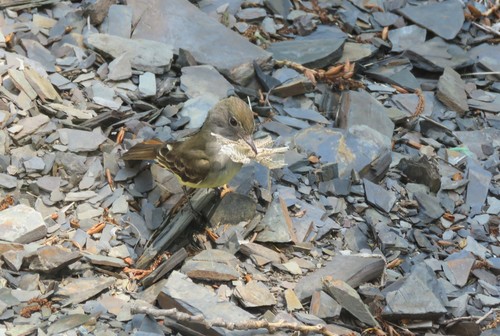 Great Crested Flycatcher
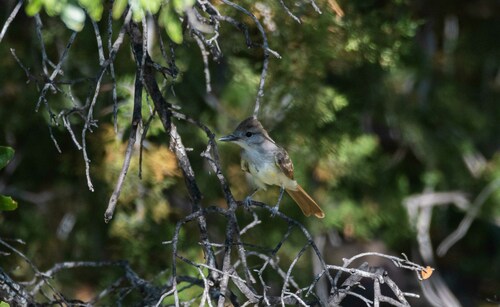 Brown-crested Flycatcher
In breve
Il segno di campo più affidabile per separare il Great Crested Flycatcher dal Brown-crested Flycatcher è il colore e il modello della coda e dei bordi delle ali: il Great Crested mostra una lunga coda ruggine ricca e meno ruggine sulle ali, mentre il Brown-crested (soprattutto la sottospecie del sud-ovest degli Stati Uniti) ha una coda più scura con ruggine principalmente sulle membrane interne e bordi ruggine più estesi sulle ali. Entrambe le specie hanno pance gialle e petti grigi, ma sottili differenze nel colore della corona e del viso, così come il contrasto delle barre alari, aiutano in buona luce. La struttura e le dimensioni possono sovrapporsi, ma il Brown-crested è generalmente più robusto e con un becco più grande, specialmente nel sud-ovest degli Stati Uniti. La voce è distintiva ma non sempre udibile. Fai attenzione alla variazione regionale nel Brown-crested, che può complicare l'identificazione nelle zone di sovrapposizione.
Consigli di identificazione
- Colore e modello della coda: Il Great Crested Flycatcher mostra una lunga coda ruggine ricca sopra e sotto, mentre la coda del Brown-crested è più scura (grigio-bruna a bruno-nerastra) con ruggine limitata alle membrane interne tranne che per la coppia più interna. Questo è più affidabile negli adulti e nei giovani più grandi.
- Ruggine delle ali: Il Brown-crested ha bordi ruggine più estesi sulle ali, specialmente su tutte tranne le primarie più esterne. La ruggine del Great Crested è meno pronunciata e principalmente limitata alla coda.
- Barre alari: Il Brown-crested mostra spesso due barre alari chiare e più contrastanti (copritrici maggiori e mediane), mentre le barre alari del Great Crested sono più chiare ma meno nettamente definite.
- Corona e viso: Il Brown-crested (soprattutto M. t. magister/cooperi) ha una corona grigio-bruna con fusti di piume più scuri e un viso grigio medio; la corona del Great Crested è brunastra e meno nettamente marcata, con una cresta folta.
- Parte superiore: Il Great Crested è bruno sopra; il Brown-crested è grigio-bruno più chiaro a grigio oliva scuro, a volte con una sfumatura ruggine sulle copritrici della coda. Alcune sottospecie di Brown-crested sono più scure nel complesso.
- Gola e petto: Entrambi hanno gole e petti grigi, ma il grigio del Brown-crested può essere più chiaro e estendersi sui lati; il grigio del Great Crested è più nettamente demarcato dalla pancia gialla.
- Pancia: Entrambe le specie hanno pance gialle brillanti, ma il Brown-crested può mostrare un leggero lavaggio grigio sui lati.
- Becco: Il Brown-crested (soprattutto negli Stati Uniti) ha un becco più robusto e lungo, a volte con una base più chiara; il becco del Great Crested è tutto scuro e leggermente più snello.
- Dimensioni e struttura: Il Brown-crested è generalmente più grande e robusto, specialmente nel sud-ovest degli Stati Uniti (M. t. magister), ma fai attenzione alla sovrapposizione con sottospecie di Brown-crested più piccole più a sud. Il Great Crested è leggermente più piccolo e snello nel complesso.
- Colore dell'iride: Il Brown-crested ha solitamente un'iride marrone; il colore dell'iride del Great Crested è meno distintivo nel campo.
- Zampe e piedi: Entrambe le specie hanno zampe e piedi neri; non è un segno di campo utile.
- Vocalizzazioni: Il forte 'whee-eep' del Great Crested è distintivo e non è eguagliato dal Brown-crested. Usa la voce come separatore principale quando viene udita.
- Habitat: Negli Stati Uniti, il Great Crested si trova nelle foreste orientali, il Brown-crested in boschi aridi del sud-ovest e zone ripariali. La sovrapposizione è rara ma possibile in Texas/Messico settentrionale.
- Comportamento: Entrambi si lanciano da posatoi alti, ma il Brown-crested può sembrare più robusto e deliberato. Non è un forte separatore.
- Variazione delle sottospecie: Fai attenzione che le sottospecie di Brown-crested più a sud possono essere più piccole e più scure, complicando l'identificazione. Concentrati sulla ruggine della coda e delle ali, e sulla voce, nelle zone di sovrapposizione.
Taglia
Il Great Crested Flycatcher ha una lunghezza media di 17–21 cm con un'apertura alare di circa 34 cm e pesa 27–40 g. Il Brown-crested Flycatcher è generalmente più grande, specialmente nel sud-ovest degli Stati Uniti (M. t. magister), raggiungendo 18–23 cm e 36–54 g, ma altre sottospecie possono essere piccole fino a 21 g. Negli Stati Uniti, il Brown-crested è solitamente più robusto e con un becco più lungo, ma è possibile una sovrapposizione di dimensioni, specialmente con sottospecie di Brown-crested più piccole più a sud. Entrambe le specie mostrano poco o nessun dimorfismo sessuale nelle dimensioni.
Piumaggio
- Piumaggio giovanile/immaturo: Non sono descritte differenze dettagliate nei modelli delle ali superiori specifiche per età nelle fonti per entrambe le specie, quindi ci si concentra su uccelli simili agli adulti.
- Adulti: Il Great Crested Flycatcher ha parti superiori brune, una cresta folta e una lunga coda che è ricca di ruggine sopra e sotto. Le ali sono brune con solo modestissimi bordi ruggine, e le barre alari non sono fortemente contrastanti. La gola e il petto sono grigi, nettamente separati dalla pancia gialla brillante. Il Brown-crested Flycatcher (M. t. magister e M. t. cooperi) ha una corona grigio-bruna con fusti più scuri, un viso di grigio medio e parti superiori che sono grigio-bruno chiaro a grigio oliva scuro, spesso con una sfumatura ruggine sulle copritrici della coda. La coda è più scura (grigio scuro-bruno a bruno-nerastro) con ruggine solo sulle membrane interne tranne che per la coppia più interna, e le ali mostrano bordi ruggine più estesi e due barre alari chiare, spesso più contrastanti. Il petto inferiore e la pancia sono gialli brillanti, ma i lati possono avere un lavaggio grigio. La variazione delle sottospecie nel Brown-crested può influenzare il colore della coda e delle parti superiori, con alcune (ad es., M. t. cozumelae) che sono più scure e brune nel complesso.
Comportamento
Entrambe le specie sono nidiacee in cavità e trascorrono la maggior parte del loro tempo nella parte centrale e superiore della chioma, raramente scendendo a terra. Il Great Crested Flycatcher è più probabile che venga visto lanciarsi da posatoi alti nelle foreste orientali, mentre il Brown-crested è spesso associato a habitat più aperti o aridi (inclusi i cactus nel sud-ovest). Entrambi sono attivi catturatori di insetti, ma il Brown-crested può apparire leggermente più robusto e deliberato nella postura. Entrambe le specie sono monogame socialmente e entrambi i sessi partecipano alla selezione del sito del nido, anche se la costruzione del nido è per lo più a carico della femmina.
Habitat
Il Great Crested Flycatcher si trova in foreste decidue mature o miste dell'America del Nord orientale e centrale, spesso nelle cime degli alberi. Il Brown-crested Flycatcher occupa un'area più ampia, inclusi boschi aridi, zone ripariali, foreste aperte e persino grandi cactus nel sud-ovest degli Stati Uniti e a sud attraverso l'America Centrale e Meridionale. Negli Stati Uniti, il Brown-crested è più probabile che si trovi nel sud-ovest, mentre il Great Crested è una specie orientale. La sovrapposizione è rara ma possibile in Texas e nel Messico settentrionale.
Voce
Il Great Crested Flycatcher emette un forte 'whee-eep' ascendente e una canzone dell'alba in tre parti con due fischi e un morbido churr. Altri richiami includono un veloce 'huit, huit, huit' di eccitazione e raschiamenti aspri in allerta. Il Brown-crested Flycatcher ha una voce diversa (non dettagliata nelle note fornite), ma è generalmente descritta in altre fonti come di tono più basso e meno enfatica rispetto al Great Crested. Sul campo, il 'whee-eep' del Great Crested è un forte separatore se udito.
Great Crested Flycatcher · Brown-crested Flycatcher · I miei uccelli difficili