

Grote kuiftiran vs Bruinkoptiran
Myiarchus crinitus versus Myiarchus tyrannulus
Speel een quiz met Grote kuiftiran en Bruinkoptiran
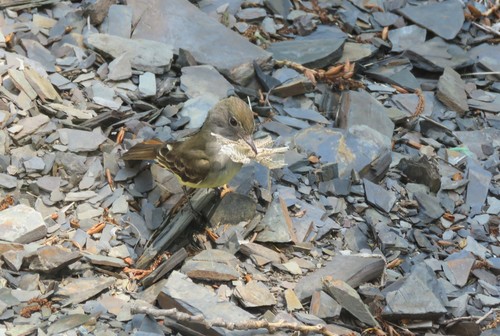 Grote kuiftiran
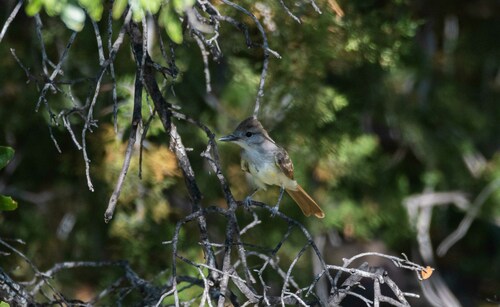 Bruinkoptiran
Kort gezegd
Het meest betrouwbare veldkenmerk om de Grote kuiftiran van de Bruinkoptiran te scheiden, is de kleur en het patroon van de staart en de vleugelranden: de Grote kuiftiran heeft een lange, rijke roestbruine staart en minder roestbruin op de vleugels, terwijl de Bruinkoptiran (vooral de zuidwestelijke VS ondersoort) een donkere staart heeft met roestbruin dat voornamelijk op de binnenste webben zit en meer uitgebreide roestbruine randen op de vleugels. Beide soorten hebben gele buiken en grijze borsten, maar subtiele verschillen in kroon- en gezichtskleur, evenals het contrast van de vleugelstreep, helpen in goed licht. Structuur en grootte kunnen overlappen, maar de Bruinkoptiran is over het algemeen robuuster en heeft een grotere snavel, vooral in de zuidwestelijke VS. De stem is kenmerkend, maar niet altijd hoorbaar. Let op regionale variatie in de Bruinkoptiran, wat de identificatie in overlapzones kan compliceren.
Herkenningstips
- Staartkleur en -patroon: De Grote kuiftiran heeft een lange, rijke roestbruine staart boven en onder, terwijl de staart van de Bruinkoptiran donkerder is (grijsbruin tot bruinachtig zwart) met roestbruin beperkt tot de binnenste webben, behalve het binnenste paar. Dit is het meest betrouwbaar bij volwassen en oudere onvolwassen vogels.
- Vleugelroestbruin: De Bruinkoptiran heeft meer uitgebreide roestbruine randen op de vleugels, vooral op alle maar de buitenste primaire vleugels. Het roestbruin van de Grote kuiftiran is minder uitgesproken en voornamelijk beperkt tot de staart.
- Vleugelstrepen: De Bruinkoptiran toont vaak twee bleke, meer contrasterende vleugelstreepjes (grotere en mediane dekkveren), terwijl de vleugelstreepjes van de Grote kuiftiran bleker zijn maar minder scherp gedefinieerd.
- Kroon en gezicht: De Bruinkoptiran (vooral M. t. magister/cooperi) heeft een grijsbruin kroon met donkerdere veer-schachten en een middelgrijs gezicht; de kroon van de Grote kuiftiran is bruinachtig en minder scherp gemarkeerd, met een bossige kuif.
- Bovenkant: De Grote kuiftiran is bruinachtig boven; de Bruinkoptiran is lichter bruinachtig grijs tot donker olijfgrijs, soms met een roestbruine tint op de dekkleden van de staart. Sommige ondersoorten van de Bruinkoptiran zijn donkerder overall.
- Keel en borst: Beide hebben grijze kelen en borsten, maar het grijs van de Bruinkoptiran kan bleker zijn en zich naar de zijkanten uitstrekken; het grijs van de Grote kuiftiran is scherper afgebakend van de gele buik.
- Buik: Beide soorten hebben heldergele buiken, maar de Bruinkoptiran kan een lichte grijze waas aan de zijkanten vertonen.
- Snavel: De Bruinkoptiran (vooral in de VS) heeft een robuustere, langere snavel, soms met een blekere basis; de snavel van de Grote kuiftiran is helemaal donker en iets slanker.
- Grootte en structuur: De Bruinkoptiran is over het algemeen groter en robuuster, vooral in de zuidwestelijke VS (M. t. magister), maar let op overlap met kleinere Bruinkoptiran ondersoorten verder naar het zuiden. De Grote kuiftiran is iets kleiner en slanker in het algemeen.
- Iris kleur: De Bruinkoptiran heeft meestal een bruine iris; de iris kleur van de Grote kuiftiran is minder onderscheidend in het veld.
- Potens en voeten: Beide soorten hebben zwarte poten en voeten; niet een nuttig veldkenmerk.
- Vocalisaties: De luide 'whee-eep' van de Grote kuiftiran is kenmerkend en wordt niet geëvenaard door de Bruinkoptiran. Gebruik de stem als primaire scheiding wanneer gehoord.
- Habitat: In de VS wordt de Grote kuiftiran gevonden in oostelijke bossen, de Bruinkoptiran in zuidwestelijke droge bossen en riparische zones. Overlap is zeldzaam maar mogelijk in Texas/noordelijk Mexico.
- Gedrag: Beide vliegen vanaf hoge zitplaatsen, maar de Bruinkoptiran kan robuuster en doelgerichter lijken. Geen sterke scheiding.
- Variatie in ondersoorten: Wees je ervan bewust dat Bruinkoptiran ondersoorten verder naar het zuiden kleiner en donkerder kunnen zijn, wat de identificatie kan compliceren. Focus op staart en vleugelroestbruin, en stem, in overlapzones.
Grootte
De Grote kuiftiran heeft een gemiddelde lengte van 17–21 cm met een spanwijdte van ongeveer 34 cm en weegt 27–40 g. De Bruinkoptiran is over het algemeen groter, vooral in de zuidwestelijke VS (M. t. magister), met een lengte van 18–23 cm en een gewicht van 36–54 g, maar andere ondersoorten kunnen zo klein zijn als 21 g. In de VS is de Bruinkoptiran meestal robuuster en heeft een langere snavel, maar grootte-overlap is mogelijk, vooral met kleinere Bruinkoptiran ondersoorten verder naar het zuiden. Beide soorten vertonen weinig tot geen seksuele grootte-dimorfisme.
Verenkleed
- Jong/immatuur pluimage: Er zijn geen gedetailleerde leeftijdspecifieke verschillen in het bovenste vleugelpatroon beschreven in de bronnen voor beide soorten, dus de focus ligt op volwassenachtige vogels.
- Volwassen: De Grote kuiftiran heeft bruinachtige bovenkanten, een bossige kuif en een lange staart die rijk roestbruin is boven en onder. De vleugels zijn bruin met slechts bescheiden roestbruine randen, en de vleugelstreepjes zijn niet sterk contrasterend. De keel en borst zijn grijs, scherp gescheiden van de heldergele buik. De Bruinkoptiran (M. t. magister en M. t. cooperi) heeft een grijsbruin kroon met donkerdere schachten, een gezicht dat middelgrijs is, en bovenkanten die licht bruinachtig grijs tot donker olijfgrijs zijn, vaak met een roestbruine tint op de dekkleden van de staart. De staart is donkerder (donker grijsbruin tot bruinachtig zwart) met roestbruin alleen op de binnenste webben, behalve het binnenste paar, en de vleugels vertonen meer uitgebreide roestbruine randen en twee bleke, vaak meer contrasterende, vleugelstreepjes. De onderste borst en buik zijn heldergeel, maar de zijkanten kunnen een grijze waas hebben. Variatie in ondersoorten van de Bruinkoptiran kan de kleur van de staart en bovenkant beïnvloeden, waarbij sommige (bijv. M. t. cozumelae) over het algemeen donkerder en bruiner zijn.
Gedrag
Beide soorten zijn holte-nesters en brengen het grootste deel van hun tijd door in het midden tot bovenste bladerdak, zelden op de grond. De Grote kuiftiran is waarschijnlijker te zien terwijl hij vanaf hoge zitplaatsen in oostelijke bossen vliegt, terwijl de Bruinkoptiran vaak wordt geassocieerd met meer open of droge habitats (inclusief cactussen in het zuidwesten). Beide zijn actieve vliegenvangers, maar de Bruinkoptiran kan iets robuuster en doelgerichter lijken in houding. Beide soorten zijn sociaal monogaam en beide geslachten nemen deel aan de selectie van de nestlocatie, hoewel de nestconstructie voornamelijk door het vrouwtje wordt gedaan.
Habitat
De Grote kuiftiran wordt gevonden in volwassen loof- of gemengde bossen van het oosten en het middenwesten van Noord-Amerika, vaak in de boomtoppen. De Bruinkoptiran beslaat een breder gebied, inclusief droge bossen, riparische zones, open bossen en zelfs grote cactussen in de zuidwestelijke VS en zuidwaarts door Midden- en Zuid-Amerika. In de VS is de Bruinkoptiran het meest waarschijnlijk in het zuidwesten, terwijl de Grote kuiftiran een oostelijke soort is. Overlap is zeldzaam maar mogelijk in Texas en noordelijk Mexico.
Geluid
De Grote kuiftiran geeft een luide, stijgende 'whee-eep' en een driedelige zonsopgangsong met twee fluiten en een zachte churr. Andere roepen omvatten een snelle 'huit, huit, huit' in opwinding en harde raspen in alarm. De Bruinkoptiran heeft een andere stem (niet gedetailleerd in de gegeven notities), maar wordt over het algemeen in andere bronnen beschreven als lager van toon en minder emphatisch dan de Grote kuiftiran. In het veld is de 'whee-eep' van de Grote kuiftiran een sterke scheiding als deze wordt gehoord.