

gouldian finch vs parrot-billed seedeater
Chloebia gouldiae versus Sporophila peruviana
Jogue um quiz com gouldian finch e parrot-billed seedeater
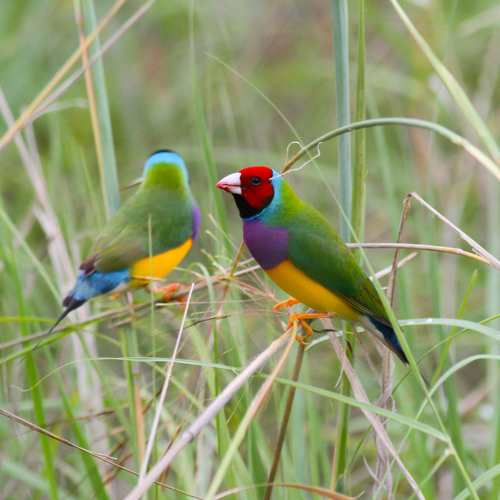 gouldian finch
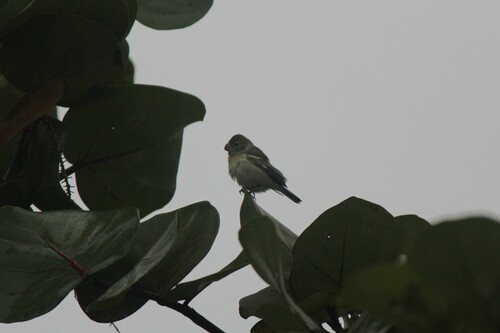 parrot-billed seedeater
Em resumo
A marca de campo mais confiável para separar gouldian finch de parrot-billed seedeater é a coloração geral: gouldian finches adultos são strikingly multicoloridos, enquanto parrot-billed seedeaters são muito mais discretos, com tons cinza-marrom e branco. Se você ver um pássaro com um bico grosso, semelhante ao de um papagaio, e duas faixas alares pálidas, especialmente em áreas áridas e abertas no oeste da América do Sul, é quase certamente um parrot-billed seedeater. Gouldian finches, em contraste, são nativos apenas da Austrália, e mesmo os imaturos mostram uma asa muito mais simples, menos padronizada. A forma do bico, o padrão das asas e o contexto do habitat são todas pistas fortes, especialmente para pássaros não adultos. Ambas as espécies podem formar grandes bandos fora da temporada de reprodução, mas seus territórios não se sobrepõem.
Dicas de identificação
- A distribuição é absoluta: Gouldian finch é encontrado apenas na Austrália; parrot-billed seedeater é encontrado apenas no Equador e no Peru. Se você estiver fora dessas áreas, reconsidere sua identificação.
- Forma do bico: Parrot-billed seedeater tem um bico massivamente grosso, semelhante ao de um papagaio, com um culmen arredondado e ponta levemente curvada, muito distinto de perfil. Gouldian finch tem um bico de tentilhão mais típico, não tão profundo ou semelhante ao de um papagaio.
- Padrão das asas (todas as idades): Parrot-billed seedeater mostra duas faixas alares pálidas e uma mancha pálida na base das primárias na asa fechada, visível tanto em pássaros empoleirados quanto em voo. Gouldian finch não tem faixas alares e não mostra uma mancha pálida na asa em nenhuma idade.
- Coloração do macho adulto: Machos de gouldian finch são extremamente coloridos (vermelho, amarelo, verde, azul, preto, roxo), enquanto machos de parrot-billed seedeater são principalmente acinzentados com uma bochecha branca, garganta escura e partes inferiores brancas.
- Coloração da fêmea adulta/imatura: Fêmeas e imaturos de parrot-billed seedeater são marrons empoeirados com faixas alares fracas e uma mancha pálida; fêmeas e imaturos de gouldian finch são muito mais simples e não têm faixas alares ou mancha pálida na asa.
- Padrão da garganta e face (macho seedeater): Machos de parrot-billed seedeater têm uma garganta escura nitidamente separada de uma faixa branca e uma bochecha branca, um padrão que não é encontrado em gouldian finch.
- Padrão da cauda: Parrot-billed seedeater tem uma cauda cinza-marrom com penas centrais escuras; a cauda de gouldian finch não é descrita como distinta nas fontes.
- Cor das pernas e íris: Ambas as espécies têm pernas e olhos escuros; não é útil para separação.
- Cor do bico (sexo/idade): O macho de parrot-billed seedeater tem um bico amarelo damasco, a fêmea um bico claro com maxila mais escura. A cor do bico de gouldian finch não é especificada nas fontes, mas não é descrita como grossa ou semelhante ao de um papagaio.
- Comportamento de bandos: Ambas podem formar grandes bandos fora da reprodução, mas gouldian finch é mais provável de ser visto em bandos mistos de tentilhões na Austrália.
- Comportamento de forrageamento: Parrot-billed seedeater forrageia principalmente no chão, especialmente fora da reprodução; gouldian finch forrageia tanto no chão quanto na vegetação.
- Contexto do habitat: Se você estiver em terras áridas, abertas, arbustivas ou agrícolas na costa do Equador/Peru, espere por parrot-billed seedeater. Se estiver na savana australiana ou em encostas de pedras, espere por gouldian finch.
- Contexto de avicultura: Gouldian finch é comum em cativeiro e em aviários em todo o mundo; parrot-billed seedeater não é notado como um pássaro de aviário. Se visto em uma gaiola fora da Austrália, verifique se é um gouldian finch.
- Dimorfismo sexual: Ambas as espécies são sexualmente dimórficas, mas apenas fêmeas/imaturos de parrot-billed seedeater mostram as faixas alares e a mancha pálida.
- Armadilha do questionário: Imaturos de parrot-billed seedeater com faixas alares fracas e mancha pálida são facilmente confundidos com outros tentilhões simples, mas nunca mostram as cores vibrantes de qualquer idade ou sexo de gouldian finch.
Tamanho
Parrot-billed seedeater mede 10,5–12,5 cm de comprimento e tem uma média de 12,6 g de peso [wikipedia]. As medidas de gouldian finch não são fornecidas nas fontes, mas ambos são pequenos tentilhões. No campo, o tamanho não é um separador confiável entre esses dois, pois ambos parecem igualmente pequenos e semelhantes a tentilhões.
Plumagem
- Pássaros juvenis/imaturos: Imaturos de parrot-billed seedeater (especialmente fêmeas) são overall marrons empoeirados com duas faixas alares fracas e uma pequena mancha branca na asa. Imaturos de gouldian finch são muito mais simples, sem faixas alares ou uma mancha pálida na asa, e não mostram nenhum padrão forte na asa fechada.
- Machos adultos: Machos de gouldian finch são inconfundivelmente coloridos (combinações de vermelho, amarelo, verde, azul, preto e roxo), enquanto machos de parrot-billed seedeater são acinzentados por cima com uma bochecha branca, garganta escura, faixa branca e duas faixas alares pálidas.
- Fêmeas adultas: Fêmeas de parrot-billed seedeater são marrons empoeirados com faixas alares fracas e uma mancha pálida na asa, enquanto fêmeas de gouldian finch também são coloridas, embora menos do que os machos, e ainda assim não têm o padrão de asa do seedeater.
- Padrão das asas em voo: Parrot-billed seedeater de todas as idades mostra duas faixas alares pálidas e uma mancha pálida na base das primárias na asa fechada; gouldian finch não mostra essas características em nenhuma idade.
Comportamento
Ambas as espécies podem formar grandes bandos fora da temporada de reprodução, às vezes somando milhares (gouldian finch) ou grupos muito grandes (parrot-billed seedeater). Durante a reprodução, ambas tendem a ser encontradas em grupos menores ou pares. Gouldian finches são notados por se juntarem a bandos mistos com outros tentilhões de grama, enquanto parrot-billed seedeaters forrageiam principalmente no chão, sozinhos ou em pequenos grupos durante a reprodução. Ambas as espécies são comedoras de sementes, mas o seedeater é mais estritamente forrageador de solo.
Habitat
Gouldian finch é nativo da Austrália, tipicamente encontrado em florestas de savana, encostas de pedras ásperas e às vezes em bandos mistos com outros tentilhões. Parrot-billed seedeater é encontrado apenas nas baixadas costeiras do Equador e do Peru, habitando campos de gramíneas áridas, arbustos, áreas agrícolas e campos supercrescidos do nível do mar até 800 m. Se você estiver na América do Sul, não está vendo um gouldian finch na natureza. O habitat e a distribuição são, portanto, altamente diagnósticos.
gouldian finch · parrot-billed seedeater · Minhas aves difíceis