

Motmot

コキンチョウ 対 インコヒメウソ

Chloebia gouldiae 対 Sporophila peruviana

コキンチョウとインコヒメウソのクイズ
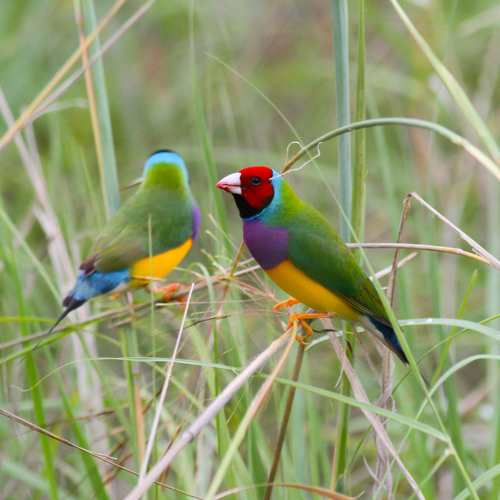
コキンチョウ (Chloebia gouldiae) コキンチョウ
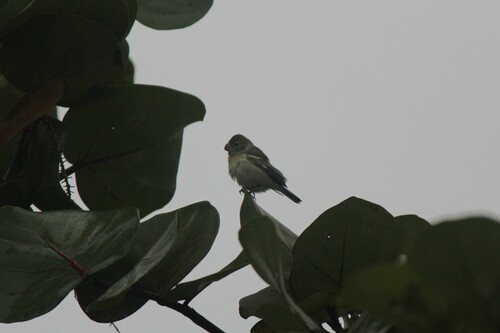
インコヒメウソ (Sporophila peruviana) インコヒメウソ

メディア

読み込み中…

要点

コキンチョウとインコヒメウソを区別する最も信頼できるフィールドマークは全体の色合いです:成鳥のコキンチョウは非常に多色で目を引く一方、インコヒメウソは灰褐色と白のトーンでずっと控えめです。特に南アメリカ西部の乾燥した開けた土地で、厚いオウムのようなくちばしと2本の淡い翼帯を持つ鳥を見たら、それはほぼ確実にインコヒメウソです。対照的に、コキンチョウはオーストラリアにのみ生息し、未成熟の個体でもずっとシンプルでパターンの少ない翼を示します。くちばしの形、翼のパターン、そして生息環境はすべて強力な手がかりであり、特に非成鳥の鳥にとって重要です。両種は繁殖シーズン外で大きな群れを形成することができますが、その分布は重なりません。

識別のコツ

  1. Range is absolute: コキンチョウはオーストラリアにのみ見られ、インコヒメウソはエクアドルとペルーにのみ見られます。これらの地域の外にいる場合は、IDを再考してください。
  2. Bill shape: インコヒメウソは、丸いクルメンとわずかにフック状の先端を持つ非常に厚いオウムのようなくちばしを持ち、横から見ると非常に特徴的です。コキンチョウは、より典型的なくちばしを持ち、深さやオウムのような形状ではありません。
  3. Wing pattern (all ages): インコヒメウソは、閉じた翼の一次羽の基部に2本の淡い翼帯と淡い斑点を示し、止まっている鳥と飛んでいる鳥の両方で確認できます。コキンチョウは翼帯がなく、どの年齢でも淡い翼の斑点を示しません。
  4. Adult male coloration: コキンチョウのオスは非常にカラフル(赤、黄、緑、青、黒、紫)ですが、インコヒメウソのオスは主に灰色がかっており、白い頬、黒っぽい喉、白い腹部を持っています。
  5. Adult female/immature coloration: インコヒメウソのメスと未成熟個体は、淡い翼帯と淡い斑点を持つほこりっぽい茶色ですが、コキンチョウのメスと未成熟個体はずっとシンプルで、翼帯や淡い翼の斑点はありません。
  6. Throat and face pattern (male seedeater): インコヒメウソのオスは、白いバンドと白い頬からはっきりと分かれた黒っぽい喉を持ち、コキンチョウには見られないパターンです。
  7. Tail pattern: インコヒメウソは灰褐色の尾を持ち、黒っぽい中央の羽があります。コキンチョウの尾は情報源では特に特徴的とは記載されていません。
  8. Leg and iris color: 両種ともに暗い脚と目を持ち、区別には役立ちません。
  9. Bill color (sex/age): オスのインコヒメウソはアプリコットイエローのくちばしを持ち、メスは淡い角質のくちばしを持ち、より暗い上顎があります。コキンチョウのくちばしの色は情報源では指定されていませんが、厚いまたはオウムのような形状とは記載されていません。
  10. Flocking behavior: 両種とも繁殖外で大きな群れを形成できますが、コキンチョウはオーストラリアの混合フィンチの群れで見られる可能性が高いです。
  11. Foraging behavior: インコヒメウソは主に地面で採餌し、特に繁殖外ではそうです。コキンチョウは地面と植生の両方で採餌します。
  12. Habitat context: もしあなたがエクアドル/ペルーの乾燥した開けた低木地や農地にいるなら、インコヒメウソを期待してください。オーストラリアのサバンナや崩れた斜面にいるなら、コキンチョウを期待してください。
  13. Aviculture context: コキンチョウは世界中の飼育下や鳥類園で一般的ですが、インコヒメウソは鳥類園の鳥としては記載されていません。オーストラリアの外でケージに見られた場合は、コキンチョウを確認してください。
  14. Sexual dimorphism: 両種は性差があり、インコヒメウソのメス/未成熟個体のみが翼帯と淡い斑点を示します。
  15. Quiz pitfall: 薄い翼帯と淡い斑点を持つ未成熟のインコヒメウソは、他のシンプルなフィンチと簡単に混同されますが、コキンチョウの年齢や性別のいずれの鮮やかな色も示しません。

大きさ

インコヒメウソは長さ10.5〜12.5 cm、平均体重は12.6 gです [wikipedia]。コキンチョウの測定値は情報源では提供されていませんが、どちらも小さなフィンチです。フィールドでは、サイズはこれら二種を区別する信頼できる指標ではなく、どちらも似たように小さくフィンチのように見えます。

羽色

行動

両種とも繁殖シーズン外で大きな群れを形成することができ、時には数千羽(コキンチョウ)または非常に大きな群れ(インコヒメウソ)になることがあります。繁殖中は、両方とも小さな群れやペアで見られる傾向があります。コキンチョウは他の草フィンチとの混合群れに参加することで知られていますが、インコヒメウソは主に地面で採餌し、繁殖中は単独または小さな群れで行動します。両種は種子を食べますが、seedeaterはより厳密に地面で採餌します。

生息環境

コキンチョウはオーストラリアに生息し、通常はサバンナの森林、荒れた崩れた斜面、時には他のフィンチとの混合群れで見られます。インコヒメウソはエクアドルとペルーの沿岸低地にのみ見られ、乾燥した草原、低木地、農業地域、そして海面から800 mまでの過成長したフィールドに生息しています。もしあなたが南アメリカにいるなら、野生でコキンチョウを見ることはありません。したがって、生息地と分布は非常に診断的です。

より良い説明を送る

比較と同じ項目を使ってください。文章はすぐに公開されます。

The most reliable field mark to separate Gouldian Finch from Parrot-billed Seedeater is overall coloration: adult Gouldian Finches are strikingly multicolored, while Parrot-billed Seedeaters are much more subdued, with gray-brown and white tones. If you see a bird with a thick, parrot-like bill and two pale wingbars, especially in arid open country in western South America, it is almost certainly a Parrot-billed Seedeater. Gouldian Finches, in contrast, are native only to Australia, and even immatures show a much plainer, less patterned wing. Bill shape, wing pattern, and habitat context are all strong clues, especially for non-adult birds. Both species can form large flocks outside the breeding season, but their ranges do not overlap.

  1. Range is absolute: Gouldian Finch is only found in Australia; Parrot-billed Seedeater is only in Ecuador and Peru. If you are outside these areas, reconsider your ID.
  2. Bill shape: Parrot-billed Seedeater has a massively thick, parrot-like bill with a rounded culmen and slightly hooked tip, very distinctive in profile. Gouldian Finch has a more typical finch bill, not as deep or parrot-like.
  3. Wing pattern (all ages): Parrot-billed Seedeater shows two pale wingbars and a pale patch at the base of the primaries on the closed wing, visible in both perched and flying birds. Gouldian Finch lacks wingbars and does not show a pale wing patch at any age.
  4. Adult male coloration: Gouldian Finch males are extremely colorful (red, yellow, green, blue, black, purple), while Parrot-billed Seedeater males are mostly grayish with a white cheek, blackish throat, and white underparts.
  5. Adult female/immature coloration: Parrot-billed Seedeater females and immatures are dusty brown with faint wingbars and a pale patch; Gouldian Finch females and immatures are much plainer and lack any wingbars or pale wing patch.
  6. Throat and face pattern (male seedeater): Parrot-billed Seedeater males have a blackish throat sharply separated from a white band and a white cheek, a pattern not found in Gouldian Finch.
  7. Tail pattern: Parrot-billed Seedeater has a gray-brown tail with blackish central feathers; Gouldian Finch tail is not described as distinctive in the sources.
  8. Leg and iris color: Both species have dark legs and eyes; not useful for separation.
  9. Bill color (sex/age): Male Parrot-billed Seedeater has an apricot-yellow bill, female a pale horn bill with duskier maxilla. Gouldian Finch bill color is not specified in the sources but is not described as thick or parrot-like.
  10. Flocking behavior: Both can form large flocks outside breeding, but Gouldian Finch is more likely to be seen in mixed finch flocks in Australia.
  11. Foraging behavior: Parrot-billed Seedeater is mostly ground-foraging, especially outside breeding; Gouldian Finch forages both on the ground and in vegetation.
  12. Habitat context: If you are in arid, open, shrubby or agricultural land in coastal Ecuador/Peru, expect Parrot-billed Seedeater. If in Australian savanna or scree slopes, expect Gouldian Finch.
  13. Aviculture context: Gouldian Finch is common in captivity and aviaries worldwide; Parrot-billed Seedeater is not noted as an aviary bird. If seen in a cage outside Australia, check for Gouldian Finch.
  14. Sexual dimorphism: Both species are sexually dimorphic, but only Parrot-billed Seedeater females/immatures show the wingbars and pale patch.
  15. Quiz pitfall: Immature Parrot-billed Seedeaters with faint wingbars and pale patch are easily confused with other plain finches, but never show the vibrant colors of any Gouldian Finch age or sex.

Parrot-billed Seedeater measures 10.5–12.5 cm in length and averages 12.6 g in weight [wikipedia]. Gouldian Finch's measurements are not provided in the sources, but both are small finches. In the field, size is not a reliable separator between these two, as both appear similarly small and finch-like.

  • Juvenile/immature birds: Parrot-billed Seedeater immatures (especially females) are overall dusty brown with two faint wingbars and a small whitish wing patch. Gouldian Finch immatures are much plainer, lacking wingbars or a pale wing patch, and do not show any strong pattern on the closed wing.
  • Adult males: Gouldian Finch males are unmistakably colorful (combinations of red, yellow, green, blue, black, and purple), while Parrot-billed Seedeater males are grayish above with a white cheek, blackish throat, white band, and two pale wingbars.
  • Adult females: Parrot-billed Seedeater females are dusty brown with faint wingbars and a pale wing patch, while female Gouldian Finches are also colorful, though less so than males, and still lack the seedeater's wing pattern.
  • Wing pattern in flight: Parrot-billed Seedeater of all ages shows two pale wingbars and a pale patch at the base of the primaries on the closed wing; Gouldian Finch does not show these features at any age.

Both species can form large flocks outside the breeding season, sometimes numbering in the thousands (Gouldian Finch) or very large groups (Parrot-billed Seedeater). During breeding, both tend to be found in smaller groups or pairs. Gouldian Finches are noted for joining mixed flocks with other grass finches, while Parrot-billed Seedeaters forage mostly on the ground, singly or in small groups during breeding. Both species are seed-eaters, but the seedeater is more strictly ground-foraging.

Gouldian Finch is native to Australia, typically found in savanna woodlands, rough scree slopes, and sometimes in mixed flocks with other finches. Parrot-billed Seedeater is found only in the coastal lowlands of Ecuador and Peru, inhabiting arid grasslands, shrublands, agricultural areas, and overgrown fields from sea level up to 800 m. If you are in South America, you are not seeing a Gouldian Finch in the wild. Habitat and range are thus highly diagnostic.

変更を破棄しますか?

保存していない編集があります。今離れると失われます。

コキンチョウ · インコヒメウソ · 苦手な鳥