

Diamante de Gould vs Semillero Peruano
Chloebia gouldiae frente a Sporophila peruviana
Juega un quiz con Diamante de Gould y Semillero Peruano
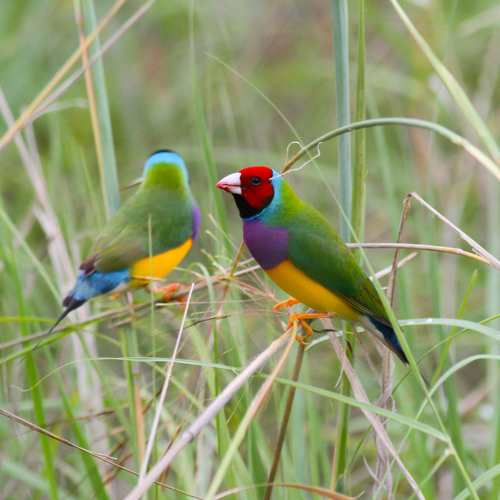 Diamante de Gould
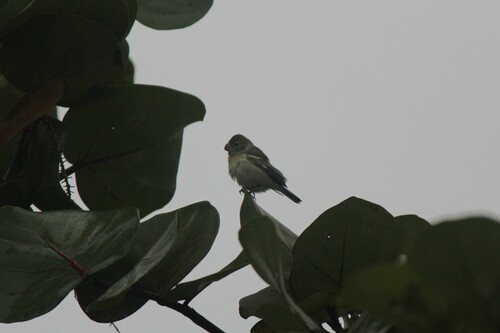 Semillero Peruano
En breve
La marca de campo más confiable para separar el Diamante de Gould del Semillero Peruano es la coloración general: los Diamantes de Gould adultos son sorprendentemente multicolores, mientras que los Semilleros Peruanos son mucho más sutiles, con tonos gris-marrón y blanco. Si ves un pájaro con un pico grueso, parecido al de un loro, y dos bandas alares pálidas, especialmente en un país árido y abierto en el oeste de Sudamérica, es casi seguro que es un Semillero Peruano. Los Diamantes de Gould, en contraste, son nativos solo de Australia, e incluso los inmaduros muestran un ala mucho más simple y menos patrón. La forma del pico, el patrón del ala y el contexto del hábitat son todas pistas fuertes, especialmente para los pájaros no adultos. Ambas especies pueden formar grandes bandadas fuera de la temporada de cría, pero sus rangos no se superponen.
Consejos de identificación
- El rango es absoluto: El Diamante de Gould solo se encuentra en Australia; el Semillero Peruano solo en Ecuador y Perú. Si estás fuera de estas áreas, reconsidera tu identificación.
- Forma del pico: El Semillero Peruano tiene un pico masivamente grueso, parecido al de un loro, con un culmen redondeado y una punta ligeramente ganchuda, muy distintivo en perfil. El Diamante de Gould tiene un pico más típico de pinzón, no tan profundo ni parecido al de un loro.
- Patrón del ala (todas las edades): El Semillero Peruano muestra dos bandas alares pálidas y una mancha pálida en la base de las primarias en el ala cerrada, visible tanto en pájaros posados como volando. El Diamante de Gould carece de bandas alares y no muestra una mancha alar pálida a ninguna edad.
- Coloración del macho adulto: Los machos del Diamante de Gould son extremadamente coloridos (rojo, amarillo, verde, azul, negro, púrpura), mientras que los machos del Semillero Peruano son mayormente grisáceos con una mejilla blanca, garganta negruzca y partes inferiores blancas.
- Coloración de la hembra adulta/inmadura: Las hembras y los inmaduros del Semillero Peruano son marrón polvoriento con bandas alares tenues y una mancha pálida; las hembras y los inmaduros del Diamante de Gould son mucho más simples y carecen de cualquier banda alar o mancha alar pálida.
- Patrón de la garganta y la cara (macho semillero): Los machos del Semillero Peruano tienen una garganta negruzca separada bruscamente de una banda blanca y una mejilla blanca, un patrón que no se encuentra en el Diamante de Gould.
- Patrón de la cola: El Semillero Peruano tiene una cola gris-marrón con plumas centrales negruzcas; la cola del Diamante de Gould no se describe como distintiva en las fuentes.
- Color de las patas y el iris: Ambas especies tienen patas y ojos oscuros; no es útil para la separación.
- Color del pico (sexo/edad): El macho del Semillero Peruano tiene un pico de color amarillo albaricoque, la hembra un pico de cuerno pálido con maxila más oscura. El color del pico del Diamante de Gould no se especifica en las fuentes, pero no se describe como grueso o parecido al de un loro.
- Comportamiento de bandada: Ambas pueden formar grandes bandadas fuera de la cría, pero es más probable que el Diamante de Gould se vea en bandadas mixtas de pinzones en Australia.
- Comportamiento de forrajeo: El Semillero Peruano forajea principalmente en el suelo, especialmente fuera de la cría; el Diamante de Gould forajea tanto en el suelo como en la vegetación.
- Contexto del hábitat: Si estás en tierras áridas, abiertas, arbustivas o agrícolas en la costa de Ecuador/Perú, espera ver un Semillero Peruano. Si estás en la sabana australiana o en laderas de rocas, espera ver un Diamante de Gould.
- Contexto de avicultura: El Diamante de Gould es común en cautiverio y aviarios en todo el mundo; el Semillero Peruano no se menciona como un pájaro de aviario. Si se ve en una jaula fuera de Australia, verifica si es un Diamante de Gould.
- Dimorfismo sexual: Ambas especies son dimórficas sexualmente, pero solo las hembras/inmaduros del Semillero Peruano muestran las bandas alares y la mancha pálida.
- Trampa del cuestionario: Los inmaduros del Semillero Peruano con bandas alares tenues y mancha pálida se confunden fácilmente con otros pinzones simples, pero nunca muestran los colores vibrantes de ninguna edad o sexo del Diamante de Gould.
Tamaño
El Semillero Peruano mide de 10.5 a 12.5 cm de longitud y promedia 12.6 g de peso [wikipedia]. Las medidas del Diamante de Gould no se proporcionan en las fuentes, pero ambos son pinzones pequeños. En el campo, el tamaño no es un separador confiable entre estos dos, ya que ambos parecen igualmente pequeños y similares a los pinzones.
Plumaje
- Pájaros juveniles/inmaduros: Los inmaduros del Semillero Peruano (especialmente las hembras) son en general marrón polvoriento con dos bandas alares tenues y una pequeña mancha alar blanquecina. Los inmaduros del Diamante de Gould son mucho más simples, carecen de bandas alares o de una mancha alar pálida, y no muestran ningún patrón fuerte en el ala cerrada.
- Machos adultos: Los machos del Diamante de Gould son inconfundiblemente coloridos (combinaciones de rojo, amarillo, verde, azul, negro y púrpura), mientras que los machos del Semillero Peruano son grisáceos por encima con una mejilla blanca, garganta negruzca, banda blanca y dos bandas alares pálidas.
- Hembras adultas: Las hembras del Semillero Peruano son marrón polvoriento con bandas alares tenues y una mancha alar pálida, mientras que las hembras del Diamante de Gould también son coloridas, aunque menos que los machos, y aún carecen del patrón de ala del semillero.
- Patrón del ala en vuelo: El Semillero Peruano de todas las edades muestra dos bandas alares pálidas y una mancha pálida en la base de las primarias en el ala cerrada; el Diamante de Gould no muestra estas características a ninguna edad.
Comportamiento
Ambas especies pueden formar grandes bandadas fuera de la temporada de cría, a veces sumando miles (Diamante de Gould) o grupos muy grandes (Semillero Peruano). Durante la cría, ambas tienden a encontrarse en grupos más pequeños o en parejas. Se nota que los Diamantes de Gould se unen a bandadas mixtas con otros pinzones de pasto, mientras que los Semilleros Peruanos forajean principalmente en el suelo, solos o en pequeños grupos durante la cría. Ambas especies son granívoras, pero el semillero es más estrictamente forrajero en el suelo.
Hábitat
El Diamante de Gould es nativo de Australia, típicamente encontrado en bosques de sabana, laderas de rocas ásperas y a veces en bandadas mixtas con otros pinzones. El Semillero Peruano se encuentra solo en las tierras bajas costeras de Ecuador y Perú, habitando pastizales áridos, arbustales, áreas agrícolas y campos crecidos desde el nivel del mar hasta 800 m. Si estás en Sudamérica, no estás viendo un Diamante de Gould en la naturaleza. Por lo tanto, el hábitat y el rango son altamente diagnósticos.