

Gouldian Finch vs Parrot-billed Seedeater
Chloebia gouldiae contro Sporophila peruviana
Fai un quiz con Gouldian Finch e Parrot-billed Seedeater
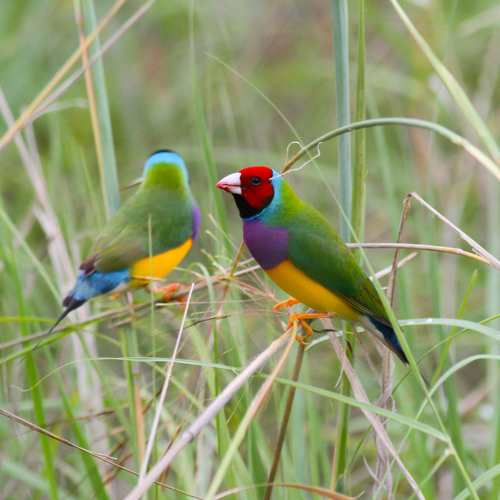 Gouldian Finch
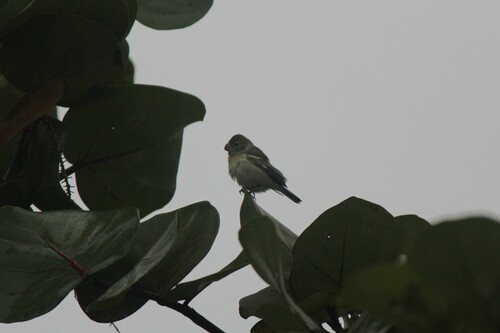 Parrot-billed Seedeater
In breve
Il segno di campo più affidabile per separare il Gouldian Finch dal Parrot-billed Seedeater è la colorazione generale: i Gouldian Finches adulti sono straordinariamente multicolori, mentre i Parrot-billed Seedeaters sono molto più sobri, con toni grigio-marroni e bianchi. Se vedi un uccello con un becco spesso, simile a quello di un pappagallo, e due barre alari chiare, specialmente in un paese arido e aperto nell'ovest del Sud America, è quasi certamente un Parrot-billed Seedeater. I Gouldian Finches, al contrario, sono nativi solo dell'Australia, e anche gli immaturi mostrano un'ala molto più semplice e meno decorata. La forma del becco, il motivo dell'ala e il contesto dell'habitat sono tutti indizi forti, specialmente per gli uccelli non adulti. Entrambe le specie possono formare grandi stormi al di fuori della stagione riproduttiva, ma i loro areali non si sovrappongono.
Consigli di identificazione
- Range is absolute: Il Gouldian Finch si trova solo in Australia; il Parrot-billed Seedeater si trova solo in Ecuador e Perù. Se sei al di fuori di queste aree, riconsidera la tua identificazione.
- Bill shape: Il Parrot-billed Seedeater ha un becco massicciamente spesso, simile a quello di un pappagallo, con un culmine arrotondato e una punta leggermente ricurva, molto distintivo di profilo. Il Gouldian Finch ha un becco di tipo più tipico per i fringillidi, non così profondo o simile a quello di un pappagallo.
- Wing pattern (all ages): Il Parrot-billed Seedeater mostra due barre alari chiare e una macchia chiara alla base delle primarie sull'ala chiusa, visibile sia negli uccelli in posa che in volo. Il Gouldian Finch non ha barre alari e non mostra una macchia alare chiara a nessuna età.
- Adult male coloration: I maschi del Gouldian Finch sono estremamente colorati (rosso, giallo, verde, blu, nero, viola), mentre i maschi del Parrot-billed Seedeater sono per lo più grigi con una guancia bianca, gola nerastra e parti inferiori bianche.
- Adult female/immature coloration: Le femmine e gli immaturi del Parrot-billed Seedeater sono marroni polverosi con barre alari deboli e una macchia chiara; le femmine e gli immaturi del Gouldian Finch sono molto più semplici e mancano di barre alari o macchie alari chiare.
- Throat and face pattern (male seedeater): I maschi del Parrot-billed Seedeater hanno una gola nerastra nettamente separata da una banda bianca e una guancia bianca, un motivo non presente nel Gouldian Finch.
- Tail pattern: Il Parrot-billed Seedeater ha una coda grigio-marrone con piume centrali nerastre; la coda del Gouldian Finch non è descritta come distintiva nelle fonti.
- Leg and iris color: Entrambe le specie hanno zampe e occhi scuri; non utili per la separazione.
- Bill color (sex/age): Il maschio del Parrot-billed Seedeater ha un becco giallo albicocca, la femmina un becco chiaro con una maxilla più scura. Il colore del becco del Gouldian Finch non è specificato nelle fonti ma non è descritto come spesso o simile a quello di un pappagallo.
- Flocking behavior: Entrambi possono formare grandi stormi al di fuori della riproduzione, ma il Gouldian Finch è più probabile che venga visto in stormi misti di fringillidi in Australia.
- Foraging behavior: Il Parrot-billed Seedeater si nutre principalmente a terra, specialmente al di fuori della riproduzione; il Gouldian Finch si nutre sia a terra che nella vegetazione.
- Habitat context: Se ti trovi in terreni aridi, aperti, cespugliosi o agricoli nella costa dell'Ecuador/Perù, aspettati il Parrot-billed Seedeater. Se sei nella savana australiana o su pendii di detriti, aspettati il Gouldian Finch.
- Aviculture context: Il Gouldian Finch è comune in cattività e in voliere in tutto il mondo; il Parrot-billed Seedeater non è noto come uccello da voliera. Se visto in una gabbia al di fuori dell'Australia, controlla per il Gouldian Finch.
- Sexual dimorphism: Entrambe le specie sono sessualmente dimorfiche, ma solo le femmine/gli immaturi del Parrot-billed Seedeater mostrano le barre alari e la macchia chiara.
- Quiz pitfall: Gli immaturi del Parrot-billed Seedeater con barre alari deboli e macchia chiara sono facilmente confusi con altri fringillidi semplici, ma non mostrano mai i colori vivaci di nessuna età o sesso del Gouldian Finch.
Taglia
Il Parrot-billed Seedeater misura 10.5–12.5 cm di lunghezza e pesa in media 12.6 g [wikipedia]. Le misure del Gouldian Finch non sono fornite nelle fonti, ma entrambi sono fringillidi di piccole dimensioni. Sul campo, la dimensione non è un separatore affidabile tra questi due, poiché entrambi appaiono simili per dimensioni e aspetto da fringillidi.
Piumaggio
- Juvenile/immature birds: Gli immaturi del Parrot-billed Seedeater (specialmente le femmine) sono complessivamente marroni polverosi con due barre alari deboli e una piccola macchia alare bianca. Gli immaturi del Gouldian Finch sono molto più semplici, privi di barre alari o di una macchia alare chiara, e non mostrano alcun forte motivo sull'ala chiusa.
- Adult males: I maschi del Gouldian Finch sono inconfondibilmente colorati (combinazioni di rosso, giallo, verde, blu, nero e viola), mentre i maschi del Parrot-billed Seedeater sono grigi sopra con una guancia bianca, gola nerastra, banda bianca e due barre alari chiare.
- Adult females: Le femmine del Parrot-billed Seedeater sono marroni polverosi con barre alari deboli e una macchia alare chiara, mentre le femmine del Gouldian Finch sono anch'esse colorate, sebbene meno dei maschi, e mancano ancora del motivo alare del seedeater.
- Wing pattern in flight: Il Parrot-billed Seedeater di tutte le età mostra due barre alari chiare e una macchia chiara alla base delle primarie sull'ala chiusa; il Gouldian Finch non mostra queste caratteristiche a nessuna età.
Comportamento
Entrambe le specie possono formare grandi stormi al di fuori della stagione riproduttiva, a volte contando migliaia (Gouldian Finch) o gruppi molto grandi (Parrot-billed Seedeater). Durante la riproduzione, entrambe tendono a trovarsi in gruppi più piccoli o coppie. I Gouldian Finches sono noti per unirsi a stormi misti con altri fringillidi, mentre i Parrot-billed Seedeaters si nutrono principalmente a terra, singolarmente o in piccoli gruppi durante la riproduzione. Entrambe le specie sono granivori, ma il seedeater si nutre più rigorosamente a terra.
Habitat
Il Gouldian Finch è nativo dell'Australia, tipicamente trovato in boschi di savana, pendii di detriti e talvolta in stormi misti con altri fringillidi. Il Parrot-billed Seedeater si trova solo nelle pianure costiere dell'Ecuador e del Perù, abitanti di praterie aride, cespugli, aree agricole e campi incolti dal livello del mare fino a 800 m. Se ti trovi in Sud America, non stai vedendo un Gouldian Finch in natura. L'habitat e l'areale sono quindi altamente diagnostici.
Gouldian Finch · Parrot-billed Seedeater · I miei uccelli difficili