

golden-breasted fruiteater vs Tricoloured Brushfinch
Pipreola aureopectus versus Atlapetes tricolor
Jogue um quiz com golden-breasted fruiteater e Tricoloured Brushfinch
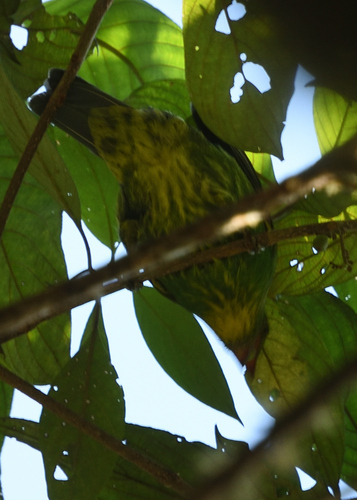 golden-breasted fruiteater
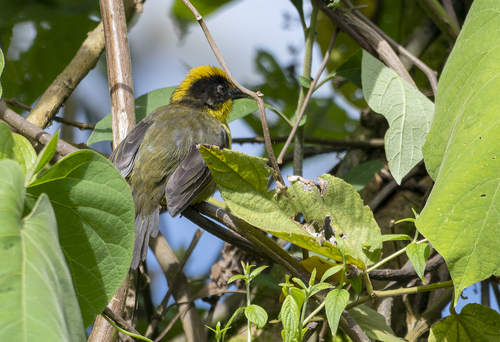 Tricoloured Brushfinch
Em resumo
A marca de campo mais confiável é a diferença marcante na coloração da cabeça e das partes inferiores: os machos adultos de golden-breasted fruiteater apresentam uma cabeça e partes superiores verde-grama com uma garganta e peito amarelo brilhante, enquanto os Tricoloured Brushfinches têm uma coroa e nuca amarelas ou ocre, um rosto preto e partes inferiores amarelas com um forte tom oliva. As fêmeas e os imaturos do fruiteater são estriados por baixo, nunca mostrando as partes inferiores amarelas limpas do brushfinch. Os juvenis de brushfinch são marrons por cima com uma coroa ruiva, ao contrário de qualquer fruiteater. Ambos são semelhantes em tamanho, mas o fruiteater é ligeiramente mais pesado e robusto. O habitat e a distribuição também são úteis: o fruiteater é encontrado na Colômbia e na Venezuela, enquanto o brushfinch é endêmico do Peru.
Dicas de identificação
- Plumagem juvenil: O juvenil Tricoloured Brushfinch é marrom escuro por cima e marrom mais claro por baixo com uma coroa ruiva—nunca igualado por qualquer fruiteater. Se você ver um pássaro marronáceo com uma coroa ruiva, é um brushfinch.
- Partes inferiores do macho adulto: O macho golden-breasted fruiteater tem uma garganta e peito amarelo brilhante, misturando-se ao verde nas laterais e flancos. O brushfinch tem partes inferiores amarelas com um forte tom oliva, especialmente nas laterais e na parte inferior da cauda.
- Padrão da cabeça: O brushfinch adulto tem uma coroa e nuca amarelas a ocre com um rosto preto, enquanto os machos e fêmeas do fruiteater têm uma cabeça verde-grama com lores e queixo escuros (machos). Nenhum fruiteater mostra o rosto preto ou a coroa amarela do brushfinch.
- Partes inferiores de fêmeas/imaturos: A fêmea fruiteater é verde por baixo com listras amarelas, nunca mostrando as partes inferiores amarelas limpas do brushfinch. Ambos os sexos de brushfinch são sem estrias por baixo.
- Partes superiores: O fruiteater é verde-grama por cima e na cauda; o brushfinch é oliva escuro a oliva-citrino nas costas, com uma cauda escura e asas cinza-escuras com bordas oliva.
- Padrão das asas: O fruiteater tem pequenas pontas brancas nas tertiais (adultos); as asas do brushfinch são cinza-escuro com bordas oliva, sem pontas brancas.
- Cor e forma do bico: O fruiteater tem um bico laranja ou laranja-avermelhado, ligeiramente curvado; o brushfinch tem um bico preto, cônico, semelhante ao de um pardal.
- Cor da íris: A íris do fruiteater é amarelo-laranja; a do brushfinch é marrom avermelhado profundo.
- Cor das pernas: O fruiteater tem pernas e pés cinza-esverdeados; o brushfinch tem pernas e pés cinza ou preto escuro.
- Dimorfismo sexual: O fruiteater apresenta forte dimorfismo sexual (machos e fêmeas parecem diferentes por baixo); os sexos do brushfinch se parecem.
- Comportamento: O fruiteater é mais frequentemente visto em pares, forrageando silenciosamente em níveis médios ou na copa; o brushfinch é mais ativo, frequentemente no chão ou próximo a ele.
- Distribuição: O fruiteater é encontrado na Colômbia e na Venezuela; o brushfinch é endêmico do Peru. Se você estiver fora da distribuição, reconsidere sua identificação.
- Habitat: O fruiteater prefere florestas montanas úmidas interiores; o brushfinch é mais frequentemente encontrado na borda da floresta ou em crescimento secundário.
- Tamanho e forma: O fruiteater é ligeiramente mais pesado e robusto; o brushfinch é mais esbelto e semelhante a um pardal.
- Bandos mistos: O fruiteater frequentemente se junta a bandos de espécies mistas na copa; o brushfinch é menos propenso a fazer isso e permanece mais baixo.
Tamanho
Ambas as espécies são semelhantes em comprimento (16–18 cm), mas o golden-breasted fruiteater é um pouco mais pesado (46–50 g para três indivíduos) em comparação com o Tricoloured Brushfinch (cerca de 37 g). O fruiteater pode parecer ligeiramente mais robusto, especialmente no corpo, enquanto o brushfinch é mais esbelto e semelhante a um pardal em construção. A estrutura do bico também difere: o fruiteater tem um bico mais robusto, ligeiramente curvado, típico das cotingas, enquanto o brushfinch tem um bico cônico, semelhante ao de um pardal.
Plumagem
- Juvenis: Os juvenis de Tricoloured Brushfinches são marrons escuros por cima e marrons mais claros por baixo, com uma coroa ruiva escura—completamente diferente de qualquer idade de golden-breasted fruiteater, que não apresenta essa coloração marrom ou ruiva em nenhuma fase.
- Machos adultos: Os machos golden-breasted fruiteater têm uma cabeça e partes superiores verde-grama, uma garganta e peito amarelo brilhante, e um peito inferior amarelo-limão que se mistura com flancos verdes. Eles também têm pequenas pontas brancas nas tertiais. Em contraste, os Tricoloured Brushfinches adultos têm uma coroa e nuca amarelas a ocre, um rosto preto, costas oliva escuras, cauda escura e partes inferiores amarelas com um forte tom oliva, especialmente nas laterais e na região ventral.
- Fêmeas adultas: As fêmeas fruiteater se assemelham aos machos por cima, mas são verdes com listras amarelas por baixo, sem as partes inferiores amarelas limpas do brushfinch. Ambos os sexos de brushfinch se parecem e nunca mostram partes inferiores estriadas.
- Íris e bico: Os fruiteaters têm uma íris amarelo-laranja e um bico laranja ou laranja-avermelhado; os brushfinches têm uma íris marrom avermelhado profundo e um bico preto.
Comportamento
O golden-breasted fruiteater geralmente forrageia em pares, principalmente nos níveis médios da floresta, e frequentemente se junta a bandos de espécies mistas. Eles são mais propensos a serem vistos empoleirados silenciosamente, alimentando-se de frutas. O Tricoloured Brushfinch, como um parente dos pardais, é mais terrestre ou encontrado em vegetação baixa, frequentemente visto forrageando no chão ou próximo a ele e se movendo sozinho ou em pares. Seus movimentos são mais ativos e semelhantes aos de pardais em comparação com o comportamento mais lento e deliberado do fruiteater.
Habitat
O golden-breasted fruiteater é encontrado em florestas montanas úmidas da Colômbia e da Venezuela, geralmente nos níveis médios da copa. O Tricoloured Brushfinch é restrito ao Peru e habita florestas montanas e bordas de floresta, frequentemente em elevações mais altas. Se você estiver fora da distribuição de uma espécie, isso pode ser uma pista decisiva. O fruiteater prefere florestas interiores, enquanto o brushfinch é mais provável de ser encontrado em bordas ou em crescimento secundário.
golden-breasted fruiteater · Tricoloured Brushfinch · Minhas aves difíceis