

Golden-breasted Fruiteater vs Tricoloured Brushfinch
Pipreola aureopectus contro Atlapetes tricolor
Fai un quiz con Golden-breasted Fruiteater e Tricoloured Brushfinch
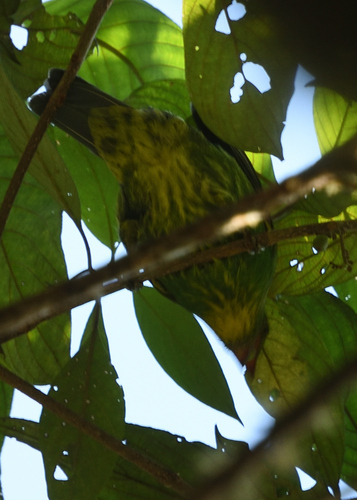 Golden-breasted Fruiteater
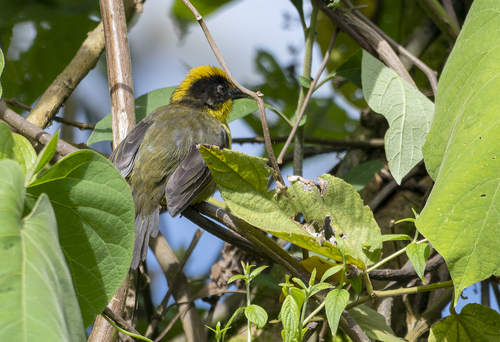 Tricoloured Brushfinch
In breve
Il segno distintivo più affidabile è la notevole differenza nella colorazione della testa e delle parti inferiori: i maschi adulti di Golden-breasted Fruiteater mostrano una testa e una parte superiore verde erba con una gola e un petto giallo brillante, mentre i Tricoloured Brushfinch hanno una corona e una nuca gialla o ocra, un volto nero e parti inferiori gialle con una forte sfumatura oliva. Le femmine e gli immaturi del fruiteater sono striati sotto, non mostrando mai le pulite parti inferiori gialle del brushfinch. I giovani brushfinch sono marroni sopra con una corona rugginosa, a differenza di qualsiasi fruiteater. Entrambi sono simili in dimensioni, ma il fruiteater è leggermente più pesante e massiccio. L'habitat e la distribuzione sono anche utili: il Fruiteater si trova in Colombia e Venezuela, mentre il brushfinch è endemico del Perù.
Consigli di identificazione
- Juvenile plumage: Il giovane Tricoloured Brushfinch è marrone scuro sopra e marrone più chiaro sotto con una corona rugginosa—mai eguagliato da qualsiasi fruiteater. Se vedi un uccello marrone con una corona rugginosa, è un brushfinch.
- Adult male underparts: Il maschio Golden-breasted Fruiteater ha una gola e un petto giallo brillante, che sfumano in verde sui lati e sui fianchi. Il brushfinch ha parti inferiori gialle con una forte sfumatura oliva, specialmente sui lati e sotto la coda.
- Head pattern: Il brushfinch adulto ha una corona e una nuca gialla o ocra con un volto nero, mentre i maschi e le femmine del fruiteater hanno una testa verde erba con lore scuri e mento (maschi). Nessun fruiteater mostra il volto nero o la corona gialla del brushfinch.
- Female/immature underparts: La femmina del fruiteater è verde sotto con striature gialle, non mostrando mai le pulite parti inferiori gialle del brushfinch. Entrambi i sessi del brushfinch non hanno striature sotto.
- Upperparts: Il fruiteater è verde erba sopra e sulla coda; il brushfinch è di un oliva scuro a oliva-citrino sulla schiena, con una coda nerognola e ali grigie scure bordate di oliva.
- Wing pattern: Il fruiteater ha piccole punte bianche sulle terziarie (adulti); le ali del brushfinch sono grigie scure con bordi oliva, senza punte bianche.
- Bill color and shape: Il fruiteater ha un becco arancione o rosso-arancione, leggermente ricurvo; il brushfinch ha un becco nero, conico, simile a quello di un passero.
- Iris color: L'iride del fruiteater è giallo-arancione; quella del brushfinch è di un marrone rossastro profondo.
- Leg color: Il fruiteater ha gambe e piedi grigio-verdastri; il brushfinch ha gambe e piedi grigio o nerognoli.
- Sexual dimorphism: Il fruiteater mostra un forte dimorfismo sessuale (maschi e femmine sembrano diversi sotto); i sessi del brushfinch si somigliano.
- Behavior: Il fruiteater è più spesso visto in coppie, foraggiando silenziosamente nei livelli medi o nella chioma; il brushfinch è più attivo, spesso a terra o vicino al suolo.
- Range: Il fruiteater si trova in Colombia e Venezuela; il brushfinch è endemico del Perù. Se sei al di fuori dell'area, riconsidera la tua identificazione.
- Habitat: Il fruiteater preferisce le foreste montane umide interne; il brushfinch è più spesso ai margini della foresta o in crescita secondaria.
- Size and shape: Il fruiteater è leggermente più pesante e massiccio; il brushfinch è più snello e simile a un passero.
- Mixed flocks: Il fruiteater spesso si unisce a stormi di specie miste nella chioma; il brushfinch è meno probabile che lo faccia e rimane più in basso.
Taglia
Entrambe le specie sono simili in lunghezza (16–18 cm), ma il Golden-breasted Fruiteater è leggermente più pesante (46–50 g per tre individui) rispetto al Tricoloured Brushfinch (circa 37 g). Il fruiteater può apparire leggermente più massiccio, specialmente nel corpo, mentre il brushfinch è più snello e simile a un passero nella struttura. Anche la struttura del becco differisce: il fruiteater ha un becco più robusto, leggermente ricurvo, tipico delle cotinghe, mentre il brushfinch ha un becco conico, simile a quello di un passero.
Piumaggio
- Juveniles: I giovani Tricoloured Brushfinch sono marroni scuri sopra e marroni più chiari sotto, con una corona rugginosa scura—completamente diversi da qualsiasi età di Golden-breasted Fruiteater, che non mostra questa colorazione marrone o rugginosa in nessuna fase.
- Adult males: I maschi di Golden-breasted Fruiteater hanno una testa e una parte superiore verde erba, una gola gialla brillante e un petto centrale giallo limone, e un petto inferiore giallo che sfuma in fianchi verdi. Hanno anche piccole punte bianche sulle terziarie. Al contrario, i Tricoloured Brushfinch adulti hanno una corona e una nuca gialla o ocra, un volto nero, una schiena di oliva scuro, una coda nerognola e parti inferiori gialle con una forte sfumatura oliva, specialmente sui lati e sul vent.
- Adult females: Le femmine di fruiteater somigliano ai maschi sopra ma sono verdi con striature gialle sotto, mancando delle pulite parti inferiori gialle del brushfinch. Entrambi i sessi del brushfinch si somigliano e non mostrano mai parti inferiori striate.
- Iris and bill: I fruiteater hanno un'iride giallo-arancione e un becco arancione o rosso-arancione; i brushfinch hanno un'iride marrone rossastro profondo e un becco nero.
Comportamento
Il Golden-breasted Fruiteater tipicamente foraggia in coppie, principalmente nei livelli medi della foresta, e spesso si unisce a stormi di specie miste. È più probabile vederli posati silenziosamente, mentre si nutrono di frutta. Il Tricoloured Brushfinch, essendo un parente dei passeri, è più terrestre o si trova in vegetazione bassa, spesso visto foraggiare a terra o vicino al suolo e muovendosi singolarmente o in coppie. I loro movimenti sono più attivi e simili a quelli dei passeri rispetto al comportamento più lento e deliberato del fruiteater.
Habitat
Il Golden-breasted Fruiteater si trova nelle foreste montane umide di Colombia e Venezuela, solitamente nei livelli medi della chioma. Il Tricoloured Brushfinch è ristretto al Perù e abita foreste montane e margini forestali, spesso a elevazioni più alte. Se sei al di fuori dell'area di una specie, questo può essere un indizio decisivo. Il fruiteater preferisce la foresta interna, mentre il brushfinch è più probabile che si trovi ai margini o in crescita secondaria.
Golden-breasted Fruiteater · Tricoloured Brushfinch · I miei uccelli difficili