

Frutero Pechidorado vs Tricoloured Brushfinch
Pipreola aureopectus frente a Atlapetes tricolor
Juega un quiz con Frutero Pechidorado y Tricoloured Brushfinch
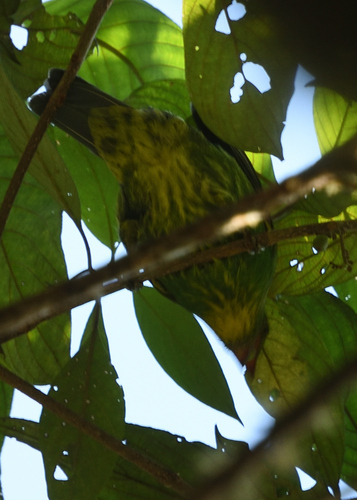 Frutero Pechidorado
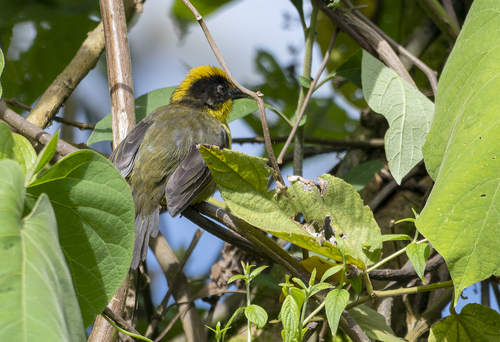 Tricoloured Brushfinch
En breve
La marca de campo más confiable es la notable diferencia en la coloración de la cabeza y las partes inferiores: los machos adultos de Frutero Pechidorado muestran una cabeza y partes superiores de color verde hierba con una garganta y pecho de un amarillo brillante, mientras que los Tricoloured Brushfinches tienen una corona y nuca amarillas u ocres, una cara negra y partes inferiores amarillas con un fuerte lavado oliváceo. Las hembras y los inmaduros del frutero tienen estrías en la parte inferior, nunca mostrando las limpias partes inferiores amarillas del brushfinch. Los juveniles de brushfinch son marrones por encima con una corona rufo, a diferencia de cualquier frutero. Ambos son similares en tamaño, pero el frutero es ligeramente más pesado y robusto. El hábitat y el rango también son útiles: el frutero se encuentra en Colombia y Venezuela, mientras que el brushfinch es endémico de Perú.
Consejos de identificación
- Plumaje juvenil: El juvenil Tricoloured Brushfinch es marrón oscuro por encima y marrón más claro por debajo con una corona rufo—nunca igualado por ningún frutero. Si ves un pájaro marrón con una corona rufo, es un brushfinch.
- Partes inferiores del macho adulto: El macho Frutero Pechidorado tiene una garganta y pecho de un amarillo brillante, que se mezcla con verde en los lados y flancos. El brushfinch tiene partes inferiores amarillas con un fuerte lavado oliváceo, especialmente en los lados y la parte inferior de la cola.
- Patrón de la cabeza: El brushfinch adulto tiene una corona y nuca amarillas a ocres con una cara negra, mientras que los machos y hembras del frutero tienen una cabeza verde hierba con loretes y barbilla oscuros (machos). Ningún frutero muestra la cara negra o la corona amarilla del brushfinch.
- Partes inferiores de hembras/inmaduros: La hembra del frutero es verde por debajo con estrías amarillas, nunca mostrando las limpias partes inferiores amarillas del brushfinch. Ambos sexos de brushfinch no tienen estrías en la parte inferior.
- Partes superiores: El frutero es verde hierba por encima y en la cola; el brushfinch es de un oliva oscuro a oliva-citrino en la espalda, con una cola negruzca y alas grisáceas con bordes oliváceos.
- Patrón de alas: El frutero tiene pequeñas puntas blancas en los terciarios (adultos); las alas del brushfinch son grisáceas con bordes oliváceos, sin puntas blancas.
- Color y forma del pico: El frutero tiene un pico naranja o naranja-rojo, ligeramente curvado; el brushfinch tiene un pico negro, cónico, similar al de un gorrión.
- Color del iris: El iris del frutero es amarillo-naranja; el del brushfinch es de un marrón rojizo profundo.
- Color de las patas: El frutero tiene patas y pies grisáceos verdosos; el brushfinch tiene patas y pies grisáceos o negros oscuros.
- Dimorfismo sexual: El frutero muestra un fuerte dimorfismo sexual (los machos y hembras se ven diferentes por debajo); los sexos del brushfinch se parecen.
- Comportamiento: El frutero se ve más a menudo en parejas, forrajeando en silencio en niveles medios o en el dosel; el brushfinch es más activo, a menudo en o cerca del suelo.
- Rango: El frutero se encuentra en Colombia y Venezuela; el brushfinch es endémico de Perú. Si estás fuera del rango, reconsidera tu identificación.
- Hábitat: El frutero prefiere el bosque montano húmedo interior; el brushfinch se encuentra más a menudo en el borde del bosque o en crecimiento secundario.
- Tamaño y forma: El frutero es ligeramente más pesado y robusto; el brushfinch es más esbelto y similar a un gorrión.
- Bandadas mixtas: El frutero a menudo se une a bandadas de especies mixtas en el dosel; el brushfinch es menos probable que lo haga y se queda más bajo.
Tamaño
Ambas especies son similares en longitud (16–18 cm), pero el Frutero Pechidorado es algo más pesado (46–50 g para tres individuos) en comparación con el Tricoloured Brushfinch (alrededor de 37 g). El frutero puede parecer ligeramente más robusto, especialmente en el cuerpo, mientras que el brushfinch es más esbelto y similar a un gorrión en su construcción. La estructura del pico también difiere: el frutero tiene un pico más robusto, ligeramente curvado, típico de las cotingas, mientras que el brushfinch tiene un pico cónico, similar al de un gorrión.
Plumaje
- Juveniles: Los juveniles de Tricoloured Brushfinch son marrones oscuros por encima y marrones más claros por debajo, con una corona rufo oscura—completamente diferente a cualquier edad de Frutero Pechidorado, que no muestra esta coloración marrón o rufo en ninguna etapa.
- Machos adultos: Los machos de Frutero Pechidorado tienen una cabeza y partes superiores de color verde hierba, una garganta y pecho de un amarillo brillante, y un pecho inferior amarillo limón que se mezcla con flancos verdes. También tienen pequeñas puntas blancas en los terciarios. En contraste, los Tricoloured Brushfinches adultos tienen una corona y nuca amarillas a ocres, una cara negra, espalda de un oliva oscuro, cola negruzca y partes inferiores amarillas con un fuerte lavado oliváceo, especialmente en los lados y el vent.
- Hembras adultas: Las hembras de frutero se parecen a los machos por encima, pero son verdes con estrías amarillas por debajo, careciendo de las limpias partes inferiores amarillas del brushfinch. Ambos sexos de brushfinch se parecen y nunca muestran partes inferiores estriadas.
- Iris y pico: Los fruteros tienen un iris amarillo-naranja y un pico naranja o naranja-rojo; los brushfinches tienen un iris marrón rojizo profundo y un pico negro.
Comportamiento
El Frutero Pechidorado típicamente forrajea en parejas, principalmente en los niveles medios del bosque, y a menudo se une a bandadas de especies mixtas. Es más probable que se les vea posados en silencio, alimentándose de fruta. El Tricoloured Brushfinch, como un pariente de los gorriones, es más terrestre o se encuentra en vegetación baja, a menudo visto forrajeando en o cerca del suelo y moviéndose solo o en parejas. Sus movimientos son más activos y similares a los de un gorrión en comparación con el comportamiento más lento y deliberado del frutero.
Hábitat
El Frutero Pechidorado se encuentra en bosques montanos húmedos de Colombia y Venezuela, generalmente en los niveles medios del dosel. El Tricoloured Brushfinch está restringido a Perú y habita bosques montanos y bordes de bosque, a menudo en elevaciones más altas. Si estás fuera del rango de una especie, esto puede ser una pista decisiva. El frutero prefiere el bosque interior, mientras que el brushfinch es más probable que se encuentre en bordes o en crecimiento secundario.
Frutero Pechidorado · Tricoloured Brushfinch · Mis aves difíciles