

maria-pechim vs guaracava-cinzenta-da-amazônia
Myiopagis gaimardii versus Myiopagis cinerea
Jogue um quiz com maria-pechim e guaracava-cinzenta-da-amazônia
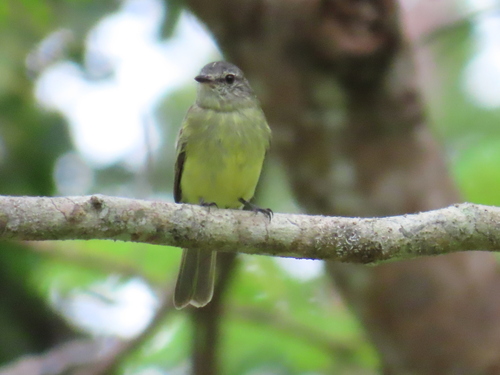 maria-pechim
 guaracava-cinzenta-da-amazônia
Em resumo
A marca de campo mais confiável entre a maria-pechim e a guaracava-cinzenta-da-amazônia é a cor e o padrão das partes superiores e inferiores, especialmente em aves empoleiradas: a maria-pechim apresenta partes superiores verde-oliva e partes inferiores verde-amareladas, enquanto a guaracava-cinzenta-da-amazônia (macho) é azul-acinzentada por cima com partes inferiores cinza-claro e uma barriga branca. As fêmeas da guaracava-cinzenta-da-amazônia, no entanto, podem ser bastante semelhantes à maria-pechim, com partes superiores verde-oliva e partes inferiores amareladas, portanto, atenção aos detalhes como a cor da barra alar e as marcas faciais é essencial. Ambas as espécies têm uma faixa de coroa parcialmente oculta, mas a cor e a visibilidade diferem. Diferenças sutis na cor do bico e no brilho da barra alar podem ajudar, mas cuidado com a sobreposição em luz fraca ou com aves desgastadas. As imaturas e fêmeas da guaracava-cinzenta-da-amazônia são as mais propensas a serem confundidas com a maria-pechim, então concentre-se na combinação da cor das partes superiores, tom das partes inferiores e contraste da barra alar.
Dicas de identificação
- Cor das partes superiores (adultos): A maria-pechim é verde-oliva por cima; o macho da guaracava-cinzenta-da-amazônia é azul-acinzentado por cima, enquanto as fêmeas são verde-oliva, tornando-as mais semelhantes à maria-pechim.
- Cor das partes inferiores: A maria-pechim é verde-amarelada no peito, amarela na barriga; o macho da guaracava-cinzenta-da-amazônia é cinza-claro nas partes inferiores com uma barriga branca. A fêmea da guaracava-cinzenta-da-amazônia tem partes inferiores verde-amareladas e barriga amarela, combinando de perto com a maria-pechim.
- Barras alares: A maria-pechim sempre apresenta duas barras alares amarelas; os machos da guaracava-cinzenta-da-amazônia têm duas barras alares brancas, enquanto as fêmeas têm barras alares amareladas. Em luz fraca, branco e amarelo podem ser difíceis de distinguir, mas em boa luz, esta é uma marca chave.
- Borda das asas: A maria-pechim tem bordas amarelas nas penas marrons das asas; os machos da guaracava-cinzenta-da-amazônia têm bordas brancas nas asas pretas, as fêmeas têm bordas amareladas.
- Faixa de coroa: Ambas as espécies têm uma faixa de coroa parcialmente oculta. A da maria-pechim é branca ou amarelo-pálido; a do macho da guaracava-cinzenta-da-amazônia é branca, a da fêmea é amarela. A faixa é frequentemente escondida, então não confie apenas nisso.
- Marcas faciais: A maria-pechim tem um supercílios branco fraco e um anel ocular branco, dando uma aparência mais aberta. Os machos da guaracava-cinzenta-da-amazônia têm uma mancha loreal cinza-branca fina e um rosto inferior mesclado, mas o supercílios é menos distinto. A fêmea da guaracava-cinzenta-da-amazônia pode mostrar um rosto menos contrastante.
- Forma e cor do bico: A maria-pechim tem um bico longo e estreito, preto por cima e rosa na base por baixo; a guaracava-cinzenta-da-amazônia tem um bico curto e escuro. Isso é sutil, mas pode ajudar a curta distância.
- Cauda: A guaracava-cinzenta-da-amazônia tem uma cauda cinza com pontas brancas; a cor da cauda não é distintiva na maria-pechim, mas não é descrita como com pontas brancas.
- Íris e pernas: Ambas têm íris escuras e pernas escuras, não úteis para separação.
- Diferenças sexuais: Apenas a guaracava-cinzenta-da-amazônia mostra forte dimorfismo sexual na plumagem; os sexos da maria-pechim são semelhantes. Se um par mostra aves azul-acinzentadas e verde-oliva juntas, é provável que seja a guaracava-cinzenta-da-amazônia.
- Empoleiradas vs. em voo: Nenhum padrão de voo ou juvenil distinto é descrito para qualquer uma das espécies, então concentre-se nas vistas empoleiradas.
- Voz: Um chamado agudo 'pitch-weep' indica a maria-pechim; a falta desse chamado não confirma a guaracava-cinzenta-da-amazônia.
- Habitat: A maria-pechim é mais provável em bordas de manguezais e em Trinidad; a guaracava-cinzenta-da-amazônia está ausente de Trinidad e do cone sul da América do Sul.
- Distribuição: Se estiver em Trinidad, a maria-pechim é a padrão; se estiver no sul da Amazônia, verifique a guaracava-cinzenta-da-amazônia.
- Armadilhas: Fêmeas e imaturas da guaracava-cinzenta-da-amazônia são as mais propensas a serem confundidas com a maria-pechim; sempre verifique a cor da barra alar e o tom das partes inferiores em boa luz.
Tamanho
Ambas as espécies são muito semelhantes em tamanho, com a maria-pechim medindo em média cerca de 12,7 cm de comprimento e 12 g de massa, e a guaracava-cinzenta-da-amazônia medindo de 12 a 13 cm e cerca de 11 g. No campo, o tamanho não é um separador confiável. A subespécie de Trinidad da maria-pechim é ligeiramente maior, mas isso é relevante apenas naquela ilha.
Plumagem
-
Padrão de asas juvenil/imatura: Nenhuma marca de asa juvenil ou de primeiro inverno distinta é descrita para qualquer uma das espécies, então marcas de voo específicas da idade não são diagnósticas aqui.
-
Adultos (macho da guaracava-cinzenta-da-amazônia): A maria-pechim tem partes superiores verde-oliva e partes inferiores verde-amareladas, com asas marrons com bordas amarelas e duas barras alares amarelas. A cabeça apresenta uma coroa escura com uma faixa central branca ou amarelo-pálido parcialmente oculta, um supercílios branco fraco e anel ocular branco. Os machos da guaracava-cinzenta-da-amazônia têm partes superiores azul-acinzentadas, uma coroa cinza escura com uma faixa branca parcialmente oculta, uma mancha loreal cinza-branca fina continuando ao redor do olho e um rosto inferior mesclado branco. Suas asas são pretas com bordas brancas nas penas de voo internas e coberturas com pontas brancas formando duas barras alares brancas. As partes inferiores são cinza-claro com uma barriga branca.
-
Fêmeas adultas (guaracava-cinzenta-da-amazônia): As fêmeas são muito mais semelhantes à maria-pechim, com partes superiores verde-oliva brilhante, barras e bordas alares amareladas, e partes inferiores verde-amareladas com uma barriga amarela. A faixa de coroa nas fêmeas é amarela, não branca. Isso as torna bastante próximas da maria-pechim em cor geral, mas as barras e bordas alares da maria-pechim são sempre amarelas, e seu supercílios e anel ocular são mais distintos.
-
Cor do bico: A maria-pechim tem um bico longo e estreito, preto por cima e rosa na base por baixo; o bico da guaracava-cinzenta-da-amazônia é curto e escuro.
-
Cauda: A guaracava-cinzenta-da-amazônia tem uma cauda cinza com pontas brancas, enquanto a cor da cauda não é especificamente descrita para a maria-pechim, mas não é notada como distintiva.
Comportamento
Ambas as espécies são tipicamente vistas sozinhas ou em pares, frequentemente empoleiradas de forma discreta no dossel médio a superior, ou caçando insetos. A maria-pechim é conhecida por capturar insetos e aranhas altas na folhagem e também comer frutas. Nenhuma diferença comportamental única é descrita que separe essas duas espécies de forma confiável no campo.
Habitat
A maria-pechim é encontrada em florestas e nas bordas de pântanos de mangue, variando do Panamá através do norte da América do Sul até a Bolívia e o Brasil, e em Trinidad. A guaracava-cinzenta-da-amazônia é amplamente distribuída na Bacia Amazônica e áreas adjacentes, presente em quase todos os países da América do Sul continental, exceto no cone sul. Ambas as espécies se sobrepõem em habitats de florestas de planície, então o habitat sozinho não é um separador confiável, exceto nas extremidades de suas distribuições ou nas bordas de mangue (mais típico da maria-pechim).
Voz
A maria-pechim tem um chamado agudo 'pitch-weep'. Nenhuma descrição vocal é fornecida para a guaracava-cinzenta-da-amazônia, então a voz não é um separador confiável, a menos que o chamado distintivo da maria-pechim seja ouvido.
maria-pechim · guaracava-cinzenta-da-amazônia · Minhas aves difíceis