

Forest Elaenia vs Amazonian Elaenia
Myiopagis gaimardii contro Myiopagis cinerea
Fai un quiz con Forest Elaenia e Amazonian Elaenia
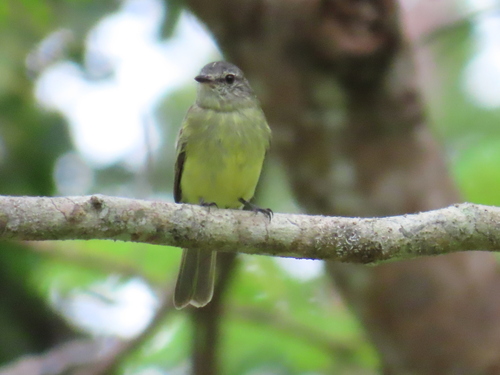 Forest Elaenia
 Amazonian Elaenia
In breve
Il segno di campo più affidabile tra Forest Elaenia e Amazonian Elaenia è il colore e il motivo delle parti superiori e inferiori, specialmente negli uccelli in perching: Forest Elaenia mostra parti superiori verde oliva e parti inferiori giallo-verde, mentre Amazonian Elaenia (maschio) è blu-grigio sopra con parti inferiori grigio chiaro e un ventre bianco. Le femmine di Amazonian Elaenia, tuttavia, possono essere abbastanza simili a Forest Elaenia, con parti superiori verde oliva e parti inferiori giallastre, quindi è essenziale prestare attenzione ai dettagli come il colore delle barre alari e le marcature facciali. Entrambe le specie hanno una striscia coronale parzialmente nascosta, ma il colore e la visibilità differiscono. Sottiglie differenze nel colore del becco e nella luminosità delle barre alari possono aiutare, ma attenzione alla sovrapposizione in luce fioca o con uccelli usurati. Gli esemplari immaturi e le femmine di Amazonian Elaenia sono i più probabili da confondere con Forest Elaenia, quindi concentrati sulla combinazione di colore delle parti superiori, tono delle parti inferiori e contrasto delle barre alari.
Consigli di identificazione
- Upperpart color (adults): Forest Elaenia è verde oliva sopra; il maschio di Amazonian Elaenia è blu-grigio sopra, mentre le femmine sono verde oliva, rendendole più simili a Forest Elaenia.
- Underpart color: Forest Elaenia è giallo-verde sul petto, giallo sul ventre; il maschio di Amazonian Elaenia è grigio chiaro sulle parti inferiori con un ventre bianco. La femmina di Amazonian Elaenia ha parti inferiori giallo-verde e ventre giallo, corrispondendo strettamente a Forest Elaenia.
- Wing bars: Forest Elaenia mostra sempre due barre alari gialle; i maschi di Amazonian Elaenia hanno due barre alari bianche, mentre le femmine hanno barre alari giallastre. In scarsa illuminazione, il bianco e il giallo possono essere difficili da distinguere, ma in buona luce, questo è un segno chiave.
- Wing edging: Forest Elaenia ha bordi gialli sulle ali marroni; i maschi di Amazonian Elaenia hanno bordi bianchi sulle ali nere, le femmine hanno bordi giallastri.
- Crown stripe: Entrambe le specie hanno una striscia coronale parzialmente nascosta. Quella di Forest Elaenia è bianca o giallo chiaro; quella del maschio di Amazonian Elaenia è bianca, quella della femmina è gialla. La striscia è spesso nascosta, quindi non fare affidamento solo su questo.
- Facial markings: Forest Elaenia ha un supercilio biancastro debole e un anello oculare bianco, dando un aspetto più aperto. I maschi di Amazonian Elaenia hanno una sottile macchia loral grigio-bianca e un volto inferiore screziato, ma il supercilio è meno distintivo. La femmina di Amazonian Elaenia può mostrare un volto meno contrastante.
- Bill shape and color: Forest Elaenia ha un becco lungo e stretto, nero sopra e rosa alla base; Amazonian Elaenia ha un becco corto e nerastro. Questo è sottile ma può aiutare a distanza ravvicinata.
- Tail: Amazonian Elaenia ha una coda grigia con punte bianche; il colore della coda non è distintivo in Forest Elaenia ma non è descritto come con punte bianche.
- Iris and legs: Entrambi hanno iridi scure e zampe scure, non utili per la separazione.
- Sex differences: Solo Amazonian Elaenia mostra un forte dimorfismo sessuale nel piumaggio; i sessi di Forest Elaenia sono simili. Se una coppia mostra uccelli blu-grigi e verde oliva insieme, è probabile che siano Amazonian Elaenia.
- Perched vs. in flight: Non sono descritti schemi di volo distintivi o di ali giovanili per nessuna delle due specie, quindi concentrati sulle viste in perching.
- Voice: Un richiamo acuto 'pitch-weep' indica Forest Elaenia; la mancanza di questo richiamo non conferma Amazonian Elaenia.
- Habitat: Forest Elaenia è più probabile ai margini delle mangrovie e a Trinidad; Amazonian Elaenia è assente da Trinidad e dal cono meridionale del Sud America.
- Range: Se a Trinidad, Forest Elaenia è la specie predefinita; se nell'Amazzonia meridionale, controlla per Amazonian Elaenia.
- Pitfalls: Le femmine e gli immaturi di Amazonian Elaenia sono i più probabili da confondere con Forest Elaenia; controlla sempre il colore delle barre alari e il tono delle parti inferiori in buona luce.
Taglia
Entrambe le specie sono molto simili in dimensioni, con Forest Elaenia che misura in media circa 12,7 cm di lunghezza e 12 g di massa, e Amazonian Elaenia da 12 a 13 cm e circa 11 g. Sul campo, la dimensione non è un separatore affidabile. La sottospecie di Trinidad di Forest Elaenia è leggermente più grande, ma questo è rilevante solo su quell'isola.
Piumaggio
-
Juvenile/immature wing pattern: Non sono descritti segni distintivi delle ali per i giovanili o i primi inverni per nessuna delle due specie, quindi i segni di volo specifici per età non sono diagnostici qui.
-
Adults (male Amazonian Elaenia): Forest Elaenia ha parti superiori verde oliva e parti inferiori giallo-verde, con ali marroni bordate di giallo e due barre alari gialle. La testa mostra una corona nerastra con una striscia centrale bianca o giallo chiaro parzialmente nascosta, un supercilio biancastro debole e un anello oculare bianco. I maschi di Amazonian Elaenia hanno parti superiori blu-grigio, una corona grigia scura con una striscia bianca parzialmente nascosta, una sottile macchia loral grigio-bianca che continua attorno all'occhio e un volto inferiore screziato biancastro. Le loro ali sono nere con bordi bianchi sulle piume di volo interne e copritrici bianche che formano due barre alari bianche. Le parti inferiori sono grigio chiaro con un ventre bianco.
-
Adult females (Amazonian Elaenia): Le femmine sono molto più simili a Forest Elaenia, con parti superiori verde oliva brillante, barre alari e bordi giallastri, e parti inferiori giallo-verde con un ventre giallo. La striscia coronale nelle femmine è gialla, non bianca. Questo le rende abbastanza simili a Forest Elaenia nel colore complessivo, ma le barre alari e i bordi di Forest Elaenia sono sempre gialli, e il suo supercilio e anello oculare sono più distintivi.
-
Bill color: Forest Elaenia ha un becco lungo e stretto, nero sopra e rosa alla base; il becco di Amazonian Elaenia è corto e nerastro.
-
Tail: Amazonian Elaenia ha una coda grigia con punte bianche, mentre il colore della coda non è specificamente descritto per Forest Elaenia ma non è notato come distintivo.
Comportamento
Entrambe le specie sono tipicamente viste sole o in coppie, spesso appollaiate in modo inconspicuo nella parte centrale o superiore della chioma, o che si lanciano per insetti. Forest Elaenia è nota per catturare insetti e ragni in alto nel fogliame e mangiare anche bacche. Non sono descritte differenze comportamentali uniche che separano affidabilmente queste due specie sul campo.
Habitat
Forest Elaenia si trova in foreste e ai margini delle paludi di mangrovie, che vanno da Panama attraverso il nord del Sud America fino alla Bolivia e al Brasile, e a Trinidad. Amazonian Elaenia è diffusa nel bacino amazzonico e nelle aree adiacenti, presente in quasi tutti i paesi del Sud America continentale tranne il cono meridionale. Entrambe le specie si sovrappongono negli habitat forestali di pianura, quindi l'habitat da solo non è un separatore affidabile tranne che ai margini estremi dei loro areali o ai margini delle mangrovie (più tipico per Forest Elaenia).
Voce
Forest Elaenia ha un richiamo acuto 'pitch-weep'. Non è fornita alcuna descrizione vocale per Amazonian Elaenia, quindi la voce non è un separatore affidabile a meno che non si senta il richiamo distintivo di Forest Elaenia.
Forest Elaenia · Amazonian Elaenia · I miei uccelli difficili